
Suffering isn’t failure. Healing starts by letting yourself be human. Many of us move through life believing that if we could just get things more stable, emotionally, financially, relationally, then we’d finally feel at ease. We work hard to fix what feels broken, manage uncertainty, and quiet the discomfort. Yet, even when life looks “fine” on the outside, something inside feels unresolved.
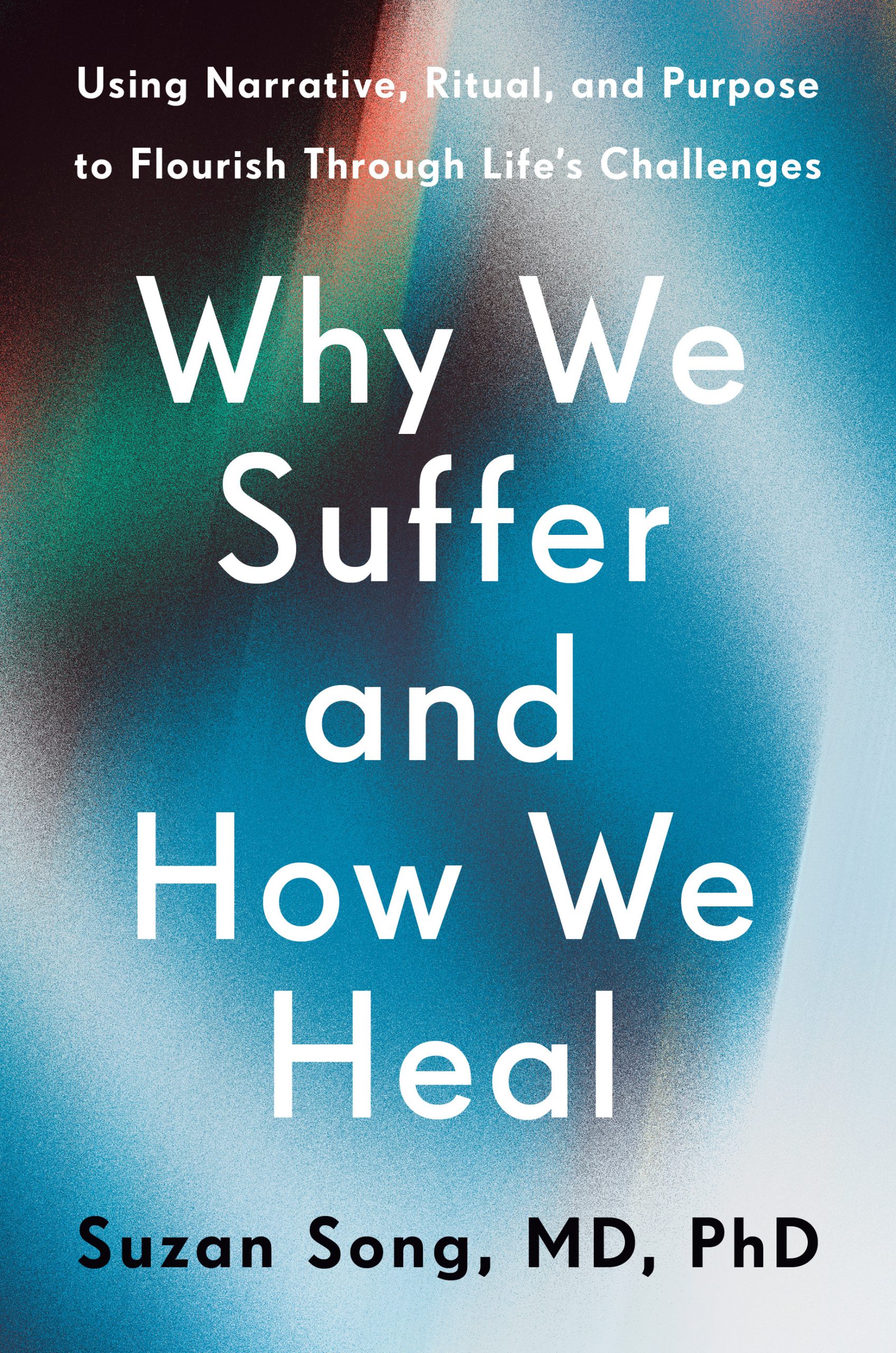
In this powerful episode on healing and resilience, Jonathan sits down with Dr. Suzan Song, a Harvard- and Stanford-trained psychiatrist, humanitarian researcher, and author of the new book Why We Suffer and How We Heal. Dr. Song has spent decades working with individuals and communities living through profound instability, revealing a gentler, more honest reframe: healing doesn’t come from forcing stability, but from learning how to relate differently to pain, uncertainty, and change.
In this conversation, discover:
- Why pain is inevitable, but suffering often grows from the stories we tell.
- The hidden role of our nervous system and memory in shaping our experience of hardship.
- The power of ritual—not as performance, but as a path to emotional grounding and resilience.
- What purpose really is, and why it’s often already present, woven into our lives through mattering.
- How genuine healing happens in relationship, not in isolation, transforming our approach to mental health.
This is an invitation to stop blaming yourself for not feeling satisfied and to remember that you don’t have to navigate life’s instabilities alone. Sometimes, relief comes not from doing more, but from allowing yourself to be human.
You can find Suzan at: Website | Linkedin | Episode Transcript
If you LOVED this episode:
- You’ll also love the conversations we had with Adam Grant about rethinking beliefs and inner patterns.
Check out our offerings & partners:
- Join My New Writing Project: Awake at the Wheel
- Visit Our Sponsor Page For Great Resources & Discount Codes
photo credit: Susan Lebowitz
_____________________________________________________________________________________________________
Episode Transcript:
Jonathan Fields: [00:00:00] So many of us move through life believing that if we could just get more things to be stable, emotionally, financially, relationally, then we’d finally feel at ease. And we work so hard to kind of fix what’s broken, to manage the uncertainty and to quiet the discomfort. Yet even when life looks fine on the outside, something inside it still feels unresolved. And today’s conversation sits right at that tension with a powerful reframe of this struggle. You are not broken. My guest today is Doctor Suzanne Song, a Harvard and Stanford trained psychiatrist and a humanitarian researcher who has spent more than two decades sitting with people living through profound instability and crises, real suffering. She’s also the author of the upcoming book Why We Suffer and How We Heal. In this conversation, we explore why pain is unavoidable. But suffering so often deepens when we resist instability. We talk about the simple power of ritual and belonging, and really how genuine healing happens in relationship, not in isolation, and we dive into the skills that help us move through change without losing ourselves. This is a conversation for anyone who’s tired of trying to fix themselves and really ready to embrace a gentler, more honest path one that reminds us that suffering is not a personal failure, but a part of being human. So excited to share this conversation with you! I’m Jonathan Fields and this is Good Life Project.
Jonathan Fields: [00:01:30] The work that you’ve been doing for a long time, clinically and in the field and around the world is deeply fascinating and has exposed you to in a lot of different ways pain, loss and suffering and how it’s experienced in different ways by different people and different contexts. As I was thinking about our conversation, there was a quote that jumped out at me that is actually a quote from Haruki Murakami from his wonderful book, what I Talk About When I Talk About running. But it’s been kind of mummified all over the web. And the quote is pain is inevitable. Suffering is optional. How does that land with you?
Suzan Song: [00:02:08] Well, suffering. As a psychiatrist and anthropologist across the spectrum of despair, right from egregious human rights violations to the more daily challenges of loss, rupture and change, I have seen people who have experienced extreme pain, but the suffering is optional, and I think that’s important because oftentimes what we crave when we’re in that moment of pain is we just want stability. We say, like I hear time and time again, I can’t wait for things to just feel stable. I can’t wait till next year until my life feels stable. And when we do that, we really miss out on something important, which is a key to figuring out how we can not experience so much suffering, but how we can feel ease and mastery even with the ups and downs of life. Because regardless of whether we want to or not, everybody will experience instabilities. And the question is not will we experience something really hard or pain? The question is, will we have the skills to be able to adapt and find ease and grace and mastery among them, and not lose ourselves within them?
Jonathan Fields: [00:03:19] So I want to zoom the lens out and bring a little more context into this quote and to your answer. Also, you’ve literally traveled the world, and you have personally been deeply involved on policy levels, on very personal levels, some of the deepest, most biggest ruptures and profound pains and crises around the world.
Suzan Song: [00:03:36] You know, in all of my work and I do work across the spectrum, I do work with the everyday kind of more common losses and grief and turmoil that we all face. But I think we can learn a lot from those who’ve experienced the most extreme, because they show us what we can all get through. They show us their bare humanity of our times. So as I was working over the course of two decades with various populations, I became really fascinated by those people who were still able to flourish, not just survive, but thrive and flourish despite the ups and downs in life. And so when I was thinking about them, I’ve had this question like, what is it about these people? Like, do they just have maybe some people just have a resilient gene, or maybe some people have a personality trait that just allows them to flow with life’s whatever stressors come their way. But I think in all of my research and all of my public health work and humanitarian settings, all of my clinical work, I found that the ability to flourish through life’s ups and downs comes to one skill, and that was this ability to embrace instability. And I think because we have this obsession with stability, we want financial relationship, job stability that we think that when bad things happen or when hard things happen, it’s rare. And so we don’t quite know what to do. We feel a little upended when multiple stressors happen. But we can all find we can all use tools that are available to all of us, regardless of culture context, to be able to manage through the hard times.
Jonathan Fields: [00:05:17] Yeah. Would it be accurate to say that bad things are going to happen to us? Those bad things will cause pain and nobody gets to opt out of that. If you’re fortunate to live long enough, no matter your life circumstance, you’re going to have things happen to you. But from what you’re saying, if I understand properly, you’re saying yes, that causes a certain amount of pain and there’s probably a certain amount of suffering that maybe we can’t escape. But there’s a whole almost like second wave of suffering that we create ourselves by saying, I need to lock down what’s happening here. I need to sort of like, rush to secure a stable certain future as quickly as humanly possible. And in most scenarios, that’s either really hard to make happen, if not impossible. And it’s that pouring ourselves into then chasing after something which we can never have that deepens and compounds the suffering. Is that accurate?
Suzan Song: [00:06:09] Yeah. That’s right. I mean, I think so often and this is something that I’ve been very surprised by, our suffering is not due to the event itself all the times. Oftentimes our suffering is more due to the stories that we tell ourselves about the event. So sometimes those stories are we have gaps in our stories about what’s happened to us, or we have fragmented stories about what’s happened to us. So, you know, I can give myself as an example, I was working as a psychiatrist in San Francisco, and I also had done some work in policy with former child soldiers in Sierra Leone and Liberia. And I decided to do a PhD because I wanted to understand what happens to child soldiers when they grow up and they have kids of their own. So, like, how do they know how to parent? So I this PhD on intergenerational trauma in Burundi while I was in Burundi, you know, I’m there basically as an anthropologist. And so I spend time with each family over the course of three years. And one day one of my child soldiers kind of turned on me and targeted me for money. And so I had to go into hiding. My local team pushed me into hiding for three days and I left the country.
Suzan Song: [00:07:21] But while I was in hiding, I thought to myself, what am I doing here? Like I’m a Korean American woman, born and raised outside of Baltimore. And how am I now in this small, remote country that no one’s ever heard of? In hiding from my life, from former child soldiers? And the first thought that just hit me was, oh my gosh, it’s dad. So my father, when I was young, my parents immigrated from South Korea. We had a liquor store outside of Baltimore, and we had a few robberies. And one time when he was closing up the store, he was carjacked and assaulted and kidnapped in an attempted murder. And he later died. Now, I was 15 at the time. I didn’t really have a narrative around this in my culture, my family culture, my community culture. This was a time where people didn’t really go to therapy, so I didn’t have narratives to explain my experience or his for that matter. So I went through I still had a GPA of 3.7. I still went to college. I went to medical school. Not really thinking this had much of an impact on me at all, until when I was in medical school, I went to be a surgeon and during my surgery rotation, I realized I became a physician.
Suzan Song: [00:08:41] Not to save lives, but To help people who are suffering, especially suffering in silence. Now, where does that come from? Like, why do we all do what we do? And for me, I didn’t realize until my time in Burundi that the experience with my father had led me to recreate a similar scenario where I was now the one feeling helpless and fearful in being targeted for murder and attempted murder, just the similar way that my father had been. But this time around, I was unconsciously trying to fix and repair what was not. I was not able to in the past. And so I say this to say that our stories about what happened and our lack of stories and our fragmented stories, like I knew the story of my father in his attack, his assault, and I knew about my time in Burundi. But until you put those things together and develop a coherent narrative, it’s very hard for us to understand what’s actually driving our lives and what’s what the narrative really is underneath and behind our suffering.
Jonathan Fields: [00:09:53] Yeah, I mean, it’s so powerful when you can put the pieces together like that in a moment of just deep insight, where it’s sort of like your brain just goes into pattern recognition mode. It’s like, oh, wait, yeah, I’m spanning decades here and putting together things, and now it’s I’m realizing what’s really going on. If part of what’s happening when we’re in a mode where there’s bad things happening, there are hard things happening, we’re in crisis or even on the other side of crisis, or you’re moving through it. If we have some level of agency and choice in whether this is an acute pain that we then largely move on from, or whether this is an acute pain that then deepens into suffering and then compounds into more suffering and more suffering, more suffering. It sounds like a big piece of this is the story that we tell ourselves about both the experience. Well, I guess about the experience and what led to it and how we’re translating what happened and also what the story that we tell about what is available to us. And I know this is actually a piece of you’ve, over the years, developed this three part model, really, which I look at as understanding this. This is how we transmute suffering into healing. This is how we basically say, yes, hard things are going to happen. And to the extent that we can opt out of a certain amount, if not a substantial amount of the suffering. These are three really important pieces. And you talk about narrative, ritual and purpose. So we’re kind of dropping into the narrative side right here.
Suzan Song: [00:11:18] Yeah. That’s right. So I wanted to find something. I guess it was my path was twofold. I had this clinical practice where I am American, I trained in the US. And so my psychotherapy approaches and my approaches to healing, frankly, are very Western bound, which is if you’re going through a hard time, maybe reach out to a loved one, maybe go to your religious community. But if things are really hard, you go to a therapist and you talk one on one or a psychiatrist. But I was pairing that, juxtaposing that with all of my global work where most people don’t have therapists, it’s just not part of the culture. And yet they’re still able to hear heal from some very hard things. And I was finding limitations within just traditional Western psychotherapy approaches. The narratives, rituals, and purpose are these tools that I found. They can be used really across cultures and across situational contexts that are available to all of us. What I hope in this book is I give permission for people not to seek out so much, but to really see inwards. We have all of these available to us, so the narratives help us understand with insight. Insight only gets us so far though, so we need to change and to help. Change is rituals. So rituals give us some movement and then the guiding light is purpose. So purpose is something of meaning that’s larger than ourselves. And that helps give us direction and anchoring among all of life’s turmoils.
Jonathan Fields: [00:12:54] Let’s drop into each one of those a little bit more. You make the argument that the stories we tell really become the lives that we live. And on the one hand, I think a lot of us have heard this and at the same time potentially kind of rolled our eyes at the concept. Yeah.
Suzan Song: [00:13:08] Yes.
Jonathan Fields: [00:13:09] You know, it sounds oh, well, that’s delightfully woo like, would that it be true? But you make a compelling argument that it is, in fact, true.
Suzan Song: [00:13:17] I work with a lot of high flying women, a lot of women who are highly functional CEOs, top of their game, and they have children, many young children. Many people have young children. And I see time and time again how much they’re truly suffering because they’re trying to do everything. I mean, I’ve had women who’ve called me when they’ve bare feet in the front yard screaming at their two kids, just having a meltdown. And what it comes down to is I think people are oftentimes playing out a script, an identity script that they didn’t even know was written for them. So what does it mean to be, for example, a mother or like choose any role? What does it mean to me to be a physician? We all have these roles that dictate and define what we’re supposed to do, or how we’re supposed to feel, how we’re supposed to act. And they’re so culturally embedded that we aren’t conscious of them. For many of you know, many mothers especially, let’s say, like whether or not they’re professional, but many mothers of young kids in particular, who are trying to do everything. So they vacillate between overfunctioning and numbing. And there’s not really a lot in between. A lot of times that’s because of some narrative that they’ve inherited and they don’t realize it. And so when we address that and we say, okay, what is this script about what a mother should be? Where is it from? And we give permission to rewrite the script. It’s okay for you to write your own story of how you want to be for your own life.
Jonathan Fields: [00:14:53] And I guess maybe the the opening move there is realizing that you’re living into a story that was passed down to you, or maybe mandated for you to live into by somebody else that doesn’t fit you or maybe fit you before, but doesn’t fit you now. How do we awaken to that? I mean, because before you can tell a different story, we’ve got to realize, okay, there’s a script that’s already running here. There’s a narrative that’s happening that I was completely unaware of. That’s not right for me. In your mind, is there an effective way for us to just kind of, like, interrupt that and wake up and say, wait, wait, wait wait, wait? Yeah. This doesn’t have to be the story. Like, oh, I see what’s happening here. And now I get to hit pause and tell a different story. Like, how do we wake up to that?
Suzan Song: [00:15:40] Yeah. I think, you know, one example is to think about when we’re feeling resentment as an example. So resentment when I hear people say they’re resentful or they’re really angry because they’re resentful, to me, it signals that they’ve put someone else’s needs before their own. So what are your own needs in this moment, and how are those related to some identity, whether it’s as a father or as a mother or, you know, a physician or a teacher? What is the identity script there that’s behind that? The resentment and behind those needs, that one, what one has. And that’s just the first start is like noticing what your resentment is, noticing what your needs are, therefore. And then what’s the identity that’s tied to those. And then just write out the script. If you were a screenwriter, how would you write that role? And when we have that, I think it becomes a little bit more clear, because then we have something to work with and you can say, okay, which parts of that do I like and which are not working for me? And oftentimes there’s a friction because someone can say, let’s say for the mother who’s overfunctioning or numbing, a person can say, I know that it’s important to take care of myself. I know that I should hire a babysitter for two hours a day. I know that’s what I want to do. But the hard part is this identity script. But I feel guilty if I do that. And that’s because of some inherited cultural script. And so we have to work with the guilt around that. Our narratives and our stories should be changing. We should be writing, rewriting our stories constantly throughout our life because that’s growth. And so if you are finding the struggle and you are wanting to rewrite your narrative. That’s actually healthy. It means that we’re growing as humans. Like we all do need to have new scripts every few years, let’s say.
Jonathan Fields: [00:17:39] Yeah, that makes a lot of sense. And we’ll be right back after a word from our sponsors. You also talk about along the way. And this still falls kind of under the general bucket of narrative, the role of memory, which I think was really interesting, and the tricky role of memory, because we love to think that, oh, like we remember exactly what happened. That’s not always the case.
Suzan Song: [00:18:06] That’s right. It’s most often not the case. So memory and this is one where I maybe I’ll infuse a little bit of the neurobiology because I think it’s important when we’re talking about memory. So people often believe that memory works. A filing cabinet like you have an experience. You put your files in these nice drawers, but memory is actually more like a tennis match, Mismatch, I think I don’t actually play tennis, but I’m hoping I’ve got this metaphor right.
Jonathan Fields: [00:18:32] So pickleball more relevant these days, right?
Suzan Song: [00:18:35] So you’ve got two people playing and they’re hitting the ball across the net. That’s basically how a memory is formed. A memory has two neurons that are playing tennis or pickleball, and they’re hitting these chemical messengers. That’s the ball across back and forth. Now, in the same way with the players, the more that they communicate with each other, the faster and the stronger they become at playing. In the same way, when we have an experience that chemical, the neurons form a stronger and faster connection the more that they’re playing it. So that’s all fine. That’s how a memory is essentially formed. Memories though, let’s say. So you’ve played this game, you’re finished, you go home, you come back a month later and you try to play the same game. But this time I’m tired. I’ve had a really long day and I haven’t eaten. I’m a little grouchy, so I’m not going to play as well. It’s going to influence how I play the game. In the same way, our memories are subject to editing. Every time we think about a memory we are editing in real time. We’re changing it based off of our moods about whether we ate or not, if we had coffee.
Suzan Song: [00:19:51] So it’s constantly changing, and I think people don’t realize that every time we have a memory, even if we’re saying it the same way over and over again, we are actually changing it and adapting it based on who our audience is and what the context is around us. One thing that that affects this largely is when we’re under stress. So if if anyone’s ever been under stress and sometimes if I’m really stressed out, I’ll forget my keys or I’ll forget where I parked the car or. Right. And that’s because under times of stress, the innermost part of our brain, the limbic system, the emotional seat of our brain that becomes more active and it shuts down the higher thinking part of our brain, the cortex. It’s hard for us to really consolidate and lay down these memories because we’re basically our hippocampus. The memory part of the brain is basically bathing in these stress hormones, so it makes it harder to lay down these memories. This is why a lot of people have experienced really hard things, or just are really stressed in the moment, might have a hard time remembering things.
Jonathan Fields: [00:21:00] I’m going to zoom the lens out for a second here. Why do we care about this in the context of storytelling and suffering?
Suzan Song: [00:21:08] Our stories are almost completely dependent on our memories. So how we tell a story is informed by a past memory, or how we believe and experience has shaped and informed us. So our memories and our stories are deeply intertwined.
Jonathan Fields: [00:21:26] Which is interesting, right? Because if we so and it seems like they would, they would inform one another also because a particular memory is probably going to affect the way that we tell a story, and then the way that we tell the story is then going to potentially, if we keep repeating it shape or change the memory itself. So it can be either this cycle that pushes us into a place of positive processing or a place of just negative spiraling.
Suzan Song: [00:21:52] Yeah. That’s right. So back to the example about my father when I was in high school and I was 15, I thought from that day forward I thought he never left the hospital. I thought he went from shock trauma. And then he passed away six weeks later in hospice. That was my memory. And I thought that actually my entire adult life until writing this book, it was only in writing this book that my agent had said, you know, tell me more about your father. And I didn’t have any. This happened so long ago, I didn’t have any information about it. And then when I started looking it up online, I found some dates and I realized that, oh my gosh, the assault happened. And then he came home for a full year and he went into hospice after one full year. But that whole year of him being at home with I was living with him. I don’t remember any of it.
Jonathan Fields: [00:22:46] Wow.
Suzan Song: [00:22:47] But because of that, and that was my memory doing what it’s supposed to do, it’s kind of a survival mechanism, right? But because of that, my narrative was always, my father was murdered. That was my narrative. He was murdered in front of our liquor store, and that shaped my whole career. I mean, there’s a reason why I work with people who are suffering in silence and why I go towards the most violent crimes is because I thought that he had died because of the assault. But that’s the power of memories and stories and gaps in our narratives when we don’t create this cohesive, you know, framework of what’s happened.
Jonathan Fields: [00:23:29] So your memory had largely erased that year?
Suzan Song: [00:23:32] Yeah.
Jonathan Fields: [00:23:32] Until you really started going back to it. And so much of this also, I wonder, and you write about this to a certain extent, also like we the brain is miraculous at protecting ourselves or, you know, like wanting to protect us from feeling certain deeply traumatic things. But that doesn’t necessarily help us. You know, oftentimes it traps us in this cycle. This is one of the things you write about, like how we form these cycles. And if they’re shaped around stories and memories that keep us spinning in a cycle that’s damaging to us, or keep a cycle of suffering going, that’s not a good thing.
Suzan Song: [00:24:06] Yes. And I think it’s one aspect that many people are surprised by. I think we would all be surprised at the amount of repetitive cycles that happen in a person’s life that are based off of some sort of unmet need in our past, mostly in childhood. So, you know, you’re often about, you know, there’s maybe a woman who grows up and they had a father who had alcoholism, and they say, I’m never going to be with someone who has alcoholism because I was feeling neglected and undervalued and invalidated. And they marry someone who doesn’t even drink alcohol, but they end up having a work addiction, or they end up being overinvolved. And so the woman is left feeling the exact same feelings as they did before. They say, how did I get into this? Like, how does this happen where I have the same feelings as I did before? And you notice that time and time again, that same woman will get into will create these same cycles, because unconsciously she’s familiar with that, and they’re trying to figure out to have some mastery over that situation where now she will no longer feel that way. Now she will be loved. Now she’ll get the attention that she wanted. And unfortunately, that rarely happens. But we all, and we do this in our work situation too. It’s not just personal lives, but we all have these cycles of which we repeat trying to repair what we couldn’t in the past.
Jonathan Fields: [00:25:31] You know, the big question there is, how do we break those cycles in? Like, what’s the pattern interrupt here?
Suzan Song: [00:25:36] Yeah. So I have a whole framework in the book which I call repeat. But it’s essentially we have to first recognize that there is a pattern. And one thing that I like to do is I have people do a narrative map, just like draw a horizontal line. Time zero is time of birth to the other end of the spectrum is right now. And I ask people, just fill in events like Sentinel events that are important in your life, and then go back and put in some words that describe emotions and feelings about those events. And over the course of one’s life, they’ll start to see patterns, not in the event or the relationship, but patterns in how someone felt and the patterns where someone feels invalidated, let’s say, or dismissed or they feel small. Those might happen like 2 or 3 times. Those are the patterns to look at. And then we can say, oh my gosh, here’s a pattern. These are three instances where you felt the same way. Are they connected at all? Most of the time they are. And then that gives us somewhere to we can then pause. The hard part is then feeling, taking away the power of that feeling.
Suzan Song: [00:26:47] So for my cycle, if I was feeling helpless because of my father, I was feeling helpless because of my father. And I see that pattern show up both in Burundi, let’s say when I’m in hiding from these child soldiers. So I am feeling helpless. I need to feel that I need to sit and embrace and just allow that feeling to sit. Also with some kind of mindfulness tools, deep breathing, whatever relaxation or coping tools, I need to be able to sit with that feeling. But once we sit with the feeling, it takes the power away. It it just it takes the power of that feeling off of us because now we have control over it. And so it starts to help break that cycle. So we don’t feel compelled to repeat it again and again and again. And then we’ve now integrated vertically our brain system. We’ve integrated our cortex and our limbic system. So you know the thinking and the feeling part are more integrated. So we can choose a different path. We can make a different choice in the future.
Jonathan Fields: [00:27:50] Yeah. And it’s that feeling thing, right? It’s like so many of us, we will do anything not to feel the feeling. Yes. I mean, we’ll make up stories, we’ll change scenarios. We’ll blow up relationships or circumstances because we point to those things. Right? Rather than saying no, actually, there’s a repeated pattern here that’s been showing up throughout my life, and I keep getting dropped into this feeling, and I’m just going to keep doing everything I can not to feel it. Rather than saying, you know, the invitation you’re offering is what if you just sat with that? What if you actually allowed yourself to fully feel it? And then in a way, it sounds like it’s you’re kind of you’re both breaking the cycle and rewiring the way that the feeling itself basically controls you or has power over you. You’re disempowering it to a certain extent and saying, okay, I feel it. It’s real, but it no longer controls who I am and how I show up. Is that right?
Suzan Song: [00:28:42] Exactly, yeah.
Jonathan Fields: [00:28:43] Which I think brings us nicely also to rituals because, you know, like we’re at a moment where we’re like, okay, so what do we do? Like, you know, okay, so I can sit I can acknowledge, I can see, I can revisit my, my, my stories and my patterns, and I can be with the feeling to try and break the cycle. But then I want to, like, I want to be in more of, like an action oriented stance and an agency oriented stance. I want to move forward. So where does ritual start to play a role in all of this?
Suzan Song: [00:29:12] Narratives are important because they give us the understanding. They give us the insight. Rituals can then embody our narratives. Rituals are essentially our symbolic actions and behaviors that we do that can bridge us to community, to feeling connected to other people. Rituals have a lot of power, actually, in a sense of creating a sense of belonging. And they help us. It’s almost like this emotional scaffolding to help us weather the really hard time. So right now I live outside the DC area. A lot of there’s a lot of turmoil in my neighborhoods and my communities where people are feeling just uncertain, unsteady. This is the time to lean in to our rituals, and I used to think that rituals were really saved for New Age or spiritual ceremonies, or like only religious traditions. But we all do rituals in our everyday life, you know, like Steph Curry does. The tunnel shot, which is amazing right before every NBA game. And you know some tennis players are like bounce the ball 19 times. But that’s a regulation that’s helping them regulate their anxiety and help them focus. So rituals can be used for that to regulate. But we also use rituals in kind of transitions. So, you know, birthdays and we all bake a cake put a candle on top. There’s no real meaning behind a cake or a candle except the meaning we infuse onto it. So it’s symbolic. So all of these rituals can be used to help us just find a sense of groundedness. And one thing that I had not really appreciated was just really the power and emotional scaffolding that rituals have.
Suzan Song: [00:30:54] I’ll give an example. I was working with this former child soldier in Sierra Leone. And just to give a little background on if people don’t know what child soldiering is, essentially children can either join joined voluntarily or they’re abducted into an armed force. And many people might think that child soldiers are just like fighters. So you have this image of a young boy with an AK 47 slung over their shoulder, maybe bloodshot eyes because of the drugs that they’re forced to use. But many child soldiers are actually porters or cooks or they’re messengers or they’re sex slaves. And so this woman that I was working with had been a sex slave for about 8 or 9 years for a commander there. In many of these areas where there is a use of child soldiers. One of the initiations is to force the children to go back to their village so that they can steal or assault or maim the men, or sexually assault in their village, so that they can’t return to that village that forces them to only have their home as the rebel force. So when this woman, when the war was over. She’s disarmed, she’s in demobilization, and she’s reintegrated back into society. Back into her village. I asked her, like, how did you how do you function? Because she was actually doing pretty okay. She had a job, she had kids, she was involved in the community. And I was like, how did you manage when the majority of your life was in this rebel force? And she said, at first it was very hard because when I came back to my village, people essentially ostracized her.
Suzan Song: [00:32:29] They were telling her, like, I remember what you did. You’re a monster. And so I said, well, what was it that helped you? And she said, it was one thing when the village elder brought the community around and they did a body purification ritual where they basically atoned her of her sins, it allowed the other neighbors to say, okay, we accept you now. And she said, I feel such a sense of belonging now, and actually sense of love from them, that I’m doing okay right now. And to me, this was somewhat mind blowing because As a therapist especially, we focus so much. I think, especially Americans. We love our thoughts. We love to like take our thoughts out of our brain, and we look at them with our magnifying glass and we manipulate them and we try to reformulate them. But here is someone who did none of that. She did not do any talk therapy. She didn’t feel the need to talk about what’s happened to her in her past. What she needed was a ritual that helped her find a sense of belonging. And so I find that very powerful because it reminds me that healing is not individual. It is a team sport, like we have evolved to co-regulate with others. And I think finding a sense of belonging, I think, is integral to healing the individual and the communal rituals are are extremely important. And and some of them are defined by us culturally.
Suzan Song: [00:33:55] You know, for example, I think whenever we think about the differences in grief Practices across cultures. That’s where rituals. And we can also do individual rituals too, like I one that I like is because I work, you know, I some of my days are emotionally taxing because of the type of work that I do every night. I do a ritual where I call it my emotional GPS. So it reminds me of how I want to feel. And some of this is based on neurotransmitters. And so I tend to think about I want to feel loved. That’s oxytocin. I want to feel joy and that’s serotonin. And then I want to feel inspired and that’s dopamine. And so I write this I have this journal because I also have a hard time journaling myself. I just find it strange to journal to someone else. So. So I have this small journal. I put three columns. I just say, you know, something that made me feel inspired, loved and happy that made me smile. And it just resets every night to help direct you to how you want to feel and remind us. It reminds us all of the people in our lives. Some of them small. Like I had a neighbor yesterday who checked in on me because of the snow and the ice. That’s beautiful. There I feel loved, and now I’m connecting to my neighbor. So there are small things that we can do. Rituals don’t have to be a big deal. They can be a small, everyday things.
Jonathan Fields: [00:35:18] Yeah. No, I’m glad you brought it back to that also, because I think a lot of us do think of the big rituals for the big moments in life, and often they’re well defined rituals, whether it’s positive, you know, graduating or mourning loss. But I love this notion of just a really simple, very personal, very private, very quiet daily ritual that in some way it helps you, you know, it helps you process the day. It helps you sort of like reintegrate whatever is happening around you, whatever you may be moving through or carrying, and that it doesn’t have to be big and that it doesn’t have to be announced also, which I think there’s such a compulsion these days to share everything that you’re doing. Um, like it’s not real unless somebody else has witnessed it. And of course, there is value in other people witnessing you and seeing you, but not necessarily in like every little private act that you take has to be something that is only real when it becomes public. And we’ll be right back after a word from our sponsors. The third part of the model here, which is purpose because purpose is really about it, is about expanding beyond yourself.
Suzan Song: [00:36:27] Yeah. If narratives give us understanding, rituals give us movement, purpose gives us direction. I think one mistake that people make is that they equate goals with purpose. So goals are something to achieve, but purpose is available to all of us. It’s not something to be found like. Most people are actually living out their purpose right now. They might not be aware of it, but most people are. And so purpose is something that is of meaning that is larger than ourselves, and there’s a lot of strength and purpose because it can really guide us and anchor us throughout all of the the hard times. And there are different aspects of purpose. So in order to know one’s purpose, we have to know ourselves. But that’s a very difficult question. It’s like the age old question of who are you? It’s like a very hard question to answer. So I like to think of it as what we call in social sciences as coherence. But I think of it as resonance. Like where in your life do you feel resonance, where you feel like your values, your beliefs, your actions and your words? They all are just resonating with each other. That’s a pretty good signal. That’s directing you towards kind of your true who you are at your core. So where do we find resonance in our lives? But another part of purpose, I think, is a part that we don’t really talk much about. But I think it’s important because just like narratives are these, we have these hidden narratives driving our lives. We also have these hidden sources of repair and rupture that are driving our lives, especially towards purpose. So I hear commonly, you know, parents will say, well, through my kids, I get to live out my childhood.
Jonathan Fields: [00:38:16] Oof!
Suzan Song: [00:38:17] Right.
Jonathan Fields: [00:38:19] And I hope you’re setting up a therapy fund for your kids.
Suzan Song: [00:38:23] But so often behind that is okay. They’re trying to repair something or. Yeah, or give them something that they didn’t have and they wish they would have had and need that’s not met from their childhood. But that becomes their purpose. So one’s purpose is to repair something that they didn’t have in the past.
Jonathan Fields: [00:38:44] Mhm.
Suzan Song: [00:38:44] And then another aspect of purpose that I wish we would spend more time talking about just in the general culture is mattering, is mattering to have deep connections, not just knowing people and not just being loved. I think being loved is important, but we also need to feel like we matter to someone, to society, to people, to a community. And I think we have this deep desire to matter, but we don’t actually know how. We don’t really know how to connect with people. There’s this paradox of connection. We want it, but we don’t really know how.
Jonathan Fields: [00:39:25] Mattering is something I’ve been so deeply fascinated by. A couple of years back, I interviewed, um, Professor Isaac Betensky. He defined mattering. I’m going to get this totally wrong. But the general thing was he’s like, there are two parts of it. One is that you’re offering value and the value is acknowledged. And it’s interesting, right, because by that model and I’m hoping I got that right. If you’re doing one part like I’m offering value, I’m showing up. But it’s never acknowledged. It’s never noted. It’s never, you know, there’s no signal that it’s being received. It’s still really hard to feel like what you’re doing and who you are matter.
Suzan Song: [00:40:04] Yes.
Jonathan Fields: [00:40:04] You know, it needs this other part. It needs it needs to be witnessed or received in some meaningful way. Yes. In that way, it sounds like mattering is one of those things where it’s really hard for that to be a solitary act.
Suzan Song: [00:40:17] Definitely. And it shouldn’t be a solitary act. I think we should, you know, again, we don’t heal in isolation. And this is why the Three Friends of Winter is called Three Friends. It’s really underlying the narratives, rituals, and purpose is that we heal in community, in belonging, in relationships and so mattering. I’ll give another example. So I was working in Haiti. This was after the earthquake. This was 2010. There was a 7.0 earthquake. And there was a boy there. I was there doing humanitarian parole, parole evaluations, which is essentially helping people who had life threatening medical issues to get care in the US for a short amount of time. And so I’d worked with this 14 year old boy there who had just lost his entire family in a matter of less than a minute. So I was doing my evaluation with him. And what I often asked children in these settings is, is there anything that you need? And most of the time you hear, like, I need food, I need water, I need clothes, I need a hairbrush. And I asked him and he said, I need you to help me become a teacher.
Jonathan Fields: [00:41:22] Mhm.
Suzan Song: [00:41:23] And I said, oh how come. And he said because during the day he’s with other orphaned children who have basically glommed onto him. So he has a small group of like 15 children and he spends all day with them teaching them how to read and write Haitian Creole and how to do math. And he said they need me. So I need you to. I don’t know how to do this. He never thought about being a teacher, but he said, I want to matter to them. They need me. And that sense of mattering to this group of children that carried him throughout so much like it was amazing what he was able to do. You could feel he actually wasn’t suffering in the way that one would think after losing every. Like literally everything. I think that showed me the power of really deeply connecting with people and having a sense of mattering to others, and that it can carry us through the hardest times. Again, I think this is something we all know is that connection. You know, there’s this loneliness epidemic. I think it’s a mattering epidemic, but we don’t know how to be there for people. You know, when a loved one comes to you and they say, I’m going through all of these things.
Suzan Song: [00:42:38] I have a friend who’s going through cancer and job loss and, you know, just instabilities, Oftentimes the most loving of people will turn away. And it’s not because they’re harsh or they don’t care. It’s actually the opposite. I think they care very deeply. It’s that I think the single biggest predictor to being able to connect deeply with someone is our ability to connect deeply with our own suffering. And so if we’re not comfortable with our own struggles, it’s very hard to be there and bear witness to another person’s. That’s okay, because there are things that we can all do. I think the more that we spend time doing all of these narratives, rituals, listening to what’s resonant to us, the more we’re deeply connecting with ourselves, and we can start to make inventories and lists about who we matter to. Are their groups or their organizations. Are there people that we matter to and who do we want to matter to? And just even doing that exercise can help us feel a little bit more grounded and a sense of belonging.
Jonathan Fields: [00:43:46] Yeah, that makes so much sense as you’re describing that last piece. Years ago, I taught this workshop called the Art of Becoming Known. And this was, you know, almost like Pre-social media days. And the first question I asked, like I was asking people why they were there, like, why do you care about being known? And the first question they asked after that it was, by whom do you want to be known? And I got a lot of blank stares, you know, because we just had this instinct. We want to be known. We want to be seen for this. We want to be acknowledged for that. But when you ask somebody, by whom do you want to be seen? But whom do you want to be known? It makes them immediately go a level deeper. And because to answer that question, you have to say like, why? Why do I care? Why does this matter?
Suzan Song: [00:44:31] Yes.
Jonathan Fields: [00:44:32] And it gets you. It really gets you to a very different place. And I think a lot of people realize, actually, I don’t care about like, being known or being seen by a lot of people. But there’s my kid. There’s these people in this community. There’s this for this kid you’re talking about, like there’s these younger kids, and it’s one of these things that we never ask a question we never really think about. And then we just try. And we devote so much energy to just appearing in front of other people and often waiting for their validation when like, it doesn’t matter. They don’t have any meaningful role in our lives. And there are two people who do who may be waiting at home for us to come home. And like, those are the people that really will make the big difference in our lives and us in theirs. And it’s like you’re inviting us to really examine all of this, and maybe it’s maybe this does happen on a grand scale, but maybe it’s one person too.
Suzan Song: [00:45:23] Yes, and it’s okay if it’s one. I think it goes back to your comment about, you know, how we basically the divide in our personal and our private lives and how there’s a lot of overlap nowadays in that. And if someone is on social media and they might have a million followers or whatever. That’s fine. But where is the intimacy? And we can’t have intimacy at that level, at that scale. And so it’s okay to hone down on just the few people that you want to matter to. And also in listing out right now to whom you matter to. Sometimes we’re surprised, like we matter to people we don’t even know we matter to.
Jonathan Fields: [00:46:01] Yeah.
Suzan Song: [00:46:02] And that’s always nice to hear.
Jonathan Fields: [00:46:04] Yeah. Somebody’s listening or following along with this conversation. They’re either moving through a moment of pain or deep uncertainty right now, or they have recently and they’re trying to figure out like, what now? What’s your first invitation to them?
Suzan Song: [00:46:17] Well, first I would validate and say you are not alone. Like this is the norm. This is life. Like as a human being, you are supposed to have instabilities as part of life. So this is just par for the course. And it’s okay to pause for a bit and embrace the instability that’s there. And we don’t do that in some abstract way. We can do that through looking at our narratives, defining what rituals are in your life right now that can be grounding for you, and then thinking about your purpose that’s already there, that you’re already doing. Don’t do more work and like searching for something else. It’s already there as part of you, and part of that is mattering to other people. And so when you have a formulation of that and find one person to connect deeply with, that’s already a lot. That’s a lot that one can do just to get on the course towards feeling a little bit more ease and mastery and groundedness.
Jonathan Fields: [00:47:22] Mhm. It feels like a good place for us to come full circle as well. So in this container of Good Life Project, if I offer up the phrase to live a good life, what comes up?
Suzan Song: [00:47:32] I mean, to live a good life is to feel equipped and empowered to embrace the instabilities with a sense of groundedness where we don’t lose yourself within life’s turmoils. And for me personally, I think living a good life is to feel that responsibility is a privilege. I think too often when we view our relationships with other people, especially when we’re busy, we have a lot of people that we’re responsible for. I think when I can get to a place, because I’ve looked at my narratives and rituals and I’ve used these kinds of tools, and I can find that responsibility is actually a privilege. To me, that’s a good life.
Jonathan Fields: [00:48:16] Mhm. Thank you.
Suzan Song: [00:48:18] Yeah.
Jonathan Fields: [00:48:20] Hey, before you leave, if you love this episode, you’ll also love the conversation we had with Adam Grant about rethinking beliefs and inner patterns. You’ll find a link to that episode in the show. Notes for this episode of Good Life Project. was produced by executive producers Lindsey Fox and me, Jonathan Fields. Editing help By, Alejandro Ramirez and Troy Young Kristoffer Carter crafted our theme music. And of course, if you haven’t already done so, please go ahead and follow Good Life Project. in your favorite listening app or on YouTube too. If you found this conversation interesting or valuable and inspiring, chances are you did because you’re still listening here. Do me a personal favor, a seven second favor, and share it with just one person. I mean, if you want to share it with more, that’s awesome too. But just one person even then, invite them to talk with you about what you’ve both discovered to reconnect and explore ideas that really matter, because that’s how we all come alive together. Until next time, I’m Jonathan Fields signing off for Good Life Project..