
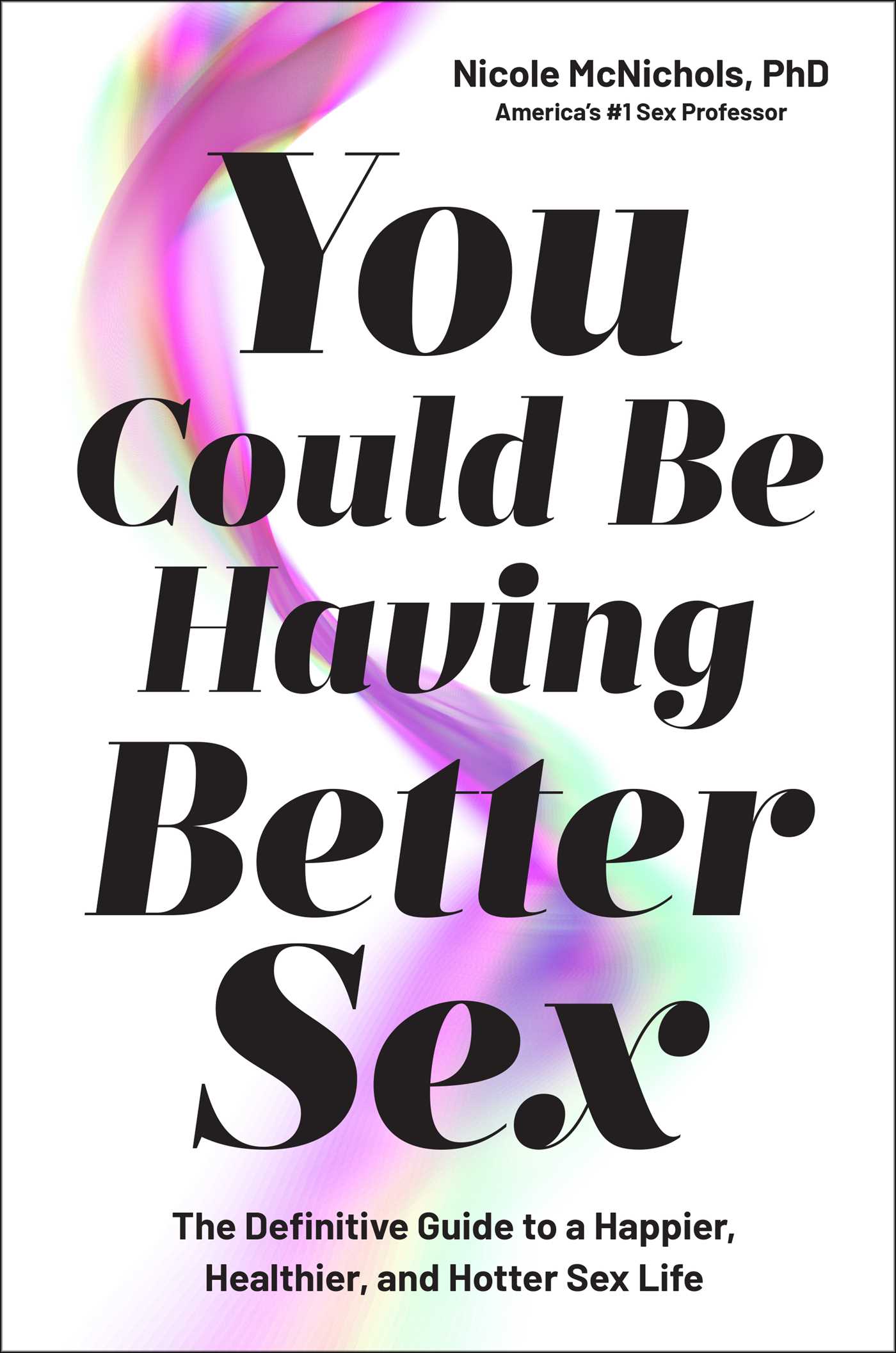
You could be having better sex and the science explains why, not because you’re broken or doing something wrong, but because most of us were never taught how desire actually works or how intimacy evolves over time. Instead, we’re handed myths, silence, and a lot of quiet frustration.
In this conversation, we explore why great sex is not something that just happens, but something you can learn, practice, and grow into at any stage of life. We talk about desire, pleasure, communication, midlife shifts, and how letting go of shame opens the door to intimacy that feels more alive, connected, and satisfying.
Dr. Nicole McNichols is an internationally renowned human sexuality professor at the University of Washington, where her course The Diversity of Human Sexuality is the most popular in the school’s history. She is also the author of You Could Be Having Better Sex, out February 3.
In this episode, you’ll discover
- A simple mindset shift that makes sex more fulfilling over time
- Why novelty matters more than frequency and how to add it without pressure
- The overlooked role pleasure plays in mental health and resilience
- What actually helps desire return in long-term relationships
- A healthier way to talk about sex that builds trust and connection
If sex has started to feel confusing, disconnected, or quietly disappointing, this episode offers a grounded, research-backed way forward. Press play to learn how intimacy can become something you grow into rather than drift away from.
You can find Nicole at: Website | Instagram | Episode Transcript
If you LOVED this episode:
- You’ll also love the conversations we had with Emily Nagoski about the science of pleasure and sustaining sexual connection.
Check out our offerings & partners:
- Join My New Writing Project: Awake at the Wheel
- Visit Our Sponsor Page For Great Resources & Discount Codes
_____________________________________________________________________________________________________
Episode Transcript:
Jonathan Fields: [00:00:00] Okay, so today we are talking about sex. Sex at any age, sex in midlife and beyond. If sex feels less satisfying, more of an obligation or like pleasure has left the building, or just simply less present than it used to be, you are not alone. Millions of others are experiencing the same thing. The question is, what if the issue isn’t desire or attraction or age, but missing skills, outdated myths, and a lack of honest conversation? Turns out sex isn’t broken and neither are you. But most of us were were just never actually taught how desire, pleasure, or intimacy really work. Especially as life changes over time. Today’s conversation, it felt both deeply grounding and quietly liberating. I sat down with Doctor Nicole Nichols, an internationally renowned professor of human sexuality, whose course is the most popular ever taught at the University of Washington, with 4000 students attending every year. She’s also the author of You Could Be Having Better Sex and What We Explore Together. It might actually surprise you. We talk about why great sex is less about chemistry and more about skills, but skills in a very different way than you might be imagining. We explore why planning intimacy can actually increase desire and pleasure. We talk about how pleasure isn’t just a nice extra, but it’s actually a key part of mental health, creativity, and resilience. We also dig into what happens to desire and sex in long term relationships during midlife and through hormonal shifts, and what actually brings connection back without pressure or performance. And we get fairly explicit and detailed rather than just kind of dance around these topics, questions and challenges, we address them head on, and Nicole shares very specific recommendations and advice, both for in the bedroom and out. This is a thoughtful, science backed conversation that meets real life where it is and equips you with the mindset and the tools to welcome pleasure back into your life. So excited to share this conversation with you! I’m Jonathan Fields and this is Good Life Project.
Jonathan Fields: [00:02:14] So let’s start out with a big sweeping question here. When you say you could be having better sex, what do you think is the most common thing standing in people’s way of that?
Nicole McNichols: [00:02:24] I think the biggest thing standing in people’s way when it comes to having better sex is this myth that it should just happen spontaneously, that we should all be instant lovers that have incredible levels of sexual skill, and that it shouldn’t be something that we have to work at or invest any kind of effort in. Because the reality is that sex is a skill, like many things in life, and it’s really important to commit to the growth process within it, the way we do with anything else that we care about and prioritize. But, you know, unfortunately, Jonathan, we live in a culture that has a very puritanical upbringing, and we tend to treat sex like a treat, like something that you get to enjoy when you get lucky, right? We have even all this phrasing around it, right?
Jonathan Fields: [00:03:21] Literally, the language around it.
Nicole McNichols: [00:03:23] Just treats it like it’s on the periphery. And sure, if it happens and falls from the sky and you have incredible sex, that’s great. But the idea, you know, most people believe that that’s the way great sex happens. And that putting effort into building a satisfying sex life is inherently unsexy. Right. And so, yeah, it’s just this idea, too, that we need to start prioritizing our sex lives and pleasure overall. Because pleasure, There’s so much data from longitudinal studies showing that when you increase pleasure in your own life, when you foster a sense of sexual intimacy or even other types of pleasure that really feel good and that bring you a sense of joy. Those aren’t just treats. They actually play really important psychological roles in terms of building ego resilience. They make you think more creatively. They help you to problem solve. We’re just so used to thinking that we need to be in these sort of lower, more serious modes to be productive, but the reality is that pleasure is an important part of our mental well-being, and it’s critical if we want to thrive and live the lives that we all want to live.
Jonathan Fields: [00:04:46] Yeah, pleasure in the moment. I think we all get why that matters. We’re like, well, sure, it feels good in the moment. Yes, right. But what you’re saying here is you’re kind of extending that and saying, yes, yes. And it feels great in the moment, like, especially when it’s good. But there’s also a much bigger role like it plays. It helps your life in so many other ways that we really don’t think about.
Nicole McNichols: [00:05:05] Exactly. And that there is such strong evidence supporting. Right? Exactly. That it replenishes us and gives us what we call in the psychology world, psychological capital to be able to handle all of life’s other inevitable stressors. Plus, there’s so many health benefits to sex that none of us hear about whenever we go to see our medical providers, right? For example, there’s sex. There’s research that shows that sex increases immunity. It protects the brain against degenerative diseases. It increases cardiovascular health. There are even studies showing that men who have more orgasms live longer. So we would expect that that study to translate to women, too. Unfortunately, it hasn’t been done yet.
Jonathan Fields: [00:05:53] Right. Wait, I’m just thinking, why hasn’t that been done on women?
Nicole McNichols: [00:05:56] Because historically, we shame and under prioritize female pleasure, which is one of the major obstacles standing in the way.
Jonathan Fields: [00:06:05] So is is the body of research around sex then still more male oriented than female?
Nicole McNichols: [00:06:10] Up until 2005, it was so it was very much focused on erectile dysfunction and on, um, you know, performance anxiety. Female pleasure wasn’t really viewed as something that mattered or was important because it didn’t play a role in reproduction. And at that time, really in the 20th century, we believed that unless it played a role within reproduction, it didn’t wasn’t really important. And, you know, the reality is that sex is really important and pleasure is important. So finally, in 2005, someone named Doctor Helen O’Connell fully mapped the clitoris so that she discovered that it had not just external portions, but also internal portions that extended much longer into the body internally and wrapped around the vagina. That led to much more pleasure than we had previously realized. But because we didn’t view the clitoris as central to the importance of sex, we just didn’t give it the attention that it deserved. So finally, now we do have much more of a focus as people have become more interested in this as a topic where we have some really robust, incredible research studies that are looking at this idea of how do we teach people to have better sex, whether you’re single or coupled, or in a 20 year or 30 year relationship or marriage, or if you’re looking to open up your marriage or you know, if you’re dating or trying to navigate the crazy Landscape that we’re all living in now when it comes to modern dating. All of these contexts can provide opportunities for fantastic sex. It’s just that we haven’t been taught how to do that. And yet there is so much good research that can be brought. That is really what my aim was in writing this book is saying, all of you, everyone, I’m here to empower you and let you know you can be having better sex. And we have the tools and the research to teach you how to do that. No matter who you are, what you’re into, what your vibe is, who you’re attracted to, what stage of life you’re in. Here’s the data and let’s dig in.
Jonathan Fields: [00:08:28] I mean, it’s kind of mind blowing to me that not until 2005 was there really equal energy given to the anatomy, like to really studying the basics of the anatomy. We all have something that literally exists for the purpose of giving us pleasure.
Nicole McNichols: [00:08:45] Exactly.
Jonathan Fields: [00:08:46] Like why wouldn’t you actually just really dive into it on both sides. But I think there’s obviously a lot of reasons. There’s political reasons, morality reasons, none of which are rational or justified. But that has been our history. Earlier in our conversation, you mentioned that sex, like any other thing, is a skill, like good sex is actually a skill that we can practice, that we can acquire. And some people would nod along with that and say, well, sure, that makes a lot of sense. But it would imagine a lot of people, especially people who are uncomfortable with the whole notion of sex, would hear that and be like, that is so reductionist, almost like gross. This is something mysterious and intimate and and also kind of magical. Like it. Doesn’t it just happen or not? How can we say it’s just a skill?
Nicole McNichols: [00:09:30] So it is something that is both a skill as well as something that needs to come from an internal source of motivation and joy. And what I mean by that is that yes, when we are being intimate with a person, one of the best ways to increase intimacy and to feel more connected to our partner, even to reach orgasm, is to practice something called sexual mindfulness, which is literally bringing yourself into the moment, right? Masters and Johnson, they were famous for bringing people into a lab, hooking up sensors to them, measuring everything that happened during a sexual experience. And one of the major things that they found that really robbed people of pleasure was this tendency to engage in what they called spectatoring. Right. Which was this third party perspective where you were watching yourself have sex. And it did feel analytical, and it did get to, you know, your earlier point of it felt unsexy. But when we are present, right, and we’re able to focus on our breath and focus on the sensations in our body, of course those ideas of what do I look like? How is this going? Is my stomach looking big from this angle? Am I doing this right? Those questions are natural to run through your head. But like a mindfulness practice that you would have outside of the bedroom where you notice those thoughts and let them go, you have to sort of allow yourself to do that so that you can become really present.
Nicole McNichols: [00:11:05] But when we’re outside of the bedroom, that is when it’s really helpful to have that prefrontal cortex kick into gear. Meaning? Yes, talking about sex, talking about what our turned ons are talking about, what is going really well in our sex life, and how can we use that as a launching pad for curiosity to make our sex life even better, right? How do we know the best times to initiate? Giving attention to something that’s so important is actually going to make it a lot better, and it’s going to allow you to achieve that sense of presence that is going to get to that mystical quality that sex can have. When you feel like you’re in the moment and you’re giving it the attention that it needs. It’s a little bit of toggling back and forth, right? We’re using sort of our skills, which, you know, I want to really sort of give people actual conversations and questions to be able to ask their partners, to allow them to figure out what feels good and what is going to turn me on, and what’s going to lead us to have the most satisfying sex. But at the same time, we have to understand that those are the very conversations that allow us to be present in the bedroom and that allow that instinctiveness that intuition and presence to take over.
Nicole McNichols: [00:12:25] So no, you are not going to ruin the mood. And at an even more concrete level. I mean, there’s so much data showing that when couples create moments for intimacy and put planning into sex, they enjoy more sex. The sex they report is more satisfying and their desire for sex increases. So it might feel counterintuitive, but we have to remember that’s just because of the cultural messaging that we’ve received our whole lives, that sex is just something that should be innate and that we figure out what we want. Just because it’s supposed to be like what everybody else wants, or because it’s what we like, what we see in porn, or what we see in Netflix or Bridgerton. But the reality is that we’re all beautifully diverse. We have beautifully different ways that we get turned on different fantasies, different erogenous zones, different types of erotic touch that make us feel good. And by really exploring that, both at individual level as well as being able to talk about it with our partner, it’s going to increase the level of satisfaction that we have and allow us, again, to really reach that state of being present.
Jonathan Fields: [00:13:35] Yeah, I mean, that makes so much sense to me. And it’s also really helpful. Reframe because when you first said scale, I’m thinking in my mind immediately just goes to like skill during the act of sex.
Nicole McNichols: [00:13:44] Yes.
Jonathan Fields: [00:13:45] You know, like, are you skilled at the actual act of sex? And so this is a great reframe because you just explained that. No, we’re talking about skills of mind. We’re talking about social skills. We’re talking about interactive skills. We’re talking about relationship skills here. We’re talking about the skills of being open and honest and transparent and vulnerable. It’s a fuller set of skills. When you use the word skill, it’s like a much bigger basket than just what is happening during the immediate act of sex.
Nicole McNichols: [00:14:10] Yes, exactly. It’s building the social and emotional skills. It’s not about learning some special technique that is going to be the technique that transforms your sex life. It might you know, I absolutely believe that. You know, we do have research on different types of techniques that tend to be better able to help women in particular, reach orgasm. There’s now, thank God, a lot of research on that. In the last five years, as female pleasure has been prioritized, but the same type of touch is not going to feel good for everyone. And even what feels good one time might not be what you’re craving the next. So no, it’s not about building a skill the way you’d build a skill with learning a math problem. It’s a skill to learn to talk about it and to embrace a sexual growth mindset, which really means learning how to fail at sex and having that be an opportunity to learn more about what you like and what you don’t like, and what you want to try more of, and maybe what you thought would be fun to try but wasn’t exactly what made the world sing to you. So yeah, exactly. It’s more of that emotional and relational type of skill set that you need to build up. That’s really the key to good sex.
Jonathan Fields: [00:15:28] And we’ll be right back after a word from our sponsors. What stops us from then just diving into building all of these skills? Is it this notion that we’re just so uncomfortable talking about the topic to start with? And depending on what your history is, there’s often there’s a moral element that goes into this, and there are a lot of shoulds and shouldn’ts that just get passed on to us. Whereas like if you want to go run a 10-K.
Nicole McNichols: [00:15:54] Yes.
Jonathan Fields: [00:15:55] Or run a marathon, right. Like nobody’s going to wake up in the morning and be like, you know what, I’ve never run a day in my life, but I’m going to run a marathon next weekend, right?
Nicole McNichols: [00:16:04] Right, right, right.
Jonathan Fields: [00:16:05] There’s a lot you need to learn. There are people you want to talk to. There are things you need to do with your body. There are skills you need to develop. There’s all this stuff that will take months and maybe years to really feel good. Like you’re confident and you’re ready and you can repeat this and it feels good in your body and in your mind. And you know, you’ve got to train your mindset also, because everyone knows you hit mile 20 and then you hit the wall and it’s all psychological. So there’s all this stuff when like for any aspiration that I think we have where we kind of want to be good at it or achieve something, we’re willing to put in the reps very often. But when it comes to sex, it’s like, no, it just you’re either good or you’re not.
Nicole McNichols: [00:16:40] Yeah. And it’s we really just need to get away from that binary way of thinking. And that’s why, you know, in my book, I set up this McNichols hierarchy of sexual needs. Because that’s exactly right. Right. We need to start, for example, with understanding our bodies, understanding the clitoris, understanding the internal structures and what pleasure really looks like and the types of erotic touch that work. And that’s a self-discovery process because you need to learn about your own body. And then we need to learn to clear out our own mental erotic space and how to achieve the kind of sexual mindfulness that we were just talking about. And then you progress into understanding sort of the social emotional skills for how to talk about sex and how to liven up sex in a long term relationship. Right. Whether that means creating intimacy dates or introducing certain types of novelty. And then after we have these skills of knowledge and the ability to talk about it and communicate about it and feel safe and be able to relax into it. Then we might explore things like kink, right? Or things like using ethical porn and really tapping into your fantasies to spark that level of creativity. But I think the mistake we make is people are like, oh, I need to spice up my sex life. So I’m just going to go in and go buy a whole, you know, dominatrix outfit, or assume that that’s what it takes to uplevel your sex life. And that feels very overwhelming, right? In other words, we need to start from the beginning. Get rid of all of those myths that have been standing in our way when it comes to incredible sex, so that we can start new and really build up, so that we can create the type of sex life that works for us, not that we’ve been told we’re supposed to have.
Jonathan Fields: [00:18:26] Yeah, and it sounds like we need to let go of a whole bunch of shame and discomfort along the way, which is easy to say, right? But when it’s been with you potentially for decades and a lot of our community is certainly in the middle years of their lives. So we’ve got a history. We’ve all got a certain amount of sexual baggage that has traveled with us for a lot of lifetimes, sometimes through a lot of relationships or sometimes within the same relationship. That’s just kind of it’s become the baggage that is always there. Like, even though you may be in a relationship for decades and decades, let’s then follow your lead and drop in. Let’s start at the most fundamental place. Let’s talk about anatomy, right? Because the physical, physical like beginnings of pleasure and because, as you shared, probably we know a lot less or we talk a lot less about women’s anatomy. What do we misunderstand about anatomy and pleasure, especially for women?
Nicole McNichols: [00:19:13] You may know, right, that female pleasure boils down to the clitoris, and the clitoris is its only purpose is for female pleasure. And for decades, it was ignored from the literature because it doesn’t play a role in reproduction. And so it was therefore deemed as not being important. But the reality that a lot of people don’t realize is that the clitoris is both internal and external, meaning that in terms of the parts of the vulva that are going to feel the best to stimulate, it’s both going to be, yes, outside of it, but also about 2 to 3in on the upper wall in an area that we now call the clitoral urethral vaginal complex, but that maybe people have heard referred to as the G-spot, the G-spot, all elusive G-spot. You know, finally, we know from research, really, in just the last decade and a half, that those internal portions which wrap around the inner wall of the vagina and that are close to the entrance, if you’re stimulating the G-spot, really all you’re doing is stimulating those internal portions of the clitoris, which is why, for a lot of people, right? I talk about things like the finger tongue combo because literally, if you can be stimulating the clitoris from multiple perspectives, that is going to lead to a lot of pleasure. But beyond that, right, we need to also remember that the entire body is an erogenous zone, right? And so there can be this tendency to think, oh, well, I’ve learned about the clitoris. I know that’s important. So I’m just going to focus on that. But sex is a full bodied experience.
Nicole McNichols: [00:20:54] However, there’s a lot of individual variation in terms of how people like to be touched, right? Some people love having their breasts touched and their stomach and, you know, having their entire body have skin to skin contact. Some people don’t really get a lot from that. Right. And it’s the same for men, right? For example, some men like to be touched in certain ways and others prefer, you know, a different type of touch. Some men love to have their nipples played with, some hate it, some love to have their scrotum played with, some don’t. It’s all of these things are all natural and okay. It’s just about exploring your own body and figuring out what feels the best. And you know, there’s, you know, understanding if we’re, you know, really getting into pleasure that, you know, when it comes to female sexual pleasure and stimulating the clitoris rhythm is your friend, right? There can be a tendency, as a woman is approaching orgasm to think, oh, I’m going to really gun it, right? I’m just going to speed it up and go really fast. Show some extra effort. No. Right. If she’s saying don’t stop, she literally means don’t stop what you’re doing. Right. And, you know, I think that gets lost. Um, you know, or, you know, looking at things like, you know, different types of sexual positions that can be fun to experiment with. But we have to remember that only 18% of women can orgasm from penetrative sex alone. Right. The rest need some kind of clitoral stimulation, again, because the clitoris is queen when it comes to pleasure. That doesn’t mean that penetrative sex can’t be incredibly satisfying and wonderful.
Nicole McNichols: [00:22:41] But when we look at the fact that if we interview straight couples and ask men the last time you had sex, did you have an orgasm, 95% will say yes, whereas only 65% of women will say yes. There’s a huge orgasm gap, right? And so we need to consider why is that? A lot of times it can have to do with sort of this idea that you should be orgasming from penetrative sex. And if you’re not that somehow you’re broken. So yeah, I think becoming creative and exploratory with the types of touch and rhythm that work best for you is a really worthwhile endeavor. You know, especially when we look at research that looks at lesbians. Right? If you ask lesbians if they had an orgasm the last time they had sex, it’s much more equal. It’s about 85 to 90% of both. Women will say I did. So we need to take a cue from their book and, you know, understand, you know, why is that? Again, it’s not there. They’re not relying on this heteronormative script that sex equals penetration. They’re experimenting. They need to ask each other from the get go. What are you into? What feels good to you? We do tend to see higher rates of orgasms in queer couples for that very reason. Right. Which again, gets back to this idea that sex is a skill and that we need to learn to talk about it and embrace the diversity of our bodies, rather than falling on scripts that we’ve just been taught are supposed to lead to pleasure for everybody.
Jonathan Fields: [00:24:07] Yeah. I mean, is there research that you’re aware of that shows that queer couples are more easily or more comfortable communicating needs and preferences than straight couples?
Nicole McNichols: [00:24:18] Yes they are. There’s actually, first of all, they’re much better at communicating. And again, it’s because if you think about a straight couple, right. There’s sort of this sexual script that tends to get followed. There’s kissing, a little bit of touching, maybe a little bit of oral. If there is, it’s typically the woman going down on the man. Then there’s penetration, right? The average duration lasts about five minutes. And then he has an orgasm and it ends right. That is sort of the old sexual script. The reality is that that’s not the most pleasurable way for most people to have an orgasm. But if you are asking queer couples, right. Who can’t just follow that script that we see everywhere, they have to communicate, right? So we do have research showing that they’re better at asking for what they want. When we look at lesbian couples, the duration of sex tends to last a lot longer than it does for straight couples, right? It’s interesting because, um, there was research decades ago showing that over the course of a long term relationship. There was this idea of lesbian bed death, meaning that lesbians would frequently see a total drop in the amount of sex that they were having and the frequency with which they were having. But we later discovered that actually the sex that they are having, it may be less frequent, but it’s lasting a lot longer. And both women guess what are much more likely to orgasm. So it’s a little bit of quality over quantity. And you know, it’s interesting, Jonathan, is the other population that we get a lot of information about. And that has really improved the skills and tools we have available to us when it comes to sexual communication is the kink community because.
Jonathan Fields: [00:26:06] It has to be explicit.
Nicole McNichols: [00:26:08] Yeah, it has to be explicit. There are all different variations and accoutrements. How extreme you want it to be. It’s inherently more risky. It’s often involving pain or domination and one person who is in charge and the other person following. And there needs to be consent. And what that how that consent is achieved is through both people sitting down beforehand and having an actual conversation about what needs to happen in the scene and what emotional needs are being met, and what the person, how the person wants it to unfold. Now you do not. This does not mean that you can only have fantastic sex if you are kinky or queer, right? No. It is available to. You know, I’ve been married to my husband for 22 years. I have three kids. I’m not to much to the massive disappointment of my students coming home at the end of the day, after teaching to a sex dungeon with my husband tied to the bed of chains, right? I’m not saying that that is by any means the formula for incredible sex, but we can learn from those groups of people because by nature of the type of sex they are and their orientation. They have to talk about it. And so going through, you know, sort of the the method of how do you ask questions, how do you establish consent, how do you figure out what feels good for both people that’s so normalized that we need to really sort of borrowed that aspect of it and bring it into all of our sexual experiences.
Jonathan Fields: [00:27:43] Yeah. Here’s my curiosity around part of what you’re saying. Also like so so a big part of this from what you’re saying. And tell me if I’m getting this right, is that we need to really understand a every single person is going to be very our anatomy, the way that we respond to touch to different parts of our body, to different things is going to be completely different based on the person. What works for one person, what feels amazing for one person might be completely ineffective or do nothing for another person. So it’s kind of on us to run the experiments to figure out, like, what do I like and what don’t I like? Here’s my curiosity, because again, there is also a shame script that so many have been taught around self-pleasure around masturbation. Right. But it seems like part of what you’re saying is, is okay, so it’s great to rely on another person that you’re in partnership with and you can play with each other, experiment with each other. See? Like, do you like this? Do you not like this? How does it feel? How does it not feel? Or direct me? Tell me. But it sounds like part of what you’re offering here also is saying you need to do some of the work yourself too, to figure out what you like.
Nicole McNichols: [00:28:50] And when it comes to sex, that’s exactly right. Right. I mean, if you look at even just a relational standpoint, if we want to heal ourselves, relationships can be vehicles for growth, right? Like, there’s no reason that you have to be perfectly amazing and fixed before you are able to thrive in a relationship, right? I will tell you, I was a hot mess when I met my husband, and it was very much through that relationship that I healed. However, I also did the self work, right? I did the work myself. I went to therapy and I worked on myself. Sex is no different than that, right? Yes. We need to learn to communicate with our partners about our needs, our wants, share our fantasies, not feel ashamed. But we need to masturbate. There’s no other way to figure out what’s going to feel good with your own body. Right? And so it’s interesting because there’s, again, so much shame and stigma around this idea of masturbation. My students are always shocked to learn that if you even just look at the history of masturbation, things like graham crackers and cornflakes, those were foods that were originally developed and in their their first form had no sugar at all in them. They were designed literally to taste like cardboard because people believed that if you gave them to children who were going through puberty to eat, it would prevent their desire and sense of wanting flavor and pleasure in their lives that you needed to dampen that hunger for sweetness and desire.
Nicole McNichols: [00:30:27] Right? Literally, right. If you go back to medieval times, they have these contraptions that were made that you would put over a boy’s genitals to keep him from getting an erection. I mean, it really just has such a long history of incredible shame. And even now, if you go on the internet, you will find things like, you know, men being told that if you masturbate, you will lose zinc, that it will lower your testosterone, that if you go through a month, you know this idea of no nut November, which if anyone has kids in their 20s, we’ll know. It’s this idea that you don’t masturbate for all of November because that’s somehow going to build this huge level of fortitude. There is literally no research to support any of that. Right. And then when we get to female sexual pleasure and female masturbation, same thing. I mean, this idea that a woman would experience pleasure without a man has this long history of, you know, being shameful, right? With some people even viewing it, if you’re doing it in a relationship as cheating.
Nicole McNichols: [00:31:34] Well, the reality is that masturbation is incredibly healthy, and it’s key for figuring out what feels good to your own body. And you know, for women in particular, the beauty of internal mapping of the clitoris is that we now have such an advancement in sex toys, vibrators. There are different kinds that offer suction technology on the clitoris that can be absolutely fantastic. There are toys that stimulate your clitoris while stimulating your G-spot. There are external vibrators. There are dildos. And again, if you look at the variety in sex toys that have been developed for women to masturbate with. It again points to this idea of pleasure diversity that all of us have different ways of experiencing pleasure, and that we need to celebrate that and design these incredible toys that that meet that. There’s even this is one of the best, in my opinion, applications of AI technology to date. We now have sex toys that are embedded with AI technology that will learn the exact types of rhythm and touch that your body responds to, so that that sex toy can mimic that exact type of pressure and touch and stimulation and direction that you like. Again, pointing to pleasure, diversity, pointing to this idea that we need to learn to explore our own bodies, figure out what feels good to us and celebrate that.
Nicole McNichols: [00:33:07] Right. Because actually, when you look at the data, masturbation leads to increased sexual self-confidence. It is a form of self-care. It relieves stress. It allows you to, you know, feel good and experience pleasure, which can provide a good break, whether it’s from stress in your life or boredom. It’s really healthy. But you know, there’s so much shame around it. And, you know, ironically, even though in many ways our culture has become more sex positive, more sex saturated, we see sex everywhere. There’s been, I think, another wave of incredible shame against masturbation that really has come, I think, with the proliferation of porn, just because porn is a context that is just kind of goes hand in hand with masturbation. And so we just see even more shame being heaped on to people, you know, particularly men who are, you know, women absolutely consume porn too, but primarily men who are, you know, watching the majority of porn who feel like, well, now I’m a bad person because I’m masturbating and I’m masturbating to porn. And so now I feel really ashamed, as opposed to understanding this behavior as something that can be very empowering and very healthy.
Jonathan Fields: [00:34:26] And the way you’re describing it also, it’s like, I would imagine somebody you will have a lot of people nodding along, being like, oh, thank you for the permission. I need to tune out. I’ll be back in ten minutes.
Nicole McNichols: [00:34:36] But I.
Jonathan Fields: [00:34:37] Love that, which is.
Nicole McNichols: [00:34:38] Fine to tune out.
Jonathan Fields: [00:34:40] Do what you want to do, and then come back and listen to the rest.
Nicole McNichols: [00:34:42] I see people searching clitoral suction device.
Jonathan Fields: [00:34:46] Right. Exactly, exactly. Um, but we’ll probably also have some other people who are kind of like, let’s say I go buy some sex toys and I experiment with them, and it feels really good. And then like, does that pose a threat.
Nicole McNichols: [00:34:59] Right.
Jonathan Fields: [00:35:00] To the relationship? Like if it feels really good and then the sex that I’m having with a partner or, you know, like not even a consistent partner but with other people isn’t coming close to that. Is that going to actually make me withdraw from deepening into other relationships, rather than using it as a tool to say, okay, so now I know myself, I know what I like, I know what I don’t like. Let me see if I can bring another human being into this and share. Communicate these things to other human beings so we can sort of like create that similar elevated experience, but with another being. Does this come up in conversation?
Nicole McNichols: [00:35:35] Oh my gosh, all the time. And one of the biggest myths too about this idea. And it comes up anytime I suggest to a woman, like, buy a vibrator, buy a sex toy. That’s a great way to explore your body. There’s this idea that somehow the sex toy is, you know, the miss. I hear you’re going to desensitize the clitoris. You’re going to make it so that the clitoris can only have an orgasm if it has the exact rhythm of the buzzing of the vibrator or the suction of the vibrator. And the reality is that when we look at the data. Women who masturbate, they actually have more sex and they have more orgasms in partnered sex. Right. In other words, it’s actually a tool towards being able to have more orgasms when you’re with a partner. It facilitates it, right? It sort of teaches your body how it goes through the whole sexual arousal process. Right? Building excitement. And then it teaches your body okay. What does it feel like to be in plateau? It’s I understand that when using a vibrator that they’re going to be sort of peaks and valleys. And now my body understands that how that orgasmic platform in the pubococcygeus muscle, if anybody is interested. Build and then during orgasm. Right, has a series of contractions before going into the resolution phase, unless you go on to multiple orgasms, which we can certainly talk about.
Nicole McNichols: [00:37:01] But the point is that your body kind of learns sort of the pattern by which to have an orgasm that actually makes it easier to have an orgasm with your partner. And here’s the other thing is that when we look at data on couples in long term relationships who report really high levels of sexual satisfaction, one of the things that they report is they have a lot of oral sex. If you think about what do sex toys and oral sex have in common when it comes to if we’re talking about female pleasure, both of those things are stimulating the clitoris, right? And so for some women, it might be that they, you know, are become used to a sex toy. Their brain learns what, what orgasm really feels like sort of a faster way. Maybe they become more able to access their fantasies during their masturbation periods, where they can kind of incorporate those into their sex life. But, you know, the idea is that you teach your body, right? And isn’t it better, right, that if we’re having an orgasm right from this clitoral stimulation that we’re having one, rather than not having one at all. Because the thing that people don’t realize is that if you have a sex toy that really turns you on, that you love, there is no reason these toys are designed to be brought into couples play.
Nicole McNichols: [00:38:26] And so a lot of people will feel threatened by that. Well, wait, if she’s having an orgasm, you know, and I’m using her vibrator on her during or after. Isn’t that kind of like. Oh, God, I don’t like that. That doesn’t feel connected. What doesn’t feel connected is for you to be having a sexual experience that is not focused at all on her pleasure. Right. I mean, if it’s just one sided. So, you know, I encourage people to, you know, first of all, ignore the myth that it’s going to somehow desensitize you or make your nerve endings less sensitive. That is not true at all. It’s going to increase pleasure during the sexual experience and bring it to bed with you. Right. Teach your partner how you like to be touched with it. Show them right. It can be incredibly erotic to watch your partner masturbate in front of you to understand how they like to be touched, right? It can be incredible. That’s an intimate, extremely vulnerable experience. So no, we I, we really should not be threatened by these different types of toys that can really help women. They’re actually there to help us. No woman has ever left her partner for her sex toy, as far as I’m aware, at least.
Jonathan Fields: [00:39:39] And we’ll be right back after a word from our sponsors, I’m glad you spoke to the question of bringing it into the bedroom with you also, because I think that’s a whole nother issue. It’s like, okay, it’s one thing to do it on your own and then figure out yourself and you’re sort of in the privacy of your own space while you’re doing it. You learn your body and now you can turn around and communicate, but then it’s another threshold to say, I’m going to then bring this into The act with another person, you know, and the whole experience with another person. Because and again, I think it goes to what you were saying. I feel like when you are pleasuring yourself and there’s nobody watching, it’s just about it’s just about you. But to have somebody watch you in that act, even if they’re in there with you, even if they’re actually participating in it. To me, it brings a different level of psychology into it, of shame, of vulnerability, of exposure. And I would imagine that just it’s a struggle. But if you can get past that, what you’re saying is, and it sounds like there’s research that shows this is I mean, it can be completely magical, but we’ve got so much stuff and I wonder if part of what goes on here too. I’m so curious what your take is on this is that so many of us have been taught. And now maybe I’ll sort of, like, think more on the male side that, you know, sex is a performance.
Nicole McNichols: [00:40:57] Mhm.
Jonathan Fields: [00:40:57] Right. We show up, you know, we want to get our own pleasure. But there’s also a certain level that you have to perform to in a certain outcome that is expected of you. And if you can’t deliver that outcome and as you described, 85% of women won’t actually orgasm through penetrative sex. There’s got to be something else going on. So maybe that’s oral, maybe that’s digital, whatever it may be. But if you then feel like, oh, the only way that that I’m going to make this happen or participate in making it happen is to bring a device with a battery into this, then in some way, if you approach the whole act of sex as a performance, you have now just failed on a spectacular level. You’re literally being. The only way that you can actually give this person who you really care about what they most want and deserve, is through a device. Does that come up too?
Nicole McNichols: [00:41:47] That definitely comes up, which is one of the main reasons that I always advise couples for something that feels like a major departure from the type of sex you’re having, which is really if you’re masturbating for the first time in front of your partner. That really is what that is. Those conversations about whether or not to do that, those are best had with your clothes on when you’re not having sex and not feeling vulnerable. Right?
Jonathan Fields: [00:42:12] Yeah.
Nicole McNichols: [00:42:13] And the conversation could start with, you know, I know that this sounds crazy, but I’ve read or, you know, I’ve heard that if you know, masturbating in front of your partner can be a really fun, turn on, fun thing to try, right? Fun thing that can bring some heat and that can teach you about what feels good, you know, to your partner. I know this is such an awkward topic, and it might seem really weird, but I’m bringing it to you because it’s important for our relationship, right? And it’s important for sexual intimacy. And I love you. And I love the sex we’re having. But I want to make it even more incredible. And I think that if you can sort of open the door. Right. Because if you think about what is the resistance, a lot of people, if they were a partner and they were initially threatened by the idea of bringing a sex toy in. It might be that means I’m not good enough. That means I’m not skilled enough, right? And again, it comes back. If you have this very performative idea of sex, and you’re assuming that it needs to look like what you see in a pornography clip in order to be hot, the idea of a sex toy in it is gonna feel like it completely shatters that whole idea, right? And it’s going to can feel like a giant bruise to your ego. But like with many things that have to do with sex, it’s rarely the sex act itself that’s giving us so much pause. But the meaning we’re assigned to it and the meaning we’re assigning to it. We have a lot of control over again if we’re willing to talk about it with our partner. You know, by saying this is going to, you know, this is a vulnerable act. And I think it could be really hot if you were to watch me. And I could sort of teach you how I like to be touched with it. And then you could try and it could be something we do together, right? Your partner, if they feel like what you’re not saying to your partner is our sex life sucks. And I just want to completely start over, and you can’t get me off at all. So we’re just going to use my toy, right? That’s why you’re having a conversation with your clothes on. So that you can reassure each other and create that safe environment so that when you then go to actually try these things together, right, you have that element of safety and comfort. You’re not bringing something up in the moment that immediately risks being put down or rejected or closed off by your partner, because you haven’t had the chance to talk about the meaning behind it.
Jonathan Fields: [00:44:40] Yeah. Would you recommend then having conversations not just about masturbation or bringing sex toys into the bedroom, but just any changes, any sort of like novel, anything new or different where one person is kind of curious, they don’t really know how it’s going to land with another person, but they want to try something. Would you recommend also then having that conversation out of the bedroom first or absolutely would?
Nicole McNichols: [00:45:04] Yes. Okay. You know, because we hear all the time okay. Communication is important. And yes, absolutely. When we look at longitudinal studies of couples that report high levels of sexual satisfaction, one thing they’re definitely doing is communicating. But what does that really mean? Right. Like communication is such a broad term. You know, I really kind of this is something I really break down in my book because we need to think of sexual communication as it’s like an upward cycle. Right. And it’s a virtuous cycle, meaning, there’s going to be sort of this before stage, and then there’s going to be the sexual communication you want to be having while you’re having sex. And then there’s the reflective aftercare type of conversations that you’re having after sex, right. In other words, these types of communication are going to look very different where you are in the phase of the experience. And they’re going to bring sort of different important benefits. So yes, when you’re looking to really change your sex life or if you’re looking to, you know, sit down tonight and have a conversation with your partner about your sex life, right? You can start again by saying, I know this is awkward, but it’s really important. So let’s have this conversation, even though it’s uncomfortable and awkward because we know it’s important and that it absolutely can lead to benefit if we commit to it. So you sit down and then I always tell people, focus on your wins, right? Don’t sit down with your partner and start tearing apart all of the things that you hate about your sex life and all the things that they do wrong. And that might sound obvious, but it’s.
Jonathan Fields: [00:46:38] Also just a good relationship to generally.
Nicole McNichols: [00:46:41] Right? We all tend to respond a bit better to positive reinforcement than to punishment, right? And especially when it’s something as vulnerable as sex. We don’t want to be telling our partner, when you rub me that way, it feels like my skin’s gonna come off, or I hate it when you do this. And, yeah, I mean, not that we necessarily need it, but there is a lot of research coming out showing how focusing on the positive with sexual communication works so much better than just focusing on the negative, because we are all we do, all become very rejection sensitive when it comes to sex. So lead. And then the other element to this is curiosity. You want to lead, you want to start out with general questions like what is working amazingly well with our sex life? Or let’s think back together concretely about the best sex we’ve ever had. Was it at home? Were we on vacation? Was it at a certain time of day? Did you initiate in a certain kind of way? Were we in a certain frame of mind? Had we just had a chance to really emotionally connect? Or maybe we had been away from each other and then just came home. Right. What were sort of the emotional circumstances surrounding that incredible sex? Because again, it’s about leading with the wins. And then how do you recreate that? Right. And it may not be that every sexual experience is going to be able to recreate all those conditions again at once. But if you can kind of lean into what’s working, right. What led that to be so satisfying? What did we both do that serves as the foundation to then let curiosity take you to the next level, right. Ask questions. Well, what are other things you’d like to try? And then get progressively more intimate, more vulnerable. Right. Like what’s something that maybe you’ve always desired, but that you’ve been too nervous to tell me? Or what is your biggest sexual fantasy? And you know, how does it unfold? And, you know, is it something that maybe you’ve been scared to tell me about? Right. So in other words, it’s focusing on sort of those larger ideas then. Right? We’re going to have a whole different type of communication that happens during the act itself. Right. And these are going to be the whole repertoire of verbal and non-verbal cues. Right.
Nicole McNichols: [00:49:07] And so for people who feel more confident right, it could be can you touch me here. Can can you do this? Initiating what you want. Asking a partner to go down on you or to, you know, light or touch firmer touch. You can. Right? Absolutely right. Feel that can be an extremely valuable type of communication. But I do acknowledge that for a lot of people that might feel uncomfortable, or at least at first. And so that’s why we really need to lean into, you know, I have a TikTok that got 5 million views, just simply called Make Noise during Sex because even things like sighs and moans and I’m not talking about Performative screaming out loud shriek. I mean, unless that’s your thing and that helps you get turned on, by all means, go for it. But I’m not talking about this Oscar worthy performance, but rather, yeah. Moan sighs, slight shifts in positions, taking your partner’s hand and moving it slightly one inch or the other. Right. There are absolutely more subtle forms of communication which, when we achieve that level of sexual presence and mindfulness that we were talking about earlier, you become really attuned to what the cues are that both of you are giving off. You’re more attuned to what’s working and what feels good, and you can give positive reinforcement through moans and sighs and things like that. For that and even phrases, right, like, can you put this blank here? Right? Or can you do this? But again, you don’t have to go to those phrases if they just feel just so uncomfortable to you. Right? Again, back to this feeling that I just want to be in the moment and present and not have to.
Nicole McNichols: [00:50:54] That’s okay. Those conversations do need to be happening at some point, like beforehand, to talk about what you want to try more of. But it’s okay if in the moment you rely on those subtle cues, right? There are many paths towards this. And then the other part that people forget about is the part that comes after. Right. And when we’re looking at the pleasure cycle. Right. It mirrors that there’s the wanting phase, the liking phase and the learning phase. The sexual communication. Right. That comes in that learning phase of the pleasure cycle, which is after you’ve received the reward, the orgasm, the pleasure, whatever the sexual experience. What was so hot about that? What felt good. Right. What made you feel really turned on? Talking about that. Right. Either right after the next day. But just it’s sort of like when people ask me for advice on how to talk to your kids about sex. There doesn’t need to be one big talk, and you never talk about it again. Right. The idea is to sprinkle it in to your normal daily or weekly conversations, where you just have a time set aside where you talk about intimacy. Right. But again, that reflective period that’s going to actually lead back into that initial wanting, because the more that you can talk about what felt good and what you want more of, that’s going to allow you to look forward to the next time you have sex even more, knowing that you now have even more to look forward to. So it really becomes a virtuous cycle, and all phases of it need to be nurtured.
Jonathan Fields: [00:52:28] Yeah, I mean, that makes so much sense to me. The other thing that keeps flashing red, as you’re describing all of this is the idea of novelty, you know? So if you’re in a relationship for a long time, let’s say you’re in a long term partnership for years or for decades, or maybe, you know, if you’re really blessed, you know, you’re further into life. You’re in your 40s, 50s, 60s, 70s. You’re both still interested in sex and but you’ve been together for a really long time. How important is novelty in sexual relationship, especially a long term committed relationship?
Nicole McNichols: [00:53:04] So novelty is often like exercise in that people hear it and they’re like, oh, I know that’s good for me. But just to do it just feels like a whole lot of effort, right? And what I often try to tell people, you know, and especially couples in long term relationships, is that luckily, right? What the research tells us is you don’t need a massive amount of novelty to see benefits. Yes, novelty is important, but you don’t need to be swinging from the chandeliers and getting the whole dominatrix getup in order to be, you know, checking the box for novelty. So, you know, this brings us to the next question naturally, which is, well, how much novelty is enough, right? And the data suggests that couples who do try one new thing a month tend to report higher levels of sexual satisfaction than couples who introduce novelty less than that once a month. Jonathan, that is not an astronomical amount of novelty, right? In other words, if we look at that research, you know, this leads to a major recommendation that I have, which is think of this as trying to introduce micro novelty, right? Everyone is into and loves Micro-dosing. Let’s take that philosophy and apply it to our sex lives, because micro novelty, especially in the construct of long term relationships, can be so helpful. And so micro novelty might look like, yeah, trying a slight shift in a sexual position, maybe introducing a sex toy, maybe introducing different types of dirty talk that you you know, which might even, you know, dirty talk could be anything from saying I love you during sex to that feels so good or I want more of that.
Nicole McNichols: [00:54:52] Or that was so hot when you. Right. Just being more verbal. Or it could be having sex at a different time of day than you normally do, or in a different location, or maybe in, you know, not in the same exact order of, of, you know, oral took penetration to, you know, whatever your sort of schedule is switch, you know, literally just switch that up. Maybe it’s that you take a bath together first. Maybe it’s that, you know, you realized during your conversation beforehand that you tend to have great sex on vacation. Maybe it’s that you schedule a night for the two of you at a hotel. In other words, even in your own city, right? Who says we have to go out of town to, you know, have hot sex, right? We can. Or to stay in a hotel. So there just are more subtle ways that we can start to introduce this because the reality is, again, focus on your wins. I mean, if you feel like you’re having satisfying sex and you’re like, yeah, it’d be great to be able to have even better sex, then that’s amazing. But don’t throw out the whole all the bathwater with the baby. In other words, if you are already doing things that work for you and that feel good, don’t feel like you need to abandon those in favor of an entirely new repertoire to have great sex, that’s simply not true, right? Yeah. It brings me to this idea of, um, there’s this notion of, you know, in the research community of maintenance sex, right? Which is this idea that it sounds awful.
Jonathan Fields: [00:56:26] It’s like the minimum viable, viable dose.
Nicole McNichols: [00:56:29] Yes, exactly. And it’s like the idea that, well, you know, sex is good for you. And so, you know, we’re just going to have it because it’s like going to the gym or, you know, taking my vitamins and it makes understandably, it can make your skin crawl. Or, you know, it kind of evokes a bit of a cringe response just by virtue of the name. But there is this idea in the research community that, you know, we have this thing called the good enough sucks model, which essentially is saying, yes, novelty is important, but sometimes you really just need to sexually connect and it needs to be pleasurable. And if there’s no novelty over time, then it’s going to stop being pleasurable. Especially and this is interesting and a bit counterintuitive, especially for women for whom sexual desire tends to decline more rapidly over the course of long term relationships than it does for men. Novelty is especially important for female desire and pleasure. So you do need to introduce elements of micro novelty or novelty, but you don’t need to completely overhaul your sex life in order to feel like you’re giving it the attention it needs, right? Sometimes it’s really a question of just small adjustments that can go far.
Jonathan Fields: [00:57:49] Yeah, I mean, that makes so much sense. I’m curious, is there research that shows that an increase in novelty is correlated at all with an increase in frequency?
Nicole McNichols: [00:57:59] Absolutely. What’s interesting is that one of the biggest predictors of frequency is pleasure, right. In other words, this makes sense when you ask someone. You’ll hear often from people in long term relationships. You know, oftentimes frequently women are I just don’t care about sex anymore, right? It’s just not interesting to me anymore. I don’t even care if I really necessarily have it again, or I just do it because I know it’s important to him, but it’s just not my thing. Instead of asking the question of like, well, why don’t you like sex? Ask the question, what you probably don’t want is boring sex or Unsatisfying sex, right? But if you can increase pleasure, if you can find ways that make the sex more likely to lead to an orgasm. Because we know from the literature that orgasm expectancy, if you expect that you’re going to be having an orgasm, that leads to more anticipation and desire. Right. I mean, this is like any other anything else in our lives. Like if we expect it’s going to be fun, then we tend to want it more. No one craves bad sex, right? So this is where novelty comes in. Because if we know that for pleasure and desire to peak for women in long term relationships, if we know that novelty for them is especially important. Yeah. This is why. Okay. You don’t want bad sex, you don’t want boring sex. But this is where it really becomes important to masturbate. Figure out what feels good. Maybe it is bringing in a sex toy, right? Maybe it is that you’ve been taught your whole life. You should have an orgasm from penetrative sex. But actually, what’s more likely to do it for you is oral sex or using a sex toy. So yes, micro novelty novelty, because of its ability to increase pleasure, is going to make you want to crave sex and therefore have sex more frequently.
Jonathan Fields: [00:59:57] Yeah. I mean, it just makes sense. Like, if it’s something that that you associate with pleasure, you’re going to look forward to it. And you’re probably going to either be open to it or actively seek it more often.
Nicole McNichols: [01:00:07] Exactly.
Jonathan Fields: [01:00:08] Just like your favorite food or just something like, it’s kind of like the same. It’s the same circuitry, right? Exactly. You’re not looking forward to eating more of the stuff that you really don’t like to eat.
Nicole McNichols: [01:00:17] Exactly. And you’re also not looking forward to eating the exact same thing every time, no matter how much you like it, right? Like, I love tacos, but if I had tacos every single night for dinner, I would not be interested in tacos anymore. Right. So. But I don’t have to not have tacos ever again. Can add some different toppings. Maybe. Sometimes it’s shrimp tacos. Maybe sometimes it’s chicken tacos. Right?
Jonathan Fields: [01:00:46] Mix it up.
Nicole McNichols: [01:00:46] You can mix it up. Yeah, exactly.
Jonathan Fields: [01:00:49] And one of the things that’s. And I realize we’ll wrap this up shortly, but there is one other thing that’s sort of like I’m really curious about in related to this really topic, which is what about you describe that. You know, there is a phenomenon of women in particular, having less and less interest in sex later in life. I imagine part of that may be about novelty, maybe about different feelings or a feeling of disconnection with a partner, but also part of it is also related to chemical changes, to hormonal changes through peri and menopause and a lot, you know, one of the the symptoms that’s reported a lot is a loss of libido. So how do you deal with this in the context of a committed couple partners? They love each other. They want to stay together. One person is still there, very attracted to their partner, and the other one is just not interested in it anymore. Not because they’re not attracted or they don’t love, or there’s not enough novelty. But chemically and psychologically they are very different human being. Having moved through a different season of life.
Nicole McNichols: [01:01:53] This phenomenon that you’re describing is a perfect example of how you need to look at both individual level factors of what’s leading to that low desire, as well as couple level factors at an individual level. The increased level of awareness around the impact of perimenopause and menopause on women’s health, vitality and sexual desire is amazing, right? I mean, HRT therapy, thank God, just had its black box warning removed and has been transformational for millions of women who take it when it comes to their sex lives, including, you know, it gets it treats brain fog. It helps with night sweats. It helps with your feeling of vitality. It helps you to sleep better. It helps with mood swings that can be related to it and all of those things, right? I mean, if you’re not sleeping and you’re feeling moody and you’re feeling, you know, tired all the time and you feel like you can’t focus on anything that alone, before we even get to the fact that those declining levels of estrogen and progesterone are going to make your sex drive plummet, just that exhaustion and hit to your well-being, that alone is going to lead to low desire. So of course, right then that lower level of those hormones, yes, is going to have a huge impact. So at an individual level, I just I really encourage women who are in midlife to talk to their doctors about things like HRT, even testosterone supplementation for women.
Nicole McNichols: [01:03:27] You know, women have always had always have some level of testosterone in them. Of course, that’s produced by the adrenal glands. It’s not nearly as high as it is for men, but it’s still present, and it’s still important in spurring desire. That can be super helpful. But here’s the thing, Jonathan, is that obviously I am a huge proponent of HRT therapy and these different things that are allowing women to treat a very real problem. But what I get concerned gets lost in this conversation about low desire in women in midlife is the sheer exhaustion of everything they are dealing with. This is, you know, I can speak to this at a very personal level, as well as literature coming out that is literally plugged into regression models. Okay. This is the hit that’s coming to women’s desire from hormones, and this is the hit that’s coming from the exhaustion that we’re feeling, from being mothers, being wives, running households, taking care of kids, doing the overwhelming majority of emotional or household labor while we are in a world where at the same time we’re managing careers, we are, you know, outearning out educating oftentimes men, right? The advancement, it’s incredible. But what we’re seeing is this paradox, because even though women are advancing and taking on more responsibilities in a professional setting, what we find is when we look at those women who are actually outearning their husbands, they’re not doing less of the household work.
Nicole McNichols: [01:04:56] They’re doing more. It’s almost this compensatory thing to make sure that their husband doesn’t feel like he’s not masculine because she’s out earning him. So what that means is that there are all these unspoken assumptions, again, in the context of heteronormative sexual relationships where they’re just exhausted. And so sometimes what’s helpful, again, this is where these larger conversations about sex are so important, because when a couple sits down to have that conversation. It might be with her feeling empowered to go talk to her provider about HRT therapy or something, but it also needs to be conversations about your mental load, right? And everything that you’re managing. And you know, the fact that as women, we feel very much socialized to take care of other people’s needs before our own and to be worrying about what everyone else needs that is going to take its toll, not just on your mental well-being, but on your sex life. Right? And so to be able to pay attention to ways to which you can create more equity within the relationship is not only going to make you feel less exhausted, but it’s going to help you have more sex.
Nicole McNichols: [01:06:17] Maybe it’s a good time right now to point out that there are studies showing that men in heterosexual relationships who vacuum more have more sex. Actual data to support that. Right. And so again, am I trying to trash men and say it’s all their fault? No, definitely not. But it is our culture’s fault. It is the fact that we live in a society where women are just sort of taught that we follow this role, where we’re the nurturers and the supporters and men are the providers. Again, when we can break free of those scripts, I mean, this is again, the reason why queer individuals, queer couples, tend to report higher levels of satisfaction than straight couples because they’re not beholden to these scripts. So to the extent that you can sit down with your partner and even out what you’re both, it doesn’t need to be a perfect split down the middle, but try to make adjustments so that one of you doesn’t feel totally overwhelmed. Express gratitude. Understand what your life goals are, what each other wants, what you need, what lights you up, what makes you excited beyond just your role as a parent or provider. To the extent that you can share that information, right. It’s not going to just be better for your relationship, but that’s actually going to make you more hot for each other.
Jonathan Fields: [01:07:39] I love that you bring this up also, because I do feel like I mean, the conversation around menopause and perimenopause over the last five years has exploded. It is such a part of the zeitgeist now, which I think is incredible, and there’s so much more energy and attention. And also in the world of medicine, being focused on it to really understand and do a lot more truth telling. It’s amazing. And what you’re saying here is this is another example of a yes and yes. Think about it, talk about it. Talk to your providers about it. Do what you feel is right for you, and don’t assume that that is the only contributor to the way that you’re feeling. Also, psychosocial relationships really sit down and have that conversation too, because there may well be something bigger going on. So let’s just deal with all of it. And I think that’s such a powerful invitation to to look more broadly, to.
Nicole McNichols: [01:08:27] Thank.
Jonathan Fields: [01:08:27] You. If somebody joining us in this conversation and the kind of nodding along and they have a whole bunch of ideas, um, and their head is maybe spinning a little bit because there are so many things they’re thinking about or thinking about, exploring and trying. Someone wants better sex but feels overwhelmed. What’s what’s maybe one small shift or step in that might help get them started down the path to better sex.
Nicole McNichols: [01:08:49] I think if you’re in a long term relationship, when we’re talking about a couple, that’s thinking, how can I start just along this journey? I would say start engaging in not just sexual intimacy, but all the other types of intimacy that exist in our relationship that tend to feed into sexual intimacy without us even knowing it. Right. And perhaps the most important example is physical touch. Right? Non-sexual physical touch when we touch our partners, our nervous systems sync up. We become attuned to each other. We. It calms us down. It calms our heart rate. It expresses affection. There’s even more research coming out showing that when one partner, for example, struggles with body image issues, that even more than telling them how beautiful they you think they are, that physical touch is actually more healing because it’s communicating at an unconscious level that you love their body no matter what. I think that if we can just, you know, engage in that kind of intimacy as well as, you know, aesthetic intimacy, appreciating beauty in our lives, whether it’s a sunset, an amazing meal, a great piece of artwork, something that you both read, that you think is incredible, intellectual intimacy about your life, views about what lights you up, about ideas that you think are interesting, that are that challenge you.
Nicole McNichols: [01:10:16] You know, spiritual intimacy. It can be a religious connection, but it could also just be your A worldview. Future oriented intimacy. What? What’s going to bring you together in terms of what you both want out of life, what you’re both looking forward to? I think the more that we can learn to connect in those other dimensions, right, the better able we’re then going to be able to have the skill set to communicate about sex and have these conversations where we’re really leaning in trying to understand, you know, what the Gottman’s call our love maps, right? Meaning we understand what’s driving you. What do you want? What’s lighting you up? What are your dreams? What are your insecurities? What are your hopes? What are your fears? Because when we feel really seen and we feel like our partner is just understanding and has gratitude for us and appreciation that turns us on. So I would encourage couples to look at that as well.
Jonathan Fields: [01:11:16] Love. That feels like a good place for us to come full circle as well. So in this container of Good Life Project., if I offer up the phrase to live a good life, what comes up?
Nicole McNichols: [01:11:26] To live a good life, you need to emphasize pleasure. It needs to be something that is a regular part of your life that you don’t have to earn. You don’t have to prove anything before you get to enjoy it. It’s not superfluous. It is a critical element of well-being, survival, thriving, your relationships, your ability to show up as a parent, a mother, a boyfriend or a girlfriend, a son, a daughter. Pleasure is critical and we need to start valuing it.
Jonathan Fields: [01:12:01] Hmm. Thank you. Hey, before you leave, if you love this episode, you’ll also love the conversation we had with Emily Nagoski about the science of pleasure and sustaining sexual connection. You can find a link to that episode in the show notes. This episode of Good Life Project was produced by executive producers Lindsey Fox and me, Jonathan Fields. Editing help by, Alejandro Ramirez and Troy Young. Kristoffer Carter crafted our theme music and of course, if you haven’t already done so, please go ahead and follow Good Life Project in your favorite listening app or on YouTube too. If you found this conversation interesting or valuable and inspiring, chances are you did because you’re still listening here, do me a personal favor. A seven-second favor is share it with just one person, and if you want to share it with more, that’s awesome too, but just one person even then, invite them to talk with you about what you’ve both discovered to reconnect and explore ideas that really matter, because that’s how we all come alive together. Until next time. I’m Jonathan Fields signing off for Good Life Project.