
Being a super-communicator isn’t a gift, it’s a skill anyone can learn.
Ever wish you were the person who could talk to anyone with ease? Like anyone you came in contact with became instant friends, confidantes, or trusted allies and collaborators. Turns out, this superpower is not something you’re born with, it’s something you can learn.
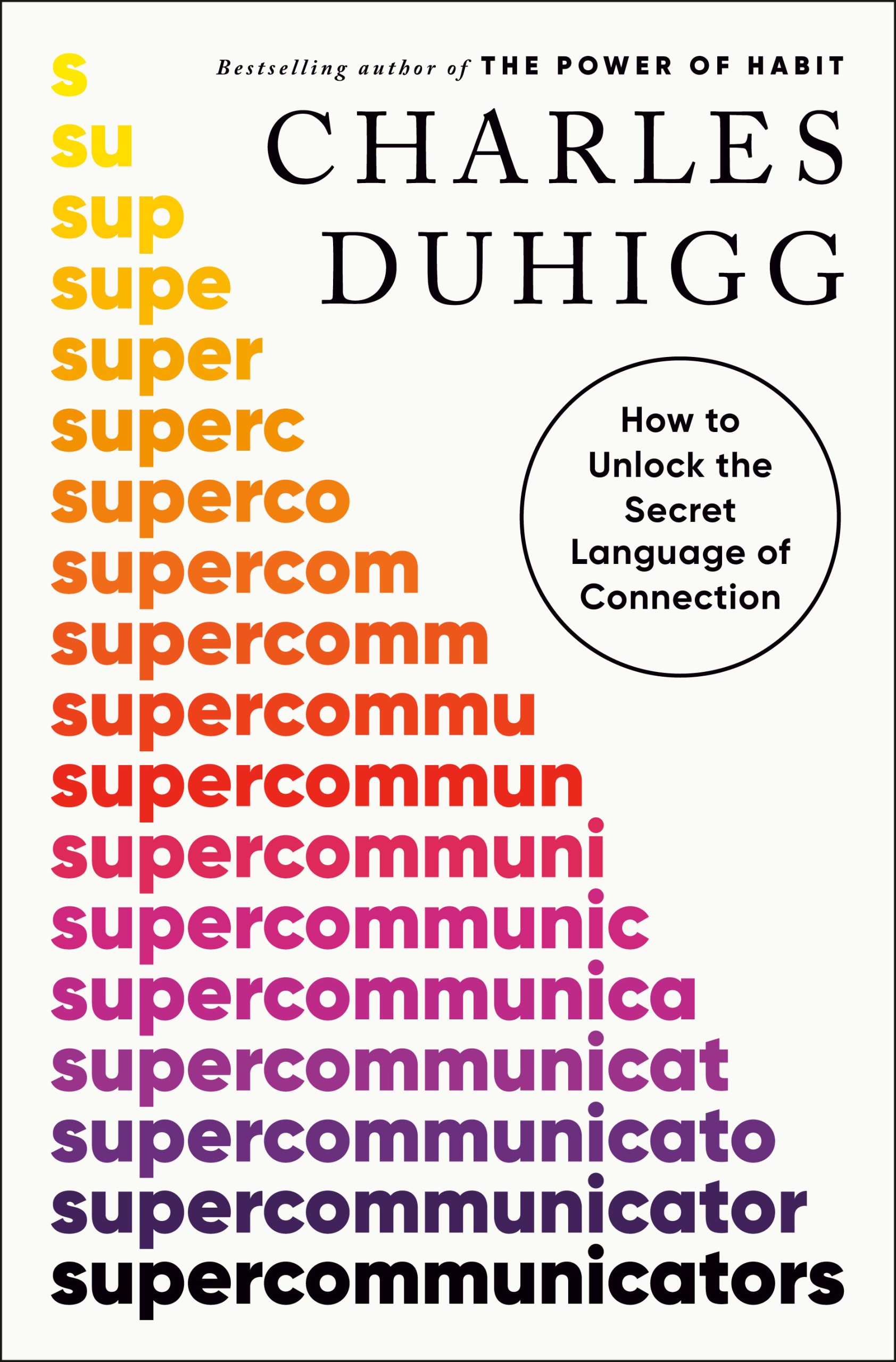
This episode shows you how. Our guest is Charles Duhigg, a Pulitzer Prize-winning investigative reporter for The New York Times and the best-selling author of The Power of Habit and his book, Supercommunicators.
In this conversation, you’ll learn:
- The “Matching Principle” that determines if a conversation succeeds or fails
- 3 distinct types of conversations and how to identify which one you’re actually in
- The “Heard, Hugged, or Helped” framework for navigating emotional conflict with ease
- A secret CIA recruitment strategy for building instant trust with complete strangers
- The power of “deep questions” to bypass small talk and reach the heart of any matter
If you’ve ever walked away from a conversation feeling disconnected, it’s time to learn the rules of the game. Listen to this episode to transform your relationships and become a supercommunicator today.
You can find Charles at: Website | Instagram | Episode Transcript
Next week, we’re sharing a conversation with Krista and Will Vanderveer. We’ll be talking about how to make the ‘invisible’ rules in your relationship visible so you can stop walking on eggshells and start leading together.
Check out our offerings & partners:
- Join My New Writing Project: Awake at the Wheel
- Visit Our Sponsor Page For Great Resources & Discount Codes
photo credit: Ilulia Matei
_____________________________________________________________________________________________________
Episode Transcript:
Jonathan Fields: [00:00:00] So you know that feeling when you’re just trying to tell someone maybe you like or love or work with about a hard day, and they immediately jump in with a, a list of ways to fix it. It’s frustrating, right? It feels like you’re just speaking two different languages and instead of feeling supported, you just feel.
Kind of alone and frustrated. I have definitely been there and I have also been the one causing that conversational friction and pushing people away. As it turns out, there’s a scientific reason for that disconnect, and it doesn’t have to be that way. Today, we are deconstructing the mythology of quote natural communicators to show that connection is actually a skill that anyone can learn.
Joining me is an old friend, Charles Duhigg. Charles is a Pulitzer Prize winning journalist, and the author of the massive hit, The Power of Habit, and his latest book, Super Communicators is a masterclass in how we connect with other people. We talk about this thing called the matching principle that can save a marriage or a business partner or close a big deal.
The three specific types of conversations that we all have that we don’t actually know we’re having. And a wild story about how the CIA uses vulnerability to recruit assets. You learn how to ask these deep questions that can turn strangers into friends and why the fact to get to the feeling is a total game changer.
So excited to share this best of conversation with you. I’m Jonathan Fields and this is Good Life Project.
So really excited to dive into this, this, this topic because you know, it touches on so many different domains of life right now. You can look at communication and how, you know, there seem to be people who move through life and really struggle to just connect with anyone else. And then there these other people who seem to move through life and somehow be anointed.
Charles Duhigg: Yeah.
Jonathan Fields: Like they can just walk into any room. They can sit down across the table from any person and this magical thing unfolds. [00:02:00] And I feel like there’s so much mythology around this and also misinformation and assumptions that aren’t true. So I love that you sort of like took on this topic and said, let’s actually deconstruct this a bit and look into it.
You know, like these, these people that we hold up and say like, these people just have something about them. They’re able to connect with others in a way that is, you know, almost godlike. Um. It’s not necessarily something that you’re just born with or not?
Charles Duhigg: No, not at all. And, and that’s a really good way of putting it, right, is that we, we all know those people who are on both sides of the spectrum and we’ve been ourselves on both sides of the spectrum, right?
There’s times when you like walk into a meeting and you just know exactly what to say or what to say to a friend to make them feel better. And other times that you’re hanging out with someone and you really want to connect with them and it’s, you just can’t, right? It’s, it’s like there’s, and what’s interesting is there is this myth that this is an inborn characteristic, that good communicators are born knowing how to [00:03:00] communicate and that bad communicators are socially awkward.
There’s, and, and that’s not right at all. Like what we’ve learned particularly in the last decade. ’cause we’re kind of living through this golden age of understanding communication because of all these advances in science is the people who are good at communication. It is a skill that anyone can learn.
And the reason they’re good at communication is because they’ve simply learned how communication works. Like they’ve sat down and either through intuition or through coaching or through experimentation, they’ve figured out that there are these rules, right? That, that help us connect with other people.
And that if you, if you observe the rules, your conversations go really well. And if you don’t know the rules, you get fouled up even though you don’t intend to.
Jonathan Fields: Yeah. I mean, that lands so strongly with me. And, and, and this is also, you know, speaking as somebody who has made a living, creating or co-creating conversations with people for over a decade now.
Um, but when I look at [00:04:00] my younger life, I was not somebody who ever would sit down and, and feel comfortable with a complete stranger.
Charles Duhigg: Yeah.
Jonathan Fields: Um. And, and then just like, you know, in minutes going deep and having like these incredible conversations about topics that, you know, really care about. Um, I was the, the opposite end of the spectrum.
Um, and in, and in different situations and circumstances, I still am. So what’s interesting to me is I think it’s also, it’s context sensitive.
Charles Duhigg: Yeah, no, it absolutely is. And my guess is if you look at people who are great communicators, oftentimes there was something in their childhood or their youth that made it hard for them to connect to other people.
And so they, they basically had to learn how to do it. They had to, to work on recognizing skills. And for me, this, this project kinda started with a situation that I think I, I’m assuming is probably familiar to you and everyone who’s listening, which is. There would be these times that I would come home from work and I would be in a bad mood and I would like start [00:05:00] complaining to my wife, like, oh, like, you know, my boss is a jerk and my coworkers don’t understand me, and nobody’s like giving me enough credit and yada, yada, yada.
And, and my wife would say something very, very rational and reasonable and practical. She would say like, look, why don’t you take your boss out to lunch and you guys can like get to know each other a little bit better then, and in, and she was very well intentioned in doing so. Right. But, but instead of hearing what she was saying, my reaction was to like, get even angrier and to be like, why aren’t you supporting me?
Like, I just, I just, you know, why are you taking their side? And, and we’re married and we love each other and we’re usually pretty good communicators. And I couldn’t figure out why, why this would happen again and again. And it wasn’t just with her, obviously this happens all the time, right? And so I started.
Calling up neurologists and others and saying like, you know, what do we know about communication? And what they said made a lot of sense. As soon as I heard it. What they said is like, look, most of us, when we think about a discussion, we think it’s like one thing, right? It’s about one topic. [00:06:00] And that’s not right at all.
Actually, every conversation is usually three different kinds of conversations, and they’re happening in sequence and they’re mixed together. And so there’s usually like a practical conversation, right? A conversation about like, how do we solve this problem? Which is what my wife was saying. And then there’s an emotional conversation, a conversation where the goal is not to solve a problem, it’s just to learn how each other feels to express our emotions.
So that’s, that’s the conversation I was having. I was upset. And then there’s also a social conversation, which is a conversation about, you know, how we relate to other people and how other people see us. And, and all three of these conversations are equally legitimate conversations. But the, the thing that happens, what’s known in psychology as the matching principle is that.
If two people are having different kinds of conversations at the same time, then they miscommunicate, they fail to hear each other. It’s like two ships passing in the night. So when I would come in and I was having an emotional conversation and my wife [00:07:00] would respond with a practical conversation, and all these, this good advice, the reason why I couldn’t hear what she was saying was because we were literally speaking different kinds of languages.
We were using different parts of our brains. And so one of the things that we know is that in order to really connect with each other, we have to be able to recognize, A, what kind of conversation is happening right now. And B, we have to learn how to invite each other to have the same kind of conversation at the same time.
Because if I say something emotional and my wife responds with an emotional conversation. And then she says something practical, then I’m ready to come back and get into a practical mindset. But if we’re having these two different conversations at the same time, that’s when everyone walks away frustrated.
Jonathan Fields: Yeah. That makes so much sense. And yet it’s one of those things I think nobody pays attention to, let alone realizes, oh, there are three different contexts we could be having here. Um, totally. And, and if we don’t meet, there’s just nothing good is, is gonna come out of this. You, you tee up [00:08:00] a really interesting.
Um, story about, uh, CA guy in the ccia, a Jim Lawler. Yeah. Um, and how this, this, this notion came in when recruiting, um, intelligence ops.
Charles Duhigg: Yes, absolutely. Absolutely. And, and Jim Lawler is like, so Jim Lawler ended up being one of the most successful CIA recruiters in history, right? Like he turned, you got thousand, or not thousands.
You got dozens and dozens of people to basically become CAE assets overseas. And he was terrible at it when he started, like he was in his thirties, he’s sent to Europe and he’s just, he literally like is incompetent at trying to have conversations with people. And what he discovered was that like. Well, he actually told me this story that’s kind of a great story, which is that before he had joined the CIA, he had been working for his dad in sales and he was like a terrible salesman.
His dad had this, um, me, they sold metal joists and stuff in west Texas. He was just a terrible salesman. And so he would, he would go to places and then try and make his pitch and they’d, you know, [00:09:00] businesses would just brush ’em off. And then he went to this, see, this one woman who’s a her, her son was in the office with her, and she was on the phone when Lawler got there and he was waiting for her to finish.
And then, you know, she finishes her phone call and he kind of makes this pitch and she’s like, look, I’m not interested in buying any of your joists. But then she just starts talking about her life and she starts talking about like, how hard it is to be a mom and a business woman. And she always feels like she’s like, you know, letting someone down.
And Lawler, who’s like, you know, at this point, like 26, he has no idea what to say, right? He’s like the deer with like, like deer in the headlights. And he is like, uh, okay. ’cause he doesn’t have kids, he doesn’t know what to do with some, some, you know, adult suddenly unloading about like their life. So he just does the same thing.
He like starts talking about how like he’s not getting along with his brother. ’cause his brother’s a better salesman than he is and it’s caused all this tension. And Lawler feels really bad about himself. And, and they just connect ’cause they’re having the same kind of conversation, right? Inadvertently he had matched the kind of conversation that she’s having.
He had matched her emotionally. She had [00:10:00] shown vulnerability and he had reciprocated that vulnerability, which is an important, an important part of how conversation works. And, and then he like says like, do you want, do you wanna buy any steel? And she’s like, no, I still don’t want any steel. But two weeks later she calls and she places one of the biggest orders in the company’s history.
And lawler’s like I. Why you like, I don’t think we can give you the pricing that you’re looking for. And she was like, that’s okay. I feel like we have a connection. Like I feel like you and me were gonna work together for a long time and this is what we know. And, and that’s how exactly the strategy he used with overseas assets is that he learned that if he speaks the language they are using, if they’re talking about how they’re concerned and they feel uncertain of themselves and they feel worried that rather than being saying like, it’s all gonna be okay, I promise I can take care of this.
I’m gonna keep you safe. If e turn to them and say, look, I know I feel the same way this all the time. Like I’m worried I’m gonna get deported from this country. I’m worried someone’s gonna, I’m worried I’m gonna get fired. I’m worried that my wife is gonna leave me. [00:11:00] If he’s as vulnerable with them as they are with him, then they feel like they have a connection.
They feel like they can trust each other. Or if they come in practical and they say, look. Uh, the reason I don’t wanna give you secrets is because you know, you’re not paying me enough and I’m worried I’m gonna get caught. And he gets practical and he says, look, let me take you through all the steps we’re gonna take to make sure that you don’t get caught.
If he matches them and invites them to match him, that’s when we connect.
Jonathan Fields: Let’s say somebody wants to really better understand how to identify which of the three types of conversations are happening at any given moment. Um, what would be tells for somebody to basically be able to pick up fairly quickly, oh, this is actually what the person is, this is, this is what’s happening here, and let me step into that same mode and meet them there.
Charles Duhigg: So it’s, it’s actually pretty easy once you start looking for it, right? So if you’re, if you just listen to what someone’s saying and ask yourself, are they talking to me about emotional things? Are they talking to me about how they feel? Or are they talking to me about practical problems? [00:12:00] Or are they talking to me about a social issue?
Like how other people see them or how they see themselves because of their background and their identity? You. All we really have to do is draw our attention to it, and we tend to notice pretty quickly. And I’ll g and and I’ll give you an example in, in our conversation. The other thing I’ll mention though is that oftentimes you can just ask.
Mm-hmm. Right? Like, like if I come home and I, so you
Jonathan Fields: don’t have to hide it.
Charles Duhigg: You don’t have to, you don’t have See what’s going on here. Yeah. It’s, you don’t have to look for a tell. You can say like, if, when I come home and I’m upset, my wife now says like. Do you want me, like, do you want me just to listen to you and understand how you’re feeling?
Or do you wanna try and solve this? And sometimes, sometimes that’s enough for me to be like, actually, I need you to listen until now. And now that you’ve asked that question, I’m ready to start solving it. One way that I’m, another thing that people use sometimes is, do you wanna be heard, hugged, or helped?
They actually use this a lot in schools. Like when a kid is upset, the teacher says to them, do you want to be [00:13:00] heard, hugged, or helped? Right? And heard means you’re having an emotional conversation. Like, you just need me to hear what you’re saying. Hugged is kind of a social thing, right? Like, you need to know that I another person care about you and that I’m comforting you and helped is a practical conversation like, you’re asking me to help you solve this problem.
And, and so, so a good example is like, I think in our conversation, um, or let me, let me ask you this. Like you do a ton of conversations like this. When you, when you want to help nudge a conversation into an emotional place, what do you do in order to signal that to the other person? To invite them to join you in an emotional conversation?
Jonathan Fields: Yeah, I mean, it’s such an interesting question. Um, and to me, there’s something that happens before I would do anything to invite someone into it, which is creating safety.
Charles Duhigg: Mm-hmm.
Jonathan Fields: Um, you know, to me, one of the things that I [00:14:00] always try and do is create a container of psychological safety. Um, and in, in any number of different ways, it’s gonna be different for different people.
Um, but, you know, then if I wanna invite them into something which is deeper and more emotional, um, I might share something that’s emotional myself Exactly. To telegraph that this is a safe space to share on this level, in this context. Um, I might also just, you know, um, so there’s a, there’s a, one of the mottos that I live by when, when sort of like deepening into conversations is often, um, shorthand the fact to get to the feeling.
Charles Duhigg: Mm-hmm.
Jonathan Fields: So, so it’s not unusual for folks to kind of wanna tell their story in a very factual way. Like, this happened and this happened and this happened, then this happened. Which, which is like, there’s value in that. Right. But what I’m always more interested in, I think a lot of what you are often interested in is like, but what’s underneath that?
Charles Duhigg: Yeah.
Jonathan Fields: So oftentimes the simple question, tell me more Bridges the gap. It, it, it, [00:15:00] it’s, it gives somebody the opportunity to move beyond the fact and, and opens the door to feeling.
Charles Duhigg: What I hear you saying, and I think this is, this is what the literature says, and I think it’s really, really wise, is that there’s something important about vulnerability, right?
If you say something emotional, you’re exposing a little bit of vulnerability. It invites the other person to reciprocate that vulnerability, and in doing so, you create this trust, this psychological safety, or simply saying to someone like, tell me more about that. Is showing them I’m interested in what’s going on.
And in the literature there’s this thing called known as deep questions. Um, and, and deep questions are actually really, really interesting. There’s a guy named Nick Eley who’s a psychologist. And one of the things I love about Nick is he has studied, um, conversation and questions most of his career. And he comes to it pretty honestly.
When he was in high school, he, um, he was pulled over twice for, for driving while intoxicated. And he was like the, you know, the quarterback of the football [00:16:00] team and Mr. Popular on campus. And the second time he’s pulled over, his parents are super freaked out and they’re like, look man, there’s a problem here.
And he didn’t hear them at all. They were like, tell us what’s going on. Like, why are you feeling this way? Like, why do you feel like you need to drink and drive? Why are you being, why are you being a jackass? And he’s like, you guys don’t understand me. I hate you, et cetera. And so they’re like, look, you gotta go talk to a therapist.
So they sent him to this therapist, and the therapist, instead of lecturing him or interrogating him or anything like that, just says, look, I just want you to tell me why do you think this happened? Like, what were you feeling right before you had that drink And got into that car, not like, I’m gonna judge you for it.
Just literally like, I’m just curious what you were feeling. And then Nick would answer that question and she would ask another question, a follow up and again and again. And eventually Nick started listening to himself and he realized what he was saying was, I drink because I feel uncomfortable. And then once [00:17:00] I, then I have to get home and I don’t have another option.
And at that point, Nick says like, actually, like now I understand why I am doing this thing. Not because the therapist told him what he was doing. Not even because she led him down like a garden path towards it. She just asked questions that asked him how he felt. And this is what we know about deep questions, is that deep questions invite us to expose vulnerability because they ask about something about our beliefs or values or experiences.
And what’s crazy is they don’t have to seem that deep, right? Like if you meet someone and you ask them instead of what do you do for a living? You say to them, what do you love about your job? That’s a deep question. You’re inviting them to tell you something about how they see the world and what they enjoy about life and how they see meaning in their own work.
And then when they answer that with a little bit of vulnerability, when they say, like, what I love about it is it lets me help people’s lives. And you know, not all my coworkers are the best. If you reciprocate that [00:18:00] vulnerability and you say, what I, I like, I totally understand what you’re saying, and I feel the same way because here’s what I love about my work.
You can’t help but trust each other. Right? It’s almost impossible not to build that psychological safety because we’ve both, both exposed a little bit of who we are to the other person,
Jonathan Fields: and we’ll be right back after a word from our sponsors. As you’re sharing that, I’m realizing that that oftentimes I’ll also just ask people, you know, like a simple question, like, well, how did that make you feel?
Charles Duhigg: Yeah, it’s a great
Jonathan Fields: question. You know, and nobody asks questions in conversation every day. People are like, somebody just shares this thing, and they, and, and we rarely ask that question, and I wonder sometimes if we don’t ask questions like that of friends, of family members or coworkers because we are afraid of what the answer’s gonna be.
Because if it’s not awesome or great, or, but actually like I’m really struggling. It places A, we feel like that would then place a re a [00:19:00] burden upon us.
Charles Duhigg: Yeah.
Jonathan Fields: To then respond to it in a way that was meaningful and thoughtful. And we don’t know how to do that, so we just decide not to go there entirely, which keeps a level of separation between
Charles Duhigg: us.
I think that’s really smart. I think it’s a really, really smart insight. And of course that sense of obligation that we feel that that worry that something will be, that we won’t perform live up to it. That’s actually totally incorrect, right? Because if so, if we ask someone how, how do you feel? And they say, I’m actually feeling kind of down.
All we have to do is say, tell me more about why you’re feeling down. And we have fulfilled their need. They’re signaling to us, like they actually want to talk about what’s on their mind. And that doesn’t mean we have to solve the problem for them. In fact, we shouldn’t solve the problem for them.
Jonathan Fields: Right.
That’s that’s a different
Charles Duhigg: conversation. That’s a different conversation. Right, right. And, and sometimes our instinct when somebody says, I’m feeling really down, is to try and pick ’em up. Right. To try and give ’em all these reasons why they shouldn’t feel down. You’re so great and, but that’s not what they’re asking [00:20:00] for.
That’s a practical conversation. That’s us trying to like solve the situation. What they’re saying to us is, I feel down and I want someone to hear why. And sometimes just by explaining it to you, I’ll figure out more about myself in doing so. And the more that we seek to match them where they are and then invite them to match us.
Like sometimes, like one of the best things that I think you can say to someone after you’ve asked them, like, why do you feel that way? Tell me more about it, is if you say to them, like, can I tell you? Can I tell you like how I’ve handled this situation in the past? Ask for permission to change the conversation to a practical conversation.
Oftentimes people are like, hell yeah. Like, like, like, thank you, thank you for inviting me to change the conversation from this, you know, pity party for myself into something else. But the point is that we have to invite them. We have to open up the door to that and not force it on them.
Jonathan Fields: Yeah. I mean, in this same vein though, you make a really [00:21:00] interesting, um, point in, in, um, in the book, which is that we’re often taught that perspective taking is the most effective way to actually build this bridge.
Charles Duhigg: Yeah.
Jonathan Fields: Um, and it can be, but it’s not always the best way. And sometimes there are different ways in. I mean, I remember talking to somebody recently, um, about empathy and conversations and. Who was sharing, you know, like we, we feel this human compulsion to say when somebody shares something, we wanna then reciprocate on this on a similar level.
And that can be a mechanism to build this mutual progressive vulnerability. But sometimes it turns into something different, which is a little bit of like a competitive, um, totally, you know, like sharing type of thing. And that they’re simply, you know, being able to respond differently that like, that’s not the only path.
Charles Duhigg: That’s
Jonathan Fields: exactly right too, too deep in the connection and let somebody feel, [00:22:00] seen, heard, and held.
Charles Duhigg: That’s exactly so, and I think this is a really good point. So, so reciprocity is an really important part of conversations, right? Like giving back and forth, but there’s a difference between reciprocity and stealing the spotlight for yourself.
So we’ve all been in this situation, right? Somebody who, you know, we come to someone and we say like, you know, I’m kind of bummed. I’m feeling down because my, my aunt is sick. And they say, oh man, yeah, my dad was sick last year and this is how I felt about it. And it’s kind of like, okay, like I, I mean, we have this con, this experience in common, but I, I’m not, I’m talking about myself here.
Or even worse, they’re like, oh man, my dog was sick last week. And you’re like, you’re like my aunt being sick and your dog being sick. It doesn’t seem like the same to me. So the question is how do we, how do we show what’s known as conversational receptiveness? This, this reciprocity. In a situation like that, what reciprocity means is not matching.
You know, woe to woe. What it means is showing the other person that you have heard them. [00:23:00] So sometimes if someone says, I’m feeling really down because my aunt is sick, all that they really need to hear is us saying, it seems like this is really bothering you, and I’m sorry that it’s bothering you. Tell me more about it.
Right. We’ve reciprocated, they’ve showed us that they’re upset, and we’ve reciprocated that by saying, I recognize that you’re upset. I, and it’s valid that you’re upset. It’s totally valid that you’re upset, not because I have an aunt that got sick myself, but because I hear you in pain. And I just want you to know that I see that and tell me more about it.
That is reciprocity and it’s a form of reciprocity that doesn’t steal the spotlight. And as that conversation gets deeper, you might very well say like, you know, I, what I hear you saying is that you’re feeling really down about this. And I understand that. ’cause you know, I had a parent who, or I had a family member who got sick a year ago.
But instead of trying to force my story on them simply by showing them that I hear what they’re [00:24:00] saying, that’s what reciprocity is.
Jonathan Fields: Which can be so powerful. I mean, and, and I know, you know, I’ve had friends who, who have, have been in deep grief or friends who are dealing with, who have cancer, um, and they’re not looking for reciprocity and they’re not looking for the practical conversation either.
Like all they wanna do is not be ignored.
Charles Duhigg: Yes.
Jonathan Fields: Because so many people don’t know how to respond in those situations, so they just back away.
Charles Duhigg: That’s exactly.
Jonathan Fields: Um, and like the simple, I mean, I literally asked a friend of mine once, I was like, what should I say to you or, or to anyone else who’s like in this ity?
And she’s like, honestly, just anything like. That must be so hard.
Charles Duhigg: Yeah,
Jonathan Fields: that’s it.
Charles Duhigg: You know, my, my dad died about five years ago, and, and the, the interesting thing for anyone who’s had a parent pass away is it’s obviously sad and it’s hard and it brings up all these, all these emotions. It’s also really interesting, right?
It’s, it’s oftentimes like the most interesting thing that has happened that [00:25:00] month because, because it does bring up all these new emotions and these new experiences and, and I would come back and people would ask me, you know, Hey, where were you last week? And I’d say, you know, my father passed away and I was at the funeral and nobody ever asked me anything about the funeral.
They never asked me anything about my dad. And I was like, if somebody had said, you know, what was your dad like? I would’ve loved to have told them about that, right? Like, I would’ve loved to have told ’em about this thing I just experienced that was so like meaningful and profound. And that doesn’t mean that they have to say, you know, my dad died too, so I understand what that’s like.
But simply showing curiosity in someone else’s experiences. That’s, that’s the thing that helps us connect. Um, and, and it’s interesting. I, I’ll mention, and this is like on a completely different tone in the book, there’s this, this story about, um, the Big Bang theory that this TV show that like a biggest sitcom.
One of the things that the writers of that show found, which is why it succeeded so [00:26:00] well, is they found that when they have characters obviously try to connect with each other, then it almost doesn’t matter what the character is saying, the audience likes them. So there’s something about our psychology, and this is a product of evolution, that when someone shows that they want to connect with us, we tend to to see that as a very trusting.
Trusting gesture and laughter’s a great example of this. Um, if there was, there’s been all these studies that have looked at, um, when people laugh and you would think that people laugh in response to something that’s funny and that’s not true. That’s only true for like 20% of the time. Like just like I laughed, when people laugh, it’s usually because they’re showing someone that they want to connect with them and then the other person will laugh back to show that that desire for connection has been acknowledged.
It’s like an evolutionary trait that’s developed within [00:27:00] our brains. And in fact, NASA uses this to try and figure out who will be good astronauts. They pay attention to how astronaut applicants laugh when they’re in interviews because they found that the people who laugh genuinely who match each oth match the laughter of the interviewer.
Those people are signaling that they want to connect and it’s the signaling that we want to connect that matters as much. As the connection itself, we tend to think that the other person is trustworthy because they’re showing us they want to connect with us.
Jonathan Fields: That research around laughter are so fascinating.
I remember years ago reading research that said, um, we rarely laugh in solitude.
Charles Duhigg: Totally.
Jonathan Fields: And, and so this sinks completely with that because it’s not just like, you know, we can think something’s really funny and maybe a little chuckle, but like, it, it, it is, it’s a social signal.
Charles Duhigg: It’s an
Jonathan Fields: absolutely social signal.
And that’s a huge part of laughter, which we don’t really think about. We’re just like, if something’s funny, we laugh. Like that’s just the way it is. But no, actually you’re sitting [00:28:00] on a couch alone and watching like something, you’re probably not gonna laugh even if you think it’s funny. But if somebody like your bestie is next to you, you guys may be cracking up next to each other.
Charles Duhigg: Totally. Or, or just notice like what next time you’re talking to a friend. And they laugh. Ask yourself, did you just say something funny? Probably the answer is no. Right? You didn’t say anything that funny. They’re just trying to, and, and so one of the interesting questions is, how do we operationalize this?
Like how do we make this something that, like that? And, and one of my favorite examples about, about how to do this, um, is around listening and particularly this, this concept known as, um, looping for understanding. So, so most, most of the time when people are listening, the way that they try and show that they’re listening is that they do things like they nod while someone is speaking or they like make eye contact.
The problem is when we’re talking, we’re so focused on our own words that we tend not to notice what other people are doing. So when we talk about active listening, about proving that we’re listening to someone, [00:29:00] very often what matters is not what is what we do after they stop speaking. And in particular, there’s this technique known as as looping for understanding, which is.
It just has three steps. It’s like the simplest thing on earth. Ask someone a question, tell them what you just heard them say, and then ask them if you got it right. Right. So like somebody says like, you know, I, I think that none of us should vote in the presidential election. Say like, you know, why do you think that way?
And then repeat back to them in your own words, what they just said, and then say like, am I understanding you correctly? Did I get that right? That’s how we operationalize this reciprocity, this, this rece listening receptiveness. And it’s very, very simple, right? It’s stuff that we learned to do, like when Yeah, our parents told us to do when we were like five years old.
And it turns out if you do this in a conversation, it transforms hard conversations. It’s basically [00:30:00] impossible to have conflict when people are looping for understanding. Because what we’re doing is we’re proving to the other person, we want to hear them.
Jonathan Fields: And we’ll be right back after a word from our sponsors.
I have been in some way, trained in that methodology in different contexts. Years ago when I was a kid, I, I’d spent a, a, a hot minute as an outside salesperson.
Charles Duhigg: Huh.
Jonathan Fields: And that was, you know, they, they, they sent all the new like people to this place and, you know, outside of DC And for a week I had sales training and they were teaching you all these quote techniques.
Um, and we were like cold sales. We’d literally knock on doors of offices, walk in and say like, I’m here to talk to the CEO. Um. It terrifying. And I was horrible at it. But I remember one of the things they said to do was exactly this. They’re like, basically ask a question and then reflect back, you know, like what I hear you say is this, did I get it right and keep going, because the person’s probably gonna say, look, well, kind of mostly, but there’s this one other [00:31:00] thing.
Exactly. Like, actually it’s not quite right. And then they’re gonna share it. And then you say, oh, oh, okay. So then what I’m hearing you say, so like you, you keep it going around until that person is nodding like, yes. And I, and, and, and I’ve also heard a variation of this offered in, um, by therapists. Mm-hmm.
Especially dealing with family and relationships, um, where people are just really talking through each other and this is like this, like this really core therapeutic modality to get people to start to. Legit, especially when there’s some sort of resentment or anger built up
Absolutely.
Jonathan Fields: In the relationship to break through it.
Because once the resentment, the anger is there, you really no longer here or see each other.
Charles Duhigg: No.
Jonathan Fields: You, you hear or see the representation of what you feel has been built over sometimes years or decades. That’s
Charles Duhigg: exactly
Jonathan Fields: right. And it breaks through the fiction of what you think is going on to get to the truth of what’s going on.
Charles Duhigg: That’s totally, and and, and this is a, this brings up a really interesting thing, which is like, how does co [00:32:00] communication work within our brains? So there’s been these experiments again in the last decade that have shown that when you and I connect in a conversation as we are now, if we had the ability to measure all these things, what we would see.
Is that our eyes are starting to dilate at the same rate. Our breath is starting to match each other, even though we’re not aware of it, even though we’re not in the same room, our heart rates are starting to match. If we could measure it, the electrical impulses on our skin are similar. And most importantly, and the reason why this is happening is because if we could get, see inside both of our brains, what we would say is our brains beginning to synchronize.
Right? That’s what communication is. Communication is me having a thought saying it, and you basically experiencing the same thought, understanding it. And this is known as neural entrainment in the, in the psychological and neurological literature. And so the point that you just made, what, when we’re having a conflict, when we’re having a conversation in conflict, [00:33:00] we’re not entrained, right?
Because instead of hearing what you’re saying, what I’m doing is I’m, I have a story inside my head. I have the, I have a series of thoughts or brainwaves within my head, and I’m investing in those ones instead of listening to what you’re trying to tell me, and you’re doing the same thing. And so the question is, how do we break through if communication is about us becoming untrained, about having the same thought at the same time, really clicking, right?
That’s why we call it clicking. How do we do that? The number one step is to disrupt that story that’s inside our head, like to put us in a place where I can actually listen to you. And if I say to myself instead of like, my job being to respond to the attacks you’re making, or my job being to defend myself.
If my job is to just listen as closely as I can and try and repeat back in my own words what you just said, I’m gonna entrain with you, and more importantly, I’m going to invite you to entrain with me because if you feel like you’re being [00:34:00] listened to. Almost automatically, we start listening more closely back again.
This is reciprocity. When someone listens closely to us, when they make, when it’s clear they’re making an effort, we feel an obligation to listen closely to them. And then we become entrained. And even if we don’t agree with each other, at least we understand what the other person is trying to say.
Jonathan Fields: Yeah. I, I, and I just think that’s so important.
It’s funny, like this is elements, I, I’ve used this phrase exquisite attention for years now, talking about the, it’s a great phrase. The, almost like the spell that can be cast between two people when they are in sync on a level where it feels like the world outside of that interaction falls away. Um, and so you’re describing sort of like this is the physiology of some of what’s actually happening inside of that state, like inside the spell, um, and why it’s so powerful.
Yeah. Um, you know, because I, I would imagine. Yeah. Even if we, you know, like we’re not sitting across from somebody and like [00:35:00] measuring, you know, like their brainwaves and their all these, but there’s gotta be something about our sensory system beyond the words that are being said that picks it up.
Charles Duhigg: Absolutely.
Jonathan Fields: And that knows that this is unusual in, in a really powerful and beautiful way.
Charles Duhigg: Absolutely. And, and, and if you think about it, like that’s evolved within our brains, right? We basically have this ability to pick up on that stuff that I just mentioned without even realizing it, because that is the thing that makes a species survive.
Like the ability to, to communicate with each other, the ability to trust each other and build trust. Without that, you can’t build families and societies and families and societies and cultures. They, they help people do better. And so the people who are good at this stuff, they end up surviving and others don’t.
And it evolves, but here’s the important part of it. Is that all of us have this capacity, right? It can feel very overwhelming for us to tell you like, you know, there’s three kinds of conversations and you should match each other and you should ask deep questions. All of [00:36:00] us, it almost seems like too many, too many instructions, right?
It’s too much to remember. But the, the important thing to, to know about this is all of us know how to do this. It’s literally an instinct that we’re born with because of evolution. And so the goal of, of this book, super Communicators and this science in many ways is just to remind people of what they can do.
Because sometimes we can get so deep inside our own heads that we stop paying attention. We stop paying attention to other people. We stop, we stop remembering to listen and to show that we’re listening. And part of the goal of, of super communicators is just to say, look, let me just remind you of how communication works, because you know this, you know this on an intuitive level.
And the more you listen to your intuition, the more you let go and trust yourself in a conversation, the more that conversation is gonna, the better that conversation is gonna go. And the more you’re gonna connect.
Jonathan Fields: [00:37:00] What’s your take on how technology plays into this? Because on the one hand, we’re having this conversation, you know, we’re like, we are not in the same place.
Right. Um, we can see each other, we can like see our body. We, I can hear your breathing. I can see your facial expressions, but we’re not physically present in the same room, which we used to do for six years. Yeah. And like the earlier part of the podcast. And that all got blown up. Um, and overnight we had to say, and, and, and part of our ethos was we, we only recorded in person in our own studio in New York City.
Um, because I didn’t feel like I could get the, the depth and level of connection, um, in a virtual or a remote environment. 2020 hits, you know. We basically have to make a decision. We’re either shutting down or we’re tap dancing and saying, let’s try this whole new world and see if we can recreate that same sense of safety and intimacy and nuance that would like conversations be real and deep and rich.
I and I realized I was [00:38:00] wrong.
Charles Duhigg: Yeah.
Jonathan Fields: I realized that we can, and that on the one hand, like, and that the technology, um, allowed me to do something that I never thought was possible. So that’s on the, on the give side. Yay. But on the take side, so much of a technology now, um, makes us no longer present in interactions that we’re having.
Charles Duhigg: Absolutely.
Jonathan Fields: And like, no matter how much you know, oh, I wanna do these things and engagement when we’ve got something that is, you know, every nine seconds, there’s a vibration going off in our front right pocket. It’s gotta be brutalizing. Even if you really wanna connect with other people in some way.
Charles Duhigg: Yeah. No, it’s a really great point and it’s, it’s really interesting, Jimmy, to hear that you guys had this look. Can I ask you one thing? That realization that you can get as deep and as meaningful virtually as you could in person, was that right away or was that something that kind of, it kinda gradually, yeah, you learned
Jonathan Fields: it, it we learned gradually, but also I think there was something that happened that, [00:39:00] um, but for the pandemic, um, would’ve, I think we still would’ve gotten there, but maybe it would’ve taken another five, 10 years, which is that everybody, the entire world was forced.
To get comfortable in the virtual space, you know, in a matter of weeks rather than in a matter of years, because you’re existence often your livelihood like depended on it. So everyone was weird and fumbling and awkward in the beginning and the platforms actually got a lot better really fast. Um, so it was all of a sudden people were like, oh, like I actually, I, I can do this.
Like, the technology isn’t a barrier. Everybody knows how to use this. And like, I kind of know I, the sound has to be okay and like I have to be in a well-lit room. And what I didn’t see coming was the potential for, um, the intimacy and safety of a person’s personal space. Their home often would transfer into the virtual space and lend that sense of safety.
Charles Duhigg: Yeah.
Jonathan Fields: And intimacy to, to create [00:40:00] a tether that often crossed continents. That’s really,
Charles Duhigg: really interesting.
Jonathan Fields: That blew me away. ’cause I never saw that coming.
Charles Duhigg: So, so there’s a story in the book about, um. These two conversations, there’s this group that wanted to try and figure out how to help people have conversations around conflict.
And for the con, the conflict that they chose, just kind of by chance was the guns debate. So they invited all these people who were. Pro gun and all these people who were anti-gun to Washington, DC and they sort of, at the museum, they met for three days and they trained them in communication methods. And even though these people basically were like enemies when they walked in, everyone walked away saying like, this was so meaningful.
I learned so much about the other side. This was so great. And then to keep the conversation going, they move it online. They had a private Facebook page and like literally within 45 minutes while all these people who like walked away being like, you know, this is great. I love you. This is fantastic.
Within 45 minutes, once they were online, they were calling each other like jack booted Nazi [00:41:00] thugs, right? Like, and like, you know, trying to own the libs. And, and, and so there was this interesting question like, what happened? Why, why did this work so well in person? And then it fell apart once it went online.
And what the researchers felt figured out was that I. We have been talking to each other for roughly about two millennia, right? So we have worked out a whole series of cues and signals and ways of transmitting co communication that are so subtle that we can’t even notice them at this point, that have to do with verbal communication or in personal communication.
But, you know, a phone conversation is really rich, right? You can still get, you can get deep with someone on the phone. On the other hand, we have only been talking online since 1983. And so as a result, there’s a bunch of like little things that like are still getting worked out about how to do this online.
And as they’re getting worked out, the problem is it’s fine to work [00:42:00] them out, but the problem is that when we don’t say, oh look, we’re at the beginning of this. We gotta it, there’s gonna be mistakes. We, I need to overexplain to someone what I’m thinking or feeling when I’m typing, as opposed to when I’m talking.
When we don’t realize that we’re, that we need to overemphasize, that’s when something bad happens. And so one of the interesting things I heard you say is that it’s not like they flipped a switch and suddenly you went from in-person to virtual and you discovered, oh, virtual’s as good as in person. It was a process, right?
You, you learned how to communicate with people in a virtual manner. That’s a little bit different from in person and, and all of us were learning ’cause we were having these Zoom meetings and the platforms were learning how to basically, how to make this even easier for us. And as we learn that we get better and better at it.
But that doesn’t mean we are an expert on day one. And so the same way that, for [00:43:00] instance, if I’m talking to someone in a foreign language that I’m not very fluent in, I’m gonna overexplain what I’m trying to tell them because I just assume that they’re gonna misunderstand some of what I’m saying because I’m not good at speaking this language when we’re online.
We should kind of make the same assumption. That’s why for instance, you know, when you say something, um, ironic, if I was to say it, something to you, ironic right now, you would know from the tone of my voice that I’m being ironic and when I type something ironic, I hear that tone of the voice inside my own head.
But you as the reader, you don’t hear it. You think that I’m this, you think I’m just being mean, right? Or saying something weird. And so it’s just part of this is just giving us ourselves permission when we’re online to be a little bit more careful to overemphasize a little bit more what we’re actually trying to say with a full acknowledgement that like.
It’s just because we’re learning a brand new language and it takes a while to do that.
Jonathan Fields: I also wonder, you [00:44:00] know, that what you just described, that experiment, you know, the, the other element there that in my eyes would be the difference between a conversation that is private, um, and the conversation that is going to be observed.
Charles Duhigg: Absolutely.
Jonathan Fields: And when you know that the conversation is going to be observed by potentially a group of people within whom you want to have, have a sense of belonging, and sometimes it is your primary group of people and a whole bunch of things may depend on you being a member in good standing of that community, that you’re not just having that conversation with the one other person online.
Now you’re having a conversation with everybody else who you believe to be watching that conversation. So, so you’re social signaling to everyone else and that. May profoundly change what you’re gonna say. It may even make you say things that you feel really bad about saying, but the desire to not be ostracized from the [00:45:00] group absolutely overwhelms that ly.
Charles Duhigg: And this is the social conversation. And the interesting thing about the social conversation is that it can happen when people are watching us. It can also happen when it’s just one-on-one. But we’re thinking of those other people inside our head, right? Like there’s part of us that, that if I say something that I know would upset my mom or upset my grandmother, there’s something inside my head that says like, even though my mom and my grandmother never hurt, didn’t hear me say this, and they never will, I kind of feel bad about saying it because I know that it would bug them right.
This social conversation is really, really important because sometimes our instinct is just to pretend it doesn’t exist, right? If we’re talking to someone who comes from a different social background from us, a different race, a different ethnic ethnicity, a different gender, a different socioeconomic background, sometimes our instinct is to pretend that those differences don’t exist because they can feel uncomfortable.
But what we know is that when we’re in a [00:46:00] social conversation, when we’re talking to them about society, or we’re talking to ’em about other people, even if we’re just gossiping about like the office place, which is a social conversation that oftentimes by acknowledging those differences, we actually connect better.
So for instance, um, you know, I, I know that you live in, in Boulder right now, and that you have one kid who’s, who’s older. My kids are, are younger. I think that there’s a difference there that’s interesting and by acknowledging it, by saying like, you have some wisdom that comes from raising a child that I don’t have yet.
And I have some that’s, that’s highly debatable by the way. It’s highly debatable, highly debatable. And I have some instincts that come from being in, in the, in the middle of it that you maybe have forgotten. Like when we pose it that way, it’s not offensive to point out these differences. It’s actually recognizing and acknowledging that we, that we have something unique to say.
And the same thing is true when it’s a racial difference, right? When, when [00:47:00] someone who’s white and someone who’s black is talking to each other, and this is something that happened in the book and we talk about at Netflix, there was this incident inside Netflix that kind of tore the company apart and they were trying to have, figure out how to have conversations to come back from it.
And it was around race. It was a a a, a white executive used the N word. Um, and it, it just. It just became this thing that, that was eating the company up and destroying it. That the answer was to say like, you, you as a, as a, a black employee at Netflix, you have a set of experiences that are different from mine as a white employee.
And hearing those, recognizing those, validating that those experiences are real, that’s really, really important because I wanna learn from them. And similarly, as a white employee, I have a set of experiences that are different from yours. And validating and, and recognizing that those exist, that lets us understand each other [00:48:00] better.
That helps us entrain. And so ignoring those differences, which feels sometimes like the easiest thing to do, oftentimes, is not what lets us connect. Rather acknowledging the differences, validating the importance of those differences. Recognizing the virtues of those differences, how they give us perspectives that are really interesting and wonderful and worth sharing.
That’s the thing that makes us feel like we can all come to work or to home or to a conversation and be our full self.
Jonathan Fields: To not just push that aside and say like, can we actually just center this and, and have a conversation about it in with curiosity. I’m not saying what we’re gonna resolve this or show that one side is right and one side is wrong, but can we actually just get curious exactly about our differences?
Charles Duhigg: And, and the point is not to resolve it, right? Like resolving it is a practical conversation.
Jonathan Fields: Right?
Charles Duhigg: And maybe there is a time then, like if there’s something going on that we have to [00:49:00] be practical about, we can have that conversation. But rather than saying like, the goal is to resolve, this is just to say, I want to hear what your experiences are like, I wanna show you that I’m hearing what you’re telling me.
And then, and then if it’s okay, I’d like to share what my experiences are like. That’s how we, that’s how we get beyond those stories inside our heads that prevent us from hearing each other.
Jonathan Fields: One of the things I’m curious about also, um, we’ve kind of woven the notion of safety in and had this conversation today and you write about this, you know, um, how, how do we make hard conversations safer?
Um, we were just talking about that a bit also. Do you feel like, and, and we talked about the difficulty of sometimes doing that when the conversation is happening at scale or in an observable way, do you feel like there is a way to have a conversation at scale that in some way, shape, or form can bring enough safety into it so that the conversation can, can be.[00:50:00]
What everybody wants it to be.
Charles Duhigg: That’s really interesting. That’s a really good question. And when you say at scale, what do you mean? Like what, what are you
Jonathan Fields: thinking about within a company or, or even like a one to many type of scenario? Yeah. You know, like you and I are just having a conversation, two people talking to each other.
Um, you and I also both speak from stages, you know, where it, it’s one person speaking and there are sometimes thousands of people in the audience. Um, and, and sometimes you have that feeling. Where you feel like as the speaker, you’re on stage, but you feel deeply connected to everybody in that sometimes theater and then people will walk out who are in like the third balcony in the last row and feel like you were just speaking to them.
Charles Duhigg: Yeah.
Jonathan Fields: And that to me has always felt like a bit of a superpower, um, to be able to do that. And I’ve often wondered like, what lets that happen?
Charles Duhigg: So I think part of a big reason, and there’s a lot of research that look has looked at that [00:51:00] and, and that the most consistent finding is that two things are happening that that speaker is doing, that the audience is giving the speaker permission to do.
The first is that they are, the speaker is inviting the person to connect with them. Right. And the way that they do that is by exposing a vulnerability. Now when, when I say exposing a vulnerability, most people think of that as like getting up and being like, you know, my father beat me when I was a child.
That’s not, you don’t have to do that to expose a vulnerability. Sometimes exposing a vulnerability is getting up and just saying like, Hey, it is so great to be here. Thank you so much. I’ve been looking forward to this for a long time. Right? When I say that I’m, I’m signaling to the audience like, I really want to entertain you.
I really want, I really want you to enjoy this. I hope that you enjoy this. And that is a vulnerability because it puts the power in the [00:52:00] audience’s hand to decide whether they think I’m doing a good job or not. And when I do that, I’m inviting them to connect with me. I’m inviting them to, to remember those times that they have given a speech and that they really wanted it to go well, and that they’ve tried hard.
It’s also why when I think I’m giving a speech, and I assume this is true for you and for a number of people, the thing that makes it successful, like what you didn’t say is you didn’t say, I was so polished. I hit my lines so well, the timing was exactly right. That’s why people connected with me. It’s not about being polished.
Jonathan Fields: Yeah.
Charles Duhigg: It’s never had that experience, by the way. It’s Right, right. It’s about being genuine. Right? It’s about being real on that stage. It’s about exposing something about yourself, and this is the thing that we know is that when it comes to conversations, particularly the emotional conversations, but all of them, [00:53:00] vulnerability is the most powerful tool that we have.
And vulnerability does not mean that I need to tell you a sob story. Vulnerability does not mean that I need to need to ask you about all the trauma you’ve experienced. Sometimes vulnerability is just laughing. That when someone says something that isn’t that funny, laughing to show them that you want to connect with them.
’cause you’re making an invitation. Like, I want, I want to be your friend. And they get to choose whether they’re gonna laugh back and join you in that laughter or whether they’re gonna brush you off. And it’s the act of exposing yourself a little bit, talking about what you believe or what you feel, or an experience you had asking someone about their beliefs or their values or their experiences.
That’s what creates that real sense of connection and safety. And it can be one-on-one or it can be one to thousands. Does that, does that correspond to your experiences? Does that seem
Jonathan Fields: right? Yeah, [00:54:00] no, it, it definitely does because I think I spent. Probably the better part of the first part of my speaking career, for lack of a better word, um, trying to be like, literally like having every step, every word, everything, every story dialed in.
And do you feel competent doing that? Sure. Do you feel like you’re in service of an audience genuinely and connecting them and giving them what they like? They showed up for Not often. And it’s, it’s only when LLI remember being in the middle of a keynote going blank, which is like every speaker does it at some point, right?
You completely forget, I often don’t use slides or there’s nothing to prompt me what’s coming next. And I’m sitting on the stage starting to hyper not sitting. I’m standing on the stage starting to hyperventilate, you know, this, I feel like, you know, their sweat just exploding outta my body. And, and I, I literally, I, I look at somebody in the front row.
And I [00:55:00] smile and I’m just like, I just completely spaced out. Where was I? And she, she, she shouted out a word which brought me back. I giggled and kinda laughed at myself. And the audience just went along for, right. ’cause all of a sudden they’re like, wait, he’s not a robot.
Charles Duhigg: Yeah.
Jonathan Fields: You know, like he’s one of us.
And, and then, and then at that point it almost felt like they wanted to see me win and recover.
Charles Duhigg: Yeah.
Jonathan Fields: And then like, that was a moment where I was like, what just happened there? Because, and, and can I do more of that? Not blank go blank, but can I just like show up as me. And again, like, you know, there’s often this mythology that, oh, you’ve gotta tell the big horrible story and the redemption story.
It’s like, no, just, it’s the, it just sharing your humanity is
Charles Duhigg: Yeah.
Jonathan Fields: Um, is such a big part of it. Um, because that’s, like you said, vulnerability.
Charles Duhigg: I,
Jonathan Fields: that’s where it really happens.
Charles Duhigg: No, I, I love that story and I do something kind of similar, which is, you know, sometimes I, I’ll often talk about the power of habit and I’ve been talking about it for a [00:56:00] decade now, and so I kind of, you know, so what I’ll do is when I’m talking about the power of habit, I’ll always try and tell a new joke.
And the joke that I’ll choose is a joke that I am only 50% certain is gonna work. Right. And, and the reason why I choose a joke, it’s only 50% certain is ’cause when it bombs, it’s even better, right? When I tell a joke and it bombs and nobody laughs. And then I, and then I’m like, okay, I guess that joke, I’m not using that joke again.
It reminds people like, I’m trying like, like I’m not on autopilot. I’m up here trying to, trying to entertain you, trying to connect with you. And that trying is what matters. That’s where the humanity comes from and it’s really powerful and we can do it in conversations too, right? It’s as simple as just saying to someone like, you know, what do you love about your job?
That question exposes a vulnerability. Like when I ask that question, it’s, it’s a little personal and, [00:57:00] and it shows to pe the other person, like, I’m exposing something about myself. I’m the kind of person who’s willing to ask that kind of question. Will you play along and will you answer it? ’cause you could brush me off and be like, that’s a weird question.
I don’t want anything to do with you anymore.
Jonathan Fields: But if you never ask it,
Charles Duhigg: but if you never ask it,
Jonathan Fields: you never open the door.
Charles Duhigg: Exactly.
Jonathan Fields: And, and if you brush, if somebody brushes that question off, chances are the. Openness or willingness for connection in the first place was never there.
Charles Duhigg: Totally,
Jonathan Fields: totally. So at least you, it’s almost like you’ve just pre-qualified the person.
Now you can move on to someone else to maybe really have that connection.
Charles Duhigg: Exactly. Or maybe they’re signaling, like, look, I see you trying to like move this into an emotional conversation and I’m just not interested. Like I’m here for a practical conversation. Right. Like,
Jonathan Fields: yeah.
Charles Duhigg: Like
Jonathan Fields: maybe there’s just not resource for it in that moment.
Charles Duhigg: Totally. And like sometimes, like if you’re there to like, you know, you want to buy a car and the car salesman is like trying to nudge you and you’re like, no, no, I’m not interested in telling you about, tell me
Jonathan Fields: about your childhood.
Charles Duhigg: Yeah. I’m not interested in telling you about my hopes and dreams my friend.
I wanna know like what kind of discount you’re gonna give me. [00:58:00] That’s like, that’s okay. It’s okay to signal that. The, the point is though, that you should be aware of the conversation you’re having. Like that shouldn’t happen by accident. That should happen because you’re making a choice. And, and if you’re on the other side of that, not the used car salesman, but if you’re someone who’s trying to connect.
You should remember these, in these skills that we all have, that we can actually have a deeper conversation with someone simply by, simply by asking them to.
Jonathan Fields: I love that and it feels a great place for us to come full circle as well. So I started asking this question at the end of Every Good Life Pro project conversation after we first sat down 12 years ago.
Okay. So I’m gonna ask it to you, even though this is our second time recording a conversation for the first time ever, which is in the Container of Good Life project. If I offer up the phrase to live a good life, what comes up?
Charles Duhigg: Oh, that’s a really good question. [00:59:00] I, I, I, I wish you’d asked me this a decade ago and I could see how my answer has changed over time.
I. So the final chapter in Super communicators is about the, the Harvard Study of Happiness, right? And then most people are familiar with this. It’s the largest longitudinal study that’s ever gone on to try and figure out why some people end up being happy as they get older and others don’t, and successful.
And what’s interesting about it is that the language that those researchers have used, ’cause it’s been a long time now, has changed quite a bit over time. They talk about connection now. They used to talk about love that like the secret was love, and they didn’t mean romantic love, they meant the love between friends.
But the thing that’s been consistent is that if you look at why people are happy, they’re happy because they have connections with other people and the connections that we have with other people. It doesn’t have to be a huge number of people. The number of people doesn’t matter, but the [01:00:00] depth of the connection does, and the way that we create deep connections is through conversation.
Right. It’s, it’s like I love spending time with my wife or we’re not talking to each other when we’re watching a movie together, when we’re going on a walk. But the times that I remember most are the conversations that we’ve had. And that’s probably true for all of us. So when I think of like what the good life is, what I think of the good life is, for me at least, is having people around me whom I love, who I’m having conversations with, where we can actually connect with each other.
And that gets harder and harder as we get older, right? Because we, we get inside our own heads and we, we start deciding that some people are worth talking to and others aren’t. And that person’s never gonna change. And it doesn’t matter what I say to that, to that guy. He is not gonna listen to me. But if we try, if we understand how to have [01:01:00] different kinds of conversations and to invite people to match us and to match them.
Then we can have those conversations that make us feel really connected. And if I can do that for the rest of my life. I am certain I’m going to die happy.
Jonathan Fields: Mm-hmm. Thank you. Hey, before you leave, be sure to tune in next week for our conversation with Krista and Will Van Derveer. We’ll be talking about how to make the quote invisible rules in your relationship visible so that you can stop walking on eggshells and start leading together.
Be sure to follow the show wherever you get your podcasts so you don’t miss the conversation. This episode of Good Light Project was produced by executive producers, Lindsey Fox and me, Jonathan Fields, editing help by Alejandro Ramirez and Troy Young. Kris Carter crafted our theme music, and of course, if you haven’t already done so, please go ahead and follow Good Light Project wherever you get your podcasts.
If you found this conversation interesting or valuable and inspiring, chances are you did because you’re still here. Do me a personal favor. A seven [01:02:00] second favor and share it with just one person. If you wanna share it with more, hey, that’s awesome, but just one person even. Then invite them to talk with you about what you both discovered, to reconnect and explore ideas that really matter because that’s how we all come alive together.
Until next time, I’m Jonathan Fields, signing off for Good Life Project.