
Trying to eliminate anxiety can make it worse. Do this instead…
If you wake up with a tight chest, a racing mind, or a constant sense of unease, this conversation offers clarity, relief, and a more grounded way forward.
In this episode, we unpack what anxiety actually is, why it shows up the way it does, and how to tell the difference between normal anxiety and anxiety that starts running, or even ruining your life. You’ll learn how fear, uncertainty, and your nervous system interact, and why trying to eliminate anxiety often makes it worse.
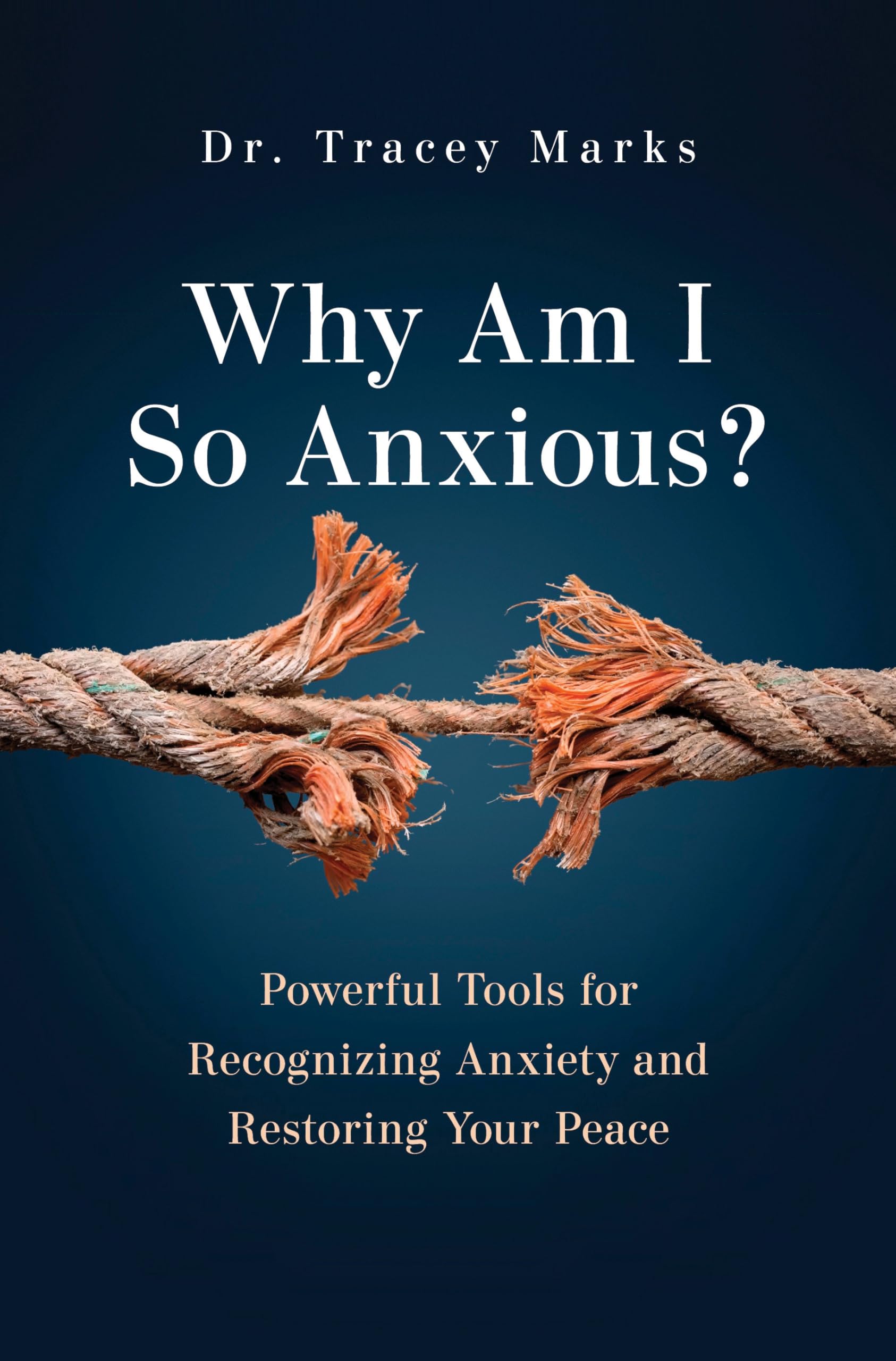
Dr. Tracey Marks is a psychiatrist, mental health educator, and creator of one of the most trusted science-based mental health platforms online. With over twenty years of clinical experience, she translates neuroscience into practical tools, and she’s the author of Why Am I So Anxious? Powerful Tools for Recognizing Anxiety and Restoring Your Peace.
In this conversation, you’ll discover
- How to tell when anxiety is helping you versus quietly harming you
- A simple way to recognize when worry has crossed into catastrophizing
- Why anxiety can feel physical even when medical tests come back normal
- The overlooked body-based tools that calm your nervous system naturally
- A healthier expectation for anxiety that makes it easier to live with
Anxiety doesn’t mean you’re broken. But ignoring how it works can keep you stuck. Press play to understand what your mind and body are asking for, and learn how to respond with more clarity and self-trust.
You can find Tracey at: Website | Instagram | Episode Transcript
Next week, we’re sharing a really meaningful conversation with Nedra Glover Tawwab and Terri Cole about life-changing boundaries, how to say no without guilt, and how to stop overgiving.
Check out our offerings & partners:
- Join My New Writing Project: Awake at the Wheel
- Visit Our Sponsor Page For Great Resources & Discount Codes
_____________________________________________________________________________________________________
Episode Transcript:
Jonathan Fields: [00:00:00] So anxiety shows up for so many of us these days. Sometimes it’s a loud and obvious thing, sometimes it’s just a a low level hum that never really goes away. And a lot of us quietly assume that feeling anxious means something’s wrong. Something’s wrong with us. But what if that’s not true? Or at least not entirely true? In this conversation, I’m joined by Dr. Tracey Marks, a psychiatrist and mental health educator who has spent over two decades helping people understand what’s really happening in their minds and bodies. She’s the author of Why Am I So Anxious? Powerful Tools for Recognizing Anxiety and Restoring Your Peace. And together we explore what anxiety actually is, why your brain creates it, and how to tell the difference between anxiety that’s protecting you and anxiety that’s quietly limiting or loudly crushing your life. We talk about why anxiety can feel so physical, even when medical tests come back normal, and why, counterintuitively, the goal isn’t actually to try to eliminate anxiety, which can make it worse, but to change your relationship with it, this is one of those conversations that helps you feel less broken and more informed. So excited to share this conversation with you! I’m Jonathan Fields and this is Good Life Project.
Jonathan Fields: [00:02:30] Let’s dive into this topic of anxiety. We are living in a time where I feel like people open their eyes in the morning and without even interacting with anything any news source, any stream, any person. So many people feel that there’s a baseline level of, oh, like there just there’s an angsty kind of thing going on with them. We a lot of us talk about anxiety. I am anxious, I feel anxious. Um, it’s been, I think, an increasing part of the conversation. But what actually is anxiety? When we talk about anxiety, what are we actually talking about?
Tracey Marks: [00:03:12] That’s a great question because we talk about a couple of things. First, there is just the emotional experience of anxiety that everyone has. That’s not a disorder. It’s a normal reaction to fear a threat. Self-preservation. The need for self-preservation. Um, and then it when it extends beyond the normative reaction and just is present in the absence of any, any particular threat, um, and persistent and causes and interferes with your life for the quality of your life, then it’s more along the disorder, uh, range of anxiety. Um, it’s usually fear based, but, um, you know, sometimes it is just, um, I’m just generalized distress. There doesn’t have to be an identifiable stressor that you’re afraid of. You can just feel the sense of unease or dis ease chronically.
Jonathan Fields: [00:04:14] Um, when you say it’s usually fear based, take me deeper into that.
Tracey Marks: [00:04:19] So what I mean by that is one of the brain structures that, um, detects threats for us as the amygdala. And that’s kind of what we typically think of as the main brain structure responsible for generating anxiety and generating the the brain responses to a perceived threat, whether it’s a real threat or a just a perception that’s not really a threat. Um, and so so the the concern that something bad is going to happen. Therefore I need to do something, whether it be worry or take action really is fear. You’re afraid that something is going to happen. Um, you know, I’m trying to think of a scenario where anxiety wouldn’t be fear based.
Jonathan Fields: [00:05:14] Mhm. So then the main thought then just from a cognitive standpoint, like the main thing that’s going on in your brain is I’m thinking about the future and maybe that’s a second, maybe it’s a day, maybe it’s a week, maybe it’s a year. And then there’s something scrolling in my brain that says, I fear the possibility of this thing that I don’t want to happen actually happening.
Tracey Marks: [00:05:37] Exactly. And so that thing could be someone breaking into your home, someone dying. It could be being insulted, not getting a promotion, not finishing your homework. I mean, it could be lots of things.
Jonathan Fields: [00:05:50] Yeah. You also described this notion that we can experience this, and you made a distinction between anxiety and anxiety disorder. Take me deeper into that.
Tracey Marks: [00:06:04] Sure. So just as we can experience happiness, joy, anger, um, anxiety, um, is is just another can be just another emotion. So again, if I am driving and a car runs the light and I almost get hit, that reaction of, um, my chest beating, my, you know, hyperventilating, afraid of what could have happened to me. All of that is an anxiety response. But we would I would expect, in the absence of having a disorder, anxiety disorder or anxiety problem, that as time passes, it’ll go away. So I’ll recover and get back to my usual routine. I won’t be ruminating or thinking a lot. About what? About the next intersection. I don’t think I can drive now. Like that is more the pathological response. So I guess a different way to think about this is pathological anxiety that causes problems, and that is excessive beyond the stimulus or beyond the trigger, and normal anxiety or non-pathological anxiety that is part of just an emotional response that we should have. Like I should fear someone breaking into my home or leaving my car unlocked. Um, you know, those are things that I should, um, be afraid of something bad happening and anticipate that these things could happen. So to protect myself.
Jonathan Fields: [00:07:39] Um, so if, for example, I want to make sure I understand this, if, for example, you’re walking outside your you’re at a bar with friends, you’re at a restaurant with friends, you’ve gone you like on your own. Um, and it’s 10:00 at night. You walk outside and you have to cross a dark parking lot to get to your car. Right? There’s probably, you know, a healthy anxiety that says, okay, so I don’t know if this is safe or not, you know, so so maybe that anxiety because you’re kind of saying like, well, like, bad things could potentially happen here. I’m alone. It’s a dark environment. It’s nighttime. Um, but that’s the anxiety where it’s kind of realistic. It’s in the moment. And maybe that leads you to take some sort of protective action. Maybe you drop back into the bar and you talk to a friend, say, hey, can you walk me to my car? Um, or you turn on the light on your phone just so that there’s a little more light in, or you talk to somebody on your phone while you’re walking to your car, just so like there’s you’re in contact with somebody while you’re doing it. That would be kind of like, okay, I’m anxious, but that’s not the disordered kind of anxiety. That’s an anxiety that’s leading you to take intelligent action. Does that land so far?
Tracey Marks: [00:08:52] Yes, absolutely. And you know, another example of how anxiety can be motivating in a good way is if I’ve got a deadline to meet. Um, I don’t want to fail at this task that I’m working on or this project. I might start to feel a little bit, um, or have some angst or anxiety about not finishing this. So I’m going to put my best foot forward and punch it and get this done. Um, so anxiety can motivate us as well to do things that we should be doing.
Jonathan Fields: [00:09:23] Yeah. So anxiety isn’t always a bad thing, is what? It’s not always breaking it down. It’s it’s like it’s a signal and potentially it has there’s a motivational energy to it which can help us do things we want to do.
Tracey Marks: [00:09:35] Absolutely.
Jonathan Fields: [00:09:37] So then how do we know? Let’s take either one of those scenarios. Right. The worst scenario where there’s a deadline, there’s a big thing, you know, maybe there’s a promotion or a big presentation online or walking across the parking lot. How would we know when a behavior like that tips from being okay? I’m anxious, but this is there’s a reason for this and there’s a healthy way to deal with it to this is now disordered anxiety. What would that look like?
Tracey Marks: [00:10:03] Sure. So probably the easiest way to conceptualize this is when the behavior is persistent. It’s not necessarily linked to a specific stressor that’s right there in front of you. And and it causes problems for you. So what does that what could that look like? Um, if we take the, um, walking to my car scenario, um, you know, yes, it’s normal to take precautions and be a little worried or anxious that something could happen to me walking to the car. But let’s say it’s 6 p.m.. It’s not dark out yet. And I am, you know, trying to find anyone who’ll just walk me to my car. And what if this happens? What if that happens? What if that? And I’m driving other people nuts because I’m like laying out all these negative situations. We call it catastrophizing, like thinking of the worst case scenario. And that’s kind of always what I talk about. Like, I’m always looking at worst case scenarios for things and assuming all these bad things are going to happen. That’s a different look to this whole issue of walking to my car by myself. Um, you know, sometimes people will wake up in the morning feeling nauseous. I was just talking to a patient recently, talking about how their anxiety was kind of ramping up with the new year. And the person was saying, you know, I’m back to throwing up in the mornings. Um, and it’s not anything specific, but it’s just this free floating, we call it free floating anxiety about nothing that you can really put your lay your hat on, but you just don’t feel good. You just feel afraid. You know, when we look at our diagnostic manual that lays out the definition of different disorders, one of the criteria for pretty much all of them is that it causes functional impairment.
Tracey Marks: [00:11:55] That’s the terminology that it uses. But it’s impairment or problems in different areas of your life. So occupational personal or social. And so you know the social aspect could be for say anxiety could be you’ve become a hermit or let’s say going back to the working person, um, you don’t go to required mixers, um, because you’re just too anxious about what people are thinking about you. And so you come up with excuses of why you can’t go, you got to pick up your kid, blah, blah, blah, and it just never works out. You’ve always got an excuse, but that causes problems workwise occupationally because you’re expected to be at these things, these networking events, so you know the person without a disorder could may still not like the networking, but they can still stomach it. They find a way to get through it, and then once they leave again, they recover and they can go to sleep at night, right? The person with the anxiety disorder may avoid, or if they can’t avoid because they don’t want to lose their job, they go, but then they can’t sleep that night, or they wake up and throw up or have headaches and things like that, like all of these physical manifestations. So that’s kind of the difference in how it could look between the person who has an aversion to something that makes them uncomfortable, but they still do it, and they get through it versus the person who has disordered or pathological anxiety about this thing.
Jonathan Fields: [00:13:27] Yeah. I’m actually really curious about what you described as the person who sort of they actually stopped doing all the things, but for each, no, for each time they opt out of it, there’s an excuse that they, they can point to. Do you find at all in clinical practice when you’re working with patients that somebody comes in and and this is what they’re experiencing. Like they have all these excuses. They’re not doing this thing, but they’re kind of telling themselves, but these are rational reasons. Like I’m not like they actually can’t. They’re not identifying that they’re anxious underneath it or the anxiety is a part of this. They think that all these decisions are actually rational. Like these are all rational, good, solid reasons not to do these things, or people generally pretty aware of the fact that there’s an underlying experience of anxiety.
Tracey Marks: [00:14:15] You know, that’s a great question, because I think that anxiety is probably one of the, I don’t know, few if I’d say few. But like one of the disorders that it’s hard to deny, like people aren’t in denial about it. They know that they don’t like the way they feel their hearts racing or whatever the symptoms are that they’re having. And so they acknowledge it. They may not acknowledge the extent to which it is It’s keeping them from doing things they may feel like, well, I got this, you know? I just don’t like meetings, so I don’t I don’t want to go, but I don’t know if if it’s my patients and they’re just, you know, self-actualized people or what, but, you know, usually we don’t have that problem of them saying, I’m not doing X because it makes me too anxious.
Jonathan Fields: [00:15:00] Yeah. And we’ll be right back after a word from our sponsors. You also brought up this really interesting example of somebody, I think you were referencing a patient of yours who kind of just wakes up with this generalized sense of doom fear to the extent where it’s affecting them physiologically or like, they actually like, they’ll throw up. So is there a distinction then, where somebody sort of says, I’m anxious because I’m thinking about a very specific thing or something happened to me. I’m worried about having, again, versus just this generalized feeling of I open my eyes in the morning and I’m just I can’t even tell you what I’m anxious about, but I am.
Tracey Marks: [00:15:41] So that scenario of I can’t even tell you what I’m anxious about, I just feel horrible or I’m just very anxious. So getting back to the question of people recognizing that they have anxiety, when people have a predominance of physical symptoms, oftentimes they will think it’s something physical and it’s not anxiety. So particularly when it has stuff has to do with like heart racing or palpitations and things like that, they might feel like, uh, you know, having panic attacks. They’ll think there’s something, there’s just something wrong with me. And they may end up in the ER a couple of times until finally someone says, you’re all clear, you’ve had a cardiology workup, you’ve had all this stuff. It’s anxiety. And so I’ve had people come to me and say, I’m here because the doctor said it must be anxiety. But I know there’s I just still feel like there’s something physically wrong with me. But I get it that, yeah, it does make me anxious.
Jonathan Fields: [00:16:34] Yeah. When we talk about all the different ways that anxiety can show up and the origins, and you describe some of the ways that thoughts can lead to these different things, fears can start to become the genesis of these different things, the feelings in our body, in our mind. And that sounds largely the way that we relate to our environment. Is there a genetic element to any of this?
Tracey Marks: [00:16:57] Oh, absolutely. Yeah. Anxiety disorders pretty much. I think most of the psychiatric disorders. But anxiety disorders run in families. Um, I couldn’t give you percentages. Uh, you know, as far as, um, you know, as far as how it’s passed down, but, yes, you have anxious. So there’s a couple of things you have, um, anxious parents can produce anxious children, but also you can learn to be anxious based on how you’re raised. So, you know, sitting around the dinner table, hearing parents fret over this and fret over that and whatnot. And we can’t we can’t make a decision because we just don’t know. You can kind of learn that, um, learn to adapt that way. Also, another, uh, genetic component is some people have less tolerance of uncertainty that’s thought of as a temperament kind of genetic thing or predisposition. There are some people who can just go through each day recognizing that there’s this level of uncertainty and hope for a better tomorrow. And then there are people who, going back to sleep, aren’t sleeping at night because they’re worried about whether or not they’re even going to have a job tomorrow. I mean, even if that’s that. Yeah, for a lot of people that’s a real thing. But even if that’s not a real threat, that no one’s ever told them that they may lose their job, they just might just because of how things are kind of thing.
Jonathan Fields: [00:18:26] Yeah. So we know that anxiety is a feeling that’s common across at some point probably everybody, that it’s not always a bad thing, that sometimes it’s a completely rational and helpful and constructive reaction, that sometimes it can give us energy and motivation, but then it can also tip into disorder, which stops us from living functionally, living the way that we want to live, that there are multiple contributors to it. Let’s talk about if we feel like it’s tipping into this part of our life, where it is stopping us from showing up the way we want to show up, participating from doing the things that might open up opportunities to us. What we can do about that. Um, you’re somebody who who lists out a whole bunch of different sets of options or tools, and before we even go into some of the individual areas or categories, um, my understanding is that you’re not necessarily somebody who says, okay, here’s the one thing for you, but oftentimes it’s kind of like, what is the basket of things that will make most sense for you? Is that right?
Tracey Marks: [00:19:29] That’s right. Um, I can’t tell you how many times I’ve heard people say, well, I’ve tried all that stuff. Well, there’s so many things you could try, number one, but it really isn’t about this one thing will erase all of your anxiety. Um, it’s what works for you. So, for example, breathing techniques, um, some people, I mean, we know that it’s effective, but still, for some people, they just can’t implement it in the time at the moment, or they just don’t feel a lot of, um, it just it just doesn’t resonate enough with them to practice it so that in the moment they it will be just a knee jerk response. So that just might not be a tool for you. Um, you know, versus, uh, something like, um, in meditation, I think kind of falls into that category, too, because it requires a certain amount of discipline to practice it, get good at it so that it becomes knee jerk for you. But for people who who it does resonate with them, they can tell you, um, you know, I’m at so much more peace now that I do this. I, you know, carve out this amount of time every day, ten minutes and this is what I do, etc.. So it really is about, um, trying to find things that work for you and having them at the ready so that you can implement them at the time.
Tracey Marks: [00:20:57] I do want to add, though, that I tell patients, the ones who are taking medications for anxiety that like if I if I start someone on a new medication, I’ll say, okay, so let’s just get straight here that the goal is not that you are anxiety free. That’s not a reasonable expectation. So whether you’re taking medication or whether you’re using tools, if you’ve got an anxiety disorder or you’ve got a lot of anxiety, we’ll just say instead of getting away from this disorder issue, um, it Anxiety tends to come and go in waves, so you can have periods of your life where it’s manageable, meaning let’s say, you know, during the day you start to feel the tightness in your chest or muscles tight, but you know, you power through, you get your work done or you you go run after work and you kind of relieve some of that tension, and now you feel better. Um, and, and that’s how you’re managing it. And then other times where it just overwhelms you and you can’t manage it alone. So maybe then you take medication. But even so, with the medication, still the expectation isn’t that if, uh, you know, someone bursts into my house holding a gun, then I’m just going to be like, hey, thanks for coming. You know, you’re still going to have an anxiety response. So we should never expect to be completely anxiety free.
Jonathan Fields: [00:22:23] Yeah. I mean, that’s such a powerful thing. I think expectation to set because I would imagine people do come to you often and say, I just want this gone from my life. It’s it’s disabling. It’s I can’t live and breathe the way that I want to. And and I just need it gone. Um, and as you described earlier in a conversation, we actually don’t want it entirely gone. It plays a really important role in us being safe and intelligent and inviting really good things into our lives. It’s when it tips into that area where it’s disabling in a lot of ways. Um, but that must be also a bit of a weird conversation to have someone who comes to you like trying to convince them you actually don’t want it entirely gone, or the expectation shouldn’t be to make it go away when especially if somebody deep in anxiety or in the throes of repeated panic attacks. I have to imagine that person’s like, no, this has to go away like forever. I don’t ever want it. Like, give me whatever I need to do, whatever level of medication, whatever practices. I just need this entirely annihilated from my life.
Tracey Marks: [00:23:28] Yeah. So then we have to have a different kind of conversation about, um, about having reasonable expectations because that mindset of, um, you know, I don’t want to feel anything unpleasant, so give me something so I don’t have to feel anything unpleasant is really an addiction mindset. I mean, like, it can lead to addictions because of this idea of, um, I need to I need I don’t want to have to cope on my own. I want something to just take it away. So I try and help people shift from thinking that way of everything has to just be taken away with a pill of some sort. But what makes that palatable or makes them able to accept that is. Well, let’s look at what do I actually mean by you’re still going to have some anxiety. Well, what’s what’s bearable anxiety. You know, maybe feeling a little tense at the thought of doing x, y, z. But once it’s over. Okay, I’ll be all right. Well, that’s that’s normal anxiety, so. Okay. You can live with that. Versus if someone you know, the the the plea to take this all away is usually for the more intense severe manifestation, like the panic attacks or, um, you know, the inability or feeling unable to go anywhere or drive your car because of some fear or something like, that’s the stuff that they want to go away versus any unpleasant feeling.
Jonathan Fields: [00:24:57] Yeah, that makes sense to me. Let’s talk about some of these major categories. Um, why don’t we start out with medication? Because we’ve referenced it a number of times now. And also this is a category where a lot of people there’s a shame associated with it for a lot of people, like, oh, like you quote shouldn’t need that or there are all these other things that you can quote do first, you know, um, Talk to me about anxiety and medication.
Tracey Marks: [00:25:27] Yeah. So, um, you made me think about something, uh, with as far as the shame and guilt about. Well, you know, I’m not. I must not be doing enough, um, to need to take medication for this, or I’m not crazy. Uh, so crazy people take medications, like, all of that kind of thinking. I think we’ve gotten better with that over the years, with more people speaking out about taking medication for something, whether it be depression or anxiety. So I think we’re getting better. But there’s still, um, in certain communities and certain cultures where if, um, you know, I’m thinking I’m a Christian and I think about Christian culture of if you trust God, then why are you anxious? Versus I’m anxious because this is a physiological Reaction. Okay, so I went down a rabbit hole. Sorry about that.
Jonathan Fields: [00:26:25] So it’s good because I think these are actually the real things that come up when somebody is dealing with this. And it may be some of the, the internal and also external pressures that come their way or judgments that come their way, that might stop them from considering something that actually might be appropriate for them, for at least for a moment in time.
Tracey Marks: [00:26:44] Exactly. So, you know, for daily anxiety, um, the recommended medication. Are antidepressants. Actually, um, antidepressants we use for both depression and anxiety. Um, there’s another one that’s serotonin agent. That’s not really an antidepressant though, but it’s similar. And that’s called buspar or buspirone. But but these medications you take every single day because you have anxiety every single day. Some people would prefer to take, um, sedative type medications like clonazepam, Xanax, or alprazolam is a generic name for those because those medications kind of work like pain pills where you take it and within 30 minutes, poof, you feel so much better. They’re pretty much like prescription alcohol because they work similarly in the brain. And so you get that instantaneous or immediate relief. Those pills, because of the way that they’re, they’re structured, um, can be habit forming and lead to a dependency on it. So then if you stop taking it, you can get withdrawal and all of this. So those are the kind of medications that are best taken as needed and not every day. So let’s say I only get. I get panic when I fly. Okay. You get a bottle of of Klonopin or Xanax that lasts you a year because you fly 3 or 4 times a year, and that’s the only time you take it, um, or even a panic attack. You know, every now, like maybe once a week or something, and you just take it and then it makes it go away, and then the rest of the week, you’re good.
Tracey Marks: [00:28:27] But if you have a daily experience, it’s best to take the medications that are intended to be taken daily. Mhm. There’s downsides in that. Um, you know, aside from the idea of buying into I’m taking a pill every day. This must be you know, because another thing about the as needed pill, I think there’s the perception for the person that I’m not that bad because I don’t need this all the time. So I can just take it every blue moon. Um, whereas it takes something every day means I’ve got, like, this chronic illness. I’m taking a pill every day. So, at any rate, um, even once you take something every day or take one of these medications, um, they do, they can have a lot of side effects, like dulling your emotions or, um, giving you, um, gastrointestinal problems and dry mouth and things like that. And sadly, you know, when those side effects occur, it just can reinforce this idea of why do I have to take medication? How do I have to deal with this every day to deal with my anxiety? So, you know, for people who have who experience side effects from these medications, they can they can end up going on and off of them because they just don’t like the experience.
Jonathan Fields: [00:29:44] Mhm. When somebody is taking the sort of like the, the daily um, and again I want to make it, I think it’s clear to anyone joining us for this conversation, this is not individual medical advice. This is just sort of like a general exploration of what is available in different categories. But one of the things that I’ve heard from people who resist this, sort of like starting on something daily, is I don’t want to be on this for life. Is, is is are these sort of a class of medications, something that most people are on for life, or is it sort of episodic? And and if it is a long term or a lifetime thing, is that okay?
Tracey Marks: [00:30:29] Yeah. So this question, the answer to this question goes back to what I was talking about anxiety coming and going in waves. So and that wave can be really long. And the the interval in between the waves can be long enough such that. So let’s say you have just this really stressful period of your life, um, and you have unmanageable anxiety. You get on medication, you’re on it for a couple of years, and then things kind of settle down. Um, you’re in a steady job. Uh, the kids are out of the house or something, and just life is more calm for you. I talk with patients about. Okay, let’s see how you can do without the medication now. And they get off and see if they can kind of wing it on their own, and they may wing it on their own, with mild levels of anxiety or anxious moments that they manage with behavioral things like the exercise or the meditation or whatever it is. Um, so lifetime could be in and out of or chunks of time that you take it and then you get off, take it, and then you get off. For some people, though, um, going back to this isn’t medical advice that doesn’t work for everyone. There are some people with debilitating enough anxiety that’s daily that it could mean a lifetime of medication. It’s hard for me to, like, sign somebody up for lifetime if they’re 38 years old, saying, you’re going to need this every day for the rest of your life, because I don’t know what their life is going to look like. Yeah, they could again retire and, uh, have a chilled life every day. And so they can just deal with the occasional stomach upset that they get when they hear something on the news or occasional bad sleep that they can have because their mind was racing.
Tracey Marks: [00:32:26] Um, so, um, but things like obsessive compulsive disorder, um, oftentimes those symptoms can be not manageable enough without medication to need medication. Um, I know we’re talking about medication, but, you know, OCD doesn’t always respond well to medication. Sometimes people need more behavioral treatment for that. So the long and the short of it is, is that it depends on how the anxiety manifests. Um, like one more thing. So someone with social anxiety, let’s say um, this with social anxiety, people have this are preoccupied with what people think about them and and people’s judgment and things like that. So, um, it’s not just social like, I just don’t like crowds. It could be worrying about what someone is going to, what someone’s going to think when you’re talking to them, even one on one. It’s called social and performance anxiety. The performance could be speaking up in a group. So I work and we have, you know, a zoom meeting and it’s my turn to present. Like I could get choked up and can barely speak like that could also be social anxiety. So all that to say is I may go through a period of life where the stressors on me, uh, or the things that I do, make my social anxiety really get in the way of me functioning. So I get treatment for it, whether that treatment be medication or something behavioral. And then I switch jobs. I’m working at home. Uh, there’s not a lot of things that trigger me into having panic and things. And so I don’t need medication during this period of my life.
Jonathan Fields: [00:34:15] Yeah. So it’s really it’s very individualized. And even for an individual, this may shift in really meaningful ways based on the moment or the season of life that they’re in. There’s really no way to say, um, at the point of intervention or prescribing, like how long or what the dosage is going to be. Um, it’s just important to really keep tabs on it, it sounds like, and adjust as needed along the way.
Tracey Marks: [00:34:42] Absolutely.
Jonathan Fields: [00:34:43] Yeah.
Tracey Marks: [00:34:44] You said it perfectly.
Jonathan Fields: [00:34:46] And we’ll be right back after a word from our sponsors. You brought up a number of other tools also to potentially bring into the toolbox here. And I think, you know, a lot of people when when they think about anxiety, one of the first things they, they think is, well, like psychology and oftentimes CBT or um, you know, like that sort of behavioral therapy is something that’s been brought up a lot. Mindfulness based cognitive behavioral therapy also is something that I think is we’ve heard a lot more about over the years. Um, how does that what does that look like and how does it actually work that that may be too big a question, but see what we can do with it?
Tracey Marks: [00:35:28] Yeah, a little bit, but I’ll I’ll narrow it down. So it just depends on what you’re trying to address. So for example, someone who’s got, um, who’s we call it phobic, who uh, is um, avoiding things because of their anxiety. So let’s go back to the social anxiety is someone who just cannot stand the idea or just make themselves, uh, go to some event, and it’s becoming a problem because, you know, the family wants me to be there for the soccer game, but it just makes me want to throw up before I go. So. But I want to see my child at the soccer game. So I got to get past this a bit. So a behavioral intervention for that could be, um, what’s called, um, gradual desensitization or just a desensitization process where you, um, you like, if my fear, you look at what the ultimate fear is. The fear is being at this place with people talking to me and me having to talk back to them. So if I’ve already started avoiding going to these things in a way that I start feeling anxious, even getting in my car, then that’s where I would start. I would start with these exercises of getting in my car. I’m going to drive to the place or even getting in my car, dealing with the anxiety I feel about that. I’m safe, this is okay. And then going back in the house and like doing that until it’s I’m desensitized. It doesn’t make me that anxious anymore. Then I go to the next step, be driving to the place. The next step beyond that might be going to this event. And being so far in the back that I’m not challenged to having to talk to people or, you know, I’m just kind of making this up.
Tracey Marks: [00:37:19] But the idea is little baby steps that you practice to get yourself to where it you can tolerate it without without all that anxiety. And you’re no longer avoiding because when you avoid things, the fear just grows. It gets bigger and bigger, and it becomes even more of an obstacle to get past. So, you know, um, desensitization, um, could work with something like that where there’s a phobia. The thing that you’re avoiding. It can also work with certain types of trauma, although that would still be kind of a phobic avoidance thing. So you get in a car accident and now it’s hard for you to get behind the wheel of the car anymore. So you work through different steps to get comfortable going. Getting in the car. Um. So so that’s one type. Um, I don’t do even though trauma is no longer like PTSD type stuff, is it really considered an anxiety disorder anymore? It can come with a lot of anxiety. Um, and so I don’t do trauma based therapies, but specific trauma based therapies, I think are what are needed to address trauma and anxiety related to trauma. And some of those also involve kind of exposure type therapies, we call it. So the desensitization exposure kind of different sides of the same coin of re-exposing yourself to these things that cause you a lot of fear and distress because of it causing you trauma in the past and and doing it in a way that you eventually overcome that fear of being exposed to it.
Jonathan Fields: [00:39:06] Yeah. So it sounds like a lot of what this is, is about. And tell me if I’m if this is off or if it’s sort of like on you, you think about the thing that causes the anxiety. You chunk it down into a series of tiny little steps, and then you start with sort of like the most accessible, the tiniest, tiniest little, most accessible step that would start you towards that experience or towards that thing. You do that and kind of see how you feel until you’re comfortable with that, and then you add the next tiny step and the next tiny, and each one kind of waiting until you’re comfortable before adding the next one. But I’m guessing also part of this is is again, going back to that thing that you would tell patients up front, which is you’re not necessarily looking for zero anxiety right along the way. You’re looking for, okay, I’m anxious, but I, I can handle this. Would that be right?
Tracey Marks: [00:40:01] That’s right. Yeah. It’s a tolerable level of anxiety.
Jonathan Fields: [00:40:07] Yeah, that makes sense. Um, let’s talk about some tools here also. And I guess these could kind of fall under CBT because they’re often offered in that context. But I think a lot of these tools also people explore on their own. Um, you mentioned one of them earlier, um, that a lot of people still roll their eyes at, which is either meditation or mindfulness. Talk to me a little bit about this and and its relationship in the context of anxiety.
Tracey Marks: [00:40:35] Sure. So with um so mindfulness mindfulness is really a big it’s a general category really of essentially your state of mind. But um, and not necessarily a meditation of sorts. But nonetheless, people will say mindfulness meditation and things like that. But when one of the things about anxiety and fretting and worrying and ruminating is that your mind is not in the present. You’re either worrying about the future, ruminating about the past, and but you’re not here. And generally, the present moment is safe. I mean, if it’s not, then, you know, we got bigger problems, but generally our minds are somewhere else and the actual moment is safe. So a person who is, let’s just say tightly wound, always feeling anxious or always feeling uptight, they may not see themselves having anxiety disorder, but they’re just kind of generally uptight. One of the things that they can do without realizing it is spending too much time, not in the present, but thinking about other stuff. And that’s taxing on the brain. You know, that’s taxing on our minds and can cause internal distress. So the way to offset that is to intentionally bring yourself into the moment. And there’s like different ways to do that. But let’s just say I’m washing dishes and, you know, I’m guilty myself. I’m washing dishes I can be thinking about, okay, I got this to do, I got that to do. And so the experience of washing dishes isn’t an isn’t a real experience. All it’s doing is giving me an opportunity to worry about all the stuff I got to do and all the stuff on my to do list. Instead, I bring I get out of my head that way, bring myself back into the moment of, um, using all of my senses to experience the current moment.
Tracey Marks: [00:42:36] What’s the temperature of the of the water? How does the plate feel? The you know, how hard is it? The suds, like all of that, takes the burden off of your kind of executive functions, um, of like keeping up with all this stuff and allows it to just focus in on a singular thing of the of the present. And it’s, it’s it’s calming in a way of slowing your mind. Not so much calming. Because I’m not anxious. It’s a way to slow your your thinking and your processing. And therefore be a calming experience for your body in general. But that’s a very simple thing that anyone can take with them and do it any time. Um, I suggest trying it sitting at the traffic light. I’ve had to force myself probably like other people. If I’m at the traffic light not to grab for my phone and see if I have any texts come through, like, stop that. Just can you how long can you sit at the traffic light and just look at the light and look at the, you know, is it dark outside? Is it look at your environment? I, we probably most people probably don’t do that. You know, their mind is somewhere else. So being in a perpetual state of your mind is somewhere else. Is is mentally draining and it lessens your, um, you know, chips away at your, your mental resources to be able to handle the daily stresses of life.
Jonathan Fields: [00:44:08] Um. Yeah. As you’re describing that, um, I often when I’m standing in line waiting for a cup of coffee, um, and if you look at everybody else there, every single head is down in their palm looking at the device. And just as a practice, I’ll be like, okay, so this is probably anywhere from 2 to 5 minutes before I step up and place my order. I’m going to challenge myself just to keep my device in my pocket. It’s remarkable how hard that is.
Tracey Marks: [00:44:35] It is!
Jonathan Fields: [00:44:36] It’s like it’s calling to me. It’s taunting me and everybody else is doing it. So I had permission to do it. Um, but you really do feel. And all of a sudden I’m like, oh, wait, I’m looking around. I’m smelling the aroma of the beans. I’m somebody got a yummy scone that’s being warmed up. I’m hearing the conversations and the music. Like this is actually pretty sweet, you know? And and when you really do that, I agree. I think it at least for me, it really it just helps me kind of downregulate a little bit in the moment. And also it just helps me notice some of what’s right around me in the moment too. Um, which is something I think oftentimes we just kind of ignore along the way.
Tracey Marks: [00:45:17] We do, we do. And, you know, then just life just passes us by because we’re not in it. We’re just thinking about it either retrospectively or worrying about the future.
Jonathan Fields: [00:45:29] Yeah. I want to talk a little bit. Um, also, you referenced earlier, um, you know, maybe you go out for a run and that helps you for a moment. There’s sort of like a body based set of tools here, um, that are available to us, too. What what is the relationship between our physical body and especially ways that we would exert ourselves physically and anxiety.
Tracey Marks: [00:45:55] Yeah. So exercise is a good thing, not only from the perspective of staying in shape. And all of that exercise actually releases endorphins. It releases endocannabinoids, which is like your body’s own CBD. Um, which is actually thought to be more responsible for the relaxing um, or or or anxiety reducing effects than endorphins are, um, you know, the whole runner’s high. It’s actually thought to be more related to endocannabinoids rather than those. But at any rate, um, and so and then it also activates BDNF brain derived neurotrophic factor, which then affects your, your brain’s wiring. And that’s a whole nother big topic. But suffice it to say is the tighter and the more connected our brain circuits are, the better we think, the better our brain is able to control our mental health and physical health and all of that. So we like the idea of doing things that promote neuroplasticity or promote regeneration of connections in the brain that promote adaptive behavior. That’s a mouthful. But, um, so exercise long story short, exercise is one of the things that can trigger or promote neuroplasticity and and promote brain health. Um, another kind of body focus, which people probably don’t always think associate this with mental health is your gut health. So the whole gut brain connection is real. Um, having paying attention into the constitution of the bacteria that we have in our gut by eating whole foods and less processed foods, less sugar. I’m guilty of eating the sugar even though I know it’s bad for me. Like all of that stuff, if we if we have good bacteria in there, that then sends signals, healthier signals back up to the brain through the vagus nerve. Um, that is also a way to promote good mental health and reduce anxiety, since that’s what we started out talking about by adjusting your diet. And kind of the easiest way to do that. There’s lots of different diets out there, and this isn’t about what diet is better. The the moral of this story is, the best way to do that is reducing processed foods and eating foods as close to their their natural state as possible.
Jonathan Fields: [00:48:42] Mhm. So it’s almost like you can um, you can approach this from the brain out, or you can approach it from the body in. It’s like the body will sort of like reverse its way up into effectively helping the brain rewire to be able to deal with anxiety and and feel calm more readily.
Tracey Marks: [00:49:01] That’s right. One of my favorite, uh, the body tools that I talk about in my anxiety book is weighted blankets. I love my weighted blanket, and weighted blankets work through, um, deep touch pressure receptors in our skin to kind of send positive signals back up to the brain. That’s just kind of a generic way of explaining it. But, um, you know, the concept of, um, I know every time that, uh, the 4th of July comes around, I see these, um, these advertisement for thunder vests, for your your dogs, for the ones where the noises scare them, but the idea is that you have this compression around their body and it’s the same concept. So with that, that is calming. So, um, you know, if you have trouble falling asleep at night or just feel, you know, just want even just a better sleep, um, I would highly recommend or suggest the use of weighted blankets. And the ideal is that it is, um, 10% of your body weight, but the common weights are like ten, £10, £15. And it just it just kind of wraps around you and has this like cuddling effect that’s similar to, um, you know, swaddling with infants.
Jonathan Fields: [00:50:32] That’s what I was just thinking. Yeah. It’s like, what do you do with an infant especially. And as soon as you swaddle an infant, it’s like you can just it’s almost like you watch this baby exhale. And they just they get really calm and she’s like, oh, I feel safe. Um, and I guess that instinct is still inside of us, for.
Tracey Marks: [00:50:49] It’s still there.
Jonathan Fields: [00:50:50] Yeah. It’s wild. It feels like a good place for us to come full circle in our conversation as well. So in this container of Good Life Project., if I offer up the phrase to live a good life, what comes up?
Tracey Marks: [00:51:02] I think of spending time with people who matter and doing something good out there in the world, like leaving something behind that helps people.
Jonathan Fields: [00:51:16] Mm. Thank you.
Tracey Marks: [00:51:18] Thank you.
Jonathan Fields: [00:51:20] Hey, before you go, be sure to tune in next week for a powerful conversation with Nedra Glover Tawwab and Teri Cole about life-changing boundaries and how to say no without guilt and how to stop overgiving. Make sure you follow Good Life Project in your favorite listening app so you don’t miss this episode. This episode of Good Life Project was produced by executive producers Lindsey Fox and me, Jonathan Fields. Editing help by, Alejandro Ramirez and Troy Young. Kristoffer Carter crafted our theme music. And of course, if you haven’t already done so, please go ahead and follow Good Life Project in your favorite listening app or on YouTube too. If you found this conversation interesting or valuable and inspiring, chances are you did because you’re still listening here, do me a personal favor. A seven-second favor and share it with just one person. And if you want to share it with more, that’s awesome too. But just one person even then, invite them to talk with you about what you’ve both discovered to reconnect and explore ideas that really matter, because that’s how we all come alive together. Until next time, I’m Jonathan Fields signing off for Good Life Project.