
 Your mind is under siege. Every day, technology and noise fight to hijack your attention, leaving you feeling less present and more distracted than ever. In a word, unconscious.
It’s time to stop the scroll and reclaim the most precious thing you own: your consciousness. Learn how to build “consciousness hygiene” and protect the privacy of your own mind.
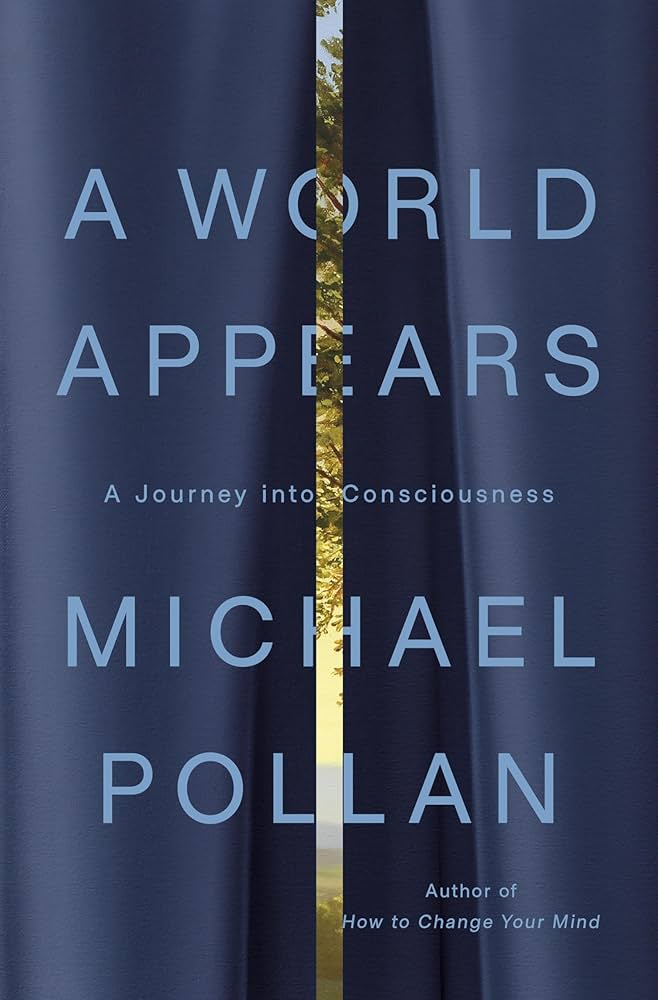
Today we are joined by legendary author Michael Pollan. Michael is a ten-time New York Times bestseller and one of Time’s 100 most influential people, known for his deep dives into food and psychedelics. He joins us to discuss his latest journey into the mystery of awareness, featured in his new book, A World Appears: A Journey into Consciousness.
We explore:
- The “Four-Second Gap”: A startling discovery about how your thoughts actually enter your awareness before you even “think” them.
- Lantern vs. Spotlight: Why your childhood way of seeing the world is the key to unlocking creativity in adulthood.
- The Chemical Genius of Plants: The surprising way roots and leaves make “intelligent” decisions without a single neuron.
- Bioelectric Body Maps: Why trauma and memory might be stored in your cells rather than just your brain.
- The “Thief in the House” Exercise: A simple mental framework to instantly quiet the critical voice of the ego.
We spend so much of our lives distracted, but you don’t have to stay that way. Play this episode to learn how to be fully present for the life you’re actually living.
You can find Michael at: Website | Instagram | Episode Transcript
Next week, we’re sharing a conversation with Anthony Klotz about why we quit, when to stay, and how to make wiser decisions when work just suddenly feels off, or relationships, or really just life.
Check out our offerings & partners:
- Join My New Writing Project: Awake at the Wheel
- Visit Our Sponsor Page For Great Resources & Discount Codes
photo credit: Christopher Michel
_____________________________________________________________________________________________________
Episode Transcript:
Jonathan Fields: [00:00:00] So your consciousness is actually the most precious thing you own. Yet most of us are essentially letting it be sold to the highest bidder. According to my guest today, Michael Pollan, between the constant pings on our phones and the noise of the world, we’ve ended up in this place where we’re less aware and less present than we’ve ever been before. It feels a bit like our minds are under siege. So today, we’re going deep into what it actually means to even be conscious, and how we can start to reclaim that space. Michael Pollan is someone who needs little introduction. A widely acclaimed, multi-time New York Times best-selling author. His latest work, A World Appears: a journey into consciousness. It might be his most personal and mysterious yet. We talk about everything from the strange four-second gap in our thinking to intelligent behavior of plants that don’t even have brains. It’s a conversation that truly challenged a lot of my own assumptions about who is actually running the show in my own head. So excited to share this conversation with you. I’m Jonathan Fields and this is Good Life Project.
Jonathan Fields: [00:01:11] You know, it’s really good to be back in conversation with you. Um, last time we were together to talk, it was in the context of your deep dive into the world of psychedelics. Um, and I think that opened a lot of people’s minds and hearts. It was, um, came at a moment where so much has changed, but also a lot has stayed the same. And now you really you’ve gone deep into the idea of consciousness. So as I sit here, you know, we can have this esoteric conversation about consciousness, a philosophical debate about consciousness. But I’m thinking of our somebody in our community who’s, you know, like who’s just kind of says to themselves, like, I’m in the middle years of my life. There’s a lot going on in the world, a lot going on in my life. Why should I care about a conversation about consciousness?
Michael Pollan: [00:02:02] Well, because your consciousness is the most precious thing you own. It is that space of privacy and freedom in our minds. And it’s under siege right now from so many things in our world. We have a president who’s taking up a huge amount of head space on a daily basis, space that could be used for other things, more nurturing and more positive things. We have a social media ecosystem that is essentially trying to buy and sell your attention, attention being a manifestation or how we direct our consciousness to this or that. And now we’re entering this era of people forming deep relationships with machines, chatbots, and they are also intruding on our consciousness. Obviously, you need to be conscious to use a chatbot or, you know, scroll on Twitter, but minimally so. So I sort of feel we’re less conscious than we could be. And then we should be. And that it’s a space of awareness we need to reclaim for ourselves because that’s part of mental health is is keeping that space clean. We need a little bit of consciousness hygiene. So that’s what I would say is the reason why it matters. It’s something we don’t always think about. We take for granted. It is. It is sort of the water we swim in.
Michael Pollan: [00:03:27] But once you start thinking about it, it’s endlessly strange and interesting. And, you know, I didn’t think about it very much for many, many years. And it was my experience with psychedelics and also in meditation. And the two interests kind of came up at the same time that both those activities have a way of kind of smudging the windshield. And suddenly you realize, oh, there’s a windshield. What’s that about? Why is it this way and not that way? And this is not at all uncommon. I mean, in meditation, we’re taught to to look at our minds and how it how our minds operate, where thoughts come from, who’s thinking those thoughts? And many, many people who’ve experimented with psychedelics find themselves thinking up riddles about consciousness, trying to understand what it is. So, you know, I think it’s one of the most important things we can think about, actually, is our consciousness and the consciousness of others, too. You know, we’re not transparent to one another, but we have ways of connecting our consciousnesses. You know, whether it’s through art or conversation. And so I’m very interested in that too. How to break down that wall that separates every consciousness from every other one.
Jonathan Fields: [00:04:47] Yeah. So this word conscious then consciousness, you know, I think a lot of us have probably heard two phrases often used, sometimes in relationship conscious and subconscious or less than conscious. And we’ve kind of walked through life and maybe we kind of say, okay, so there’s the conscious way that we move through the world, meaning what we’re aware of and the less than conscious or subconscious meaning scripts running in the background that are having a very real influence on us and the world around us, but we’re not aware of them. That feels very reductionist to me, very sort of oversimplified. And maybe this whole conversation is going to be deconstructing this. But the big question that I think is what is consciousness? And what is the distinction between this thing that we consider to be the the conscious world or us being conscious and this lesson conscious or subconscious side of things?
Michael Pollan: [00:05:36] Well, our brains are doing all sorts of things outside of our awareness. You know, they’re regulating your body in all sorts of ways. Remember, brains exist to keep bodies alive. It’s not the other way around. Your brain is, you know, maintaining your blood pressure, blood gases. It’s taking in lots of information that you’re not even aware of. It’s monitoring how hungry you are and your digestion. And what’s the mystery is why is any of it conscious? Why isn’t it all automatic? Why aren’t we zombies? And that’s a question that I explore in the book. But there are certain things we need a space of decision making that we can’t automate. Our social life, for example, is so intricate, it’s so complicated to. And we are fundamentally social beings to engage with another, to be able to anticipate what they’re thinking in order to act in an appropriate way. It’s incredibly complex, our social lives, and that probably drove the need for something like consciousness. The fact that you can’t automate a human in a social environment, there’s just too many variables, too many surprises. So that would be my best guess as to why we’re conscious at all. So in addition to all the homeostatic work your brain is doing to keep your body at the at the right temperature and, you know, right blood glucose level, all that kind of stuff.
Michael Pollan: [00:07:00] There are mental contents that we are not aware of and that pop into consciousness in a in a way that is very mysterious. You know, we’ve all had this experience of hypnagogic consciousness, you know, just when you’re falling asleep and suddenly an image or a snatch of narrative will pop into your head and you have no idea where it came from. When you meditate, the unpredictability of thought in meditation is endlessly interesting to me. You know thoughts that you didn’t think simply appear. Are they coming from something called the subconscious? We don’t really know. The subconscious is kind of a metaphor for things below our level of awareness. There’s a scientist in the book named Kalina Christof, who’s at University of British Columbia, and she studies how thoughts get into our awareness, and she puts very experienced meditators who can really quiet their mind in an fMRI with a button to press when a thought intrudes. And what she has found. And that’s quite amazing and hard to explain. I don’t think we have an explanation yet, is that she sees the activity of a thought on the MRI, which is activity in the hippocampus. It’s coming out of memory four seconds before it registers in consciousness. So there is some quite elaborate and time consuming.
Michael Pollan: [00:08:27] I mean, four seconds in brain time is huge amount of time. There is some process that a thought has to undergo to enter our conscious awareness. And maybe there are things trying to keep it out of our conscious awareness. So it has to navigate these roadblocks. Or maybe it’s competing with other thoughts to get into our conscious awareness, we really don’t know. But if we could understand that four second gap, that would be significant. And that’s something she’s working on. So there’s a lot we don’t understand. You know, we think we think our thoughts that we feel our feelings. But who is we? Who is I? When you meditate, you realize pretty quickly that the thoughts come unbidden and from who knows where, and that the mind is just a much stranger place than we, than we think about in ordinary moments. And you don’t need to take psychedelics to figure that out. Meditation will do it. 20 minutes of meditation, just watching your mind. And you know, there’s a famous meditation exercise where you’re supposed to look for the thinker of the thoughts or the feeler, the feeler of the feelings. And good luck to you, because you won’t be able to find anything. And that’s a whole other mystery of the self, right?
Jonathan Fields: [00:09:49] It’s like, who? Who is the looker looking for?
Michael Pollan: [00:09:52] Yeah, yeah. And you know the self has no physical address in the brain.
Jonathan Fields: [00:09:57] Yeah. I mean it is really interesting, right. Because we’re both writers. I’m just for fun on the side right now. I’ve been working on fiction, which I’ve never done before. I have no idea what I’m doing. No idea. Like, but I’m just kind of playing and having fun and I’ll just sit down. And every day I have a practice, I sit for 90 minutes and I with no expectation. I use the Jerry Seinfeld rule when he was writing jokes. Apparently the only rule. I don’t have a word count. I don’t have a page count. My only rule is the only thing that I can do is write, or think about writing, or just gave off into the distance. I can’t do anything else, and.
Michael Pollan: [00:10:29] I like the gaze off into the distance.
Jonathan Fields: [00:10:31] That is, frankly, most of the time.
Michael Pollan: [00:10:33] So that’s valuable time.
Jonathan Fields: [00:10:36] Yeah, absolutely. Yeah. But what I’m getting at is that all of these things, over time, are starting to emerge onto the page. I have no idea. Where they’re coming from. These aren’t experiences that I’ve had in the past. These aren’t characters or worlds that I have inhabited in the past. These aren’t lines that I’ve said in the past. They’re not relationships that I have experienced in a meaningful way. And yet they’re coming from somewhere. And I sit down every day and I don’t I don’t sit down saying, okay, this is the next piece of the outline. I’m just going to like, now detail it out. I just wait for the muse to appear.
Michael Pollan: [00:11:17] And she’s been appearing.
Jonathan Fields: [00:11:18] And I wonder if that’s part of what we’re talking about here.
Michael Pollan: [00:11:21] Yeah, it may be. I mean, creativity is not very well understood. This same scientist who did the work with the meditators, you know, study her field is spontaneous thought, and she studies daydreaming and mind wandering. You know, she’s very interested in where these thoughts and narratives come from. And that’s part of what I’m talking about. Going back to your first question of why it’s so important to defend this space, and that Jerry Seinfeld rule is a defense of that space. You can only do this and this in this time. He’s basically saying give free play to your consciousness and perhaps your unconsciousness without letting the news intrude, without scrolling on your phone, without all the distractions we have. Because I think a lot of us are afraid to be in our minds. It’s kind of easier to distract ourselves, and there’s so many amazing distractions thanks to technology and just, you know, this hyper content based culture we’re in so that when you do clear the the decks to be creative, to meditate, it’s all part of that defense of that space. Very interesting things arise. Now for some people, scary things arise. And that can happen to people who struggle with trauma, people who ruminate excessively and get stuck in loops of unproductive and sometimes destructive thought. And I think that is one reason people are willing to forego their being conscious and rather be less conscious.
Michael Pollan: [00:12:58] And of course, people use alcohol and other drugs for the same reason to dull their consciousness. But the novelist is a is a very interesting character and I think knows something very special about consciousness. And it’s one of the reasons this book is not just about the science of consciousness. I leave science at a certain point, somewhat frustrated at what it’s failed to figure out, and look at philosophy and look at fiction and poetry and look at Buddhism to that. There are these other ways of knowing, and they’re just as valid as science. And the novelist knows a lot about consciousness, because the novelist is going into the consciousness of other people, and it is a way for us to enter the consciousness of other people. We know a lot about, you know, Emma Bovary’s consciousness now. It’s true. She’s just a fictional character, but it gives us an opportunity to see see the world from the point of view of another person and learn how other people think. I think we have a desire to, to to cross that gulf between consciousnesses. I mean, love is part of the way we do it, and imagination is another way we do it. We imagine our way into other people’s heads.
Jonathan Fields: [00:14:14] And we’ll be right back after a word from our sponsors. You bring into the conversation also the notion of sentience. How is this different or what role does it play?
Michael Pollan: [00:14:27] Yeah, I try to draw a distinction between sentience and consciousness. You know, if you think of them as sets, sentience is the larger set and consciousness is is is a kind of sentience. It’s the most basic form of consciousness. So all beings, I would say all living beings have some sentience, but only some of them have consciousness. Sentience is the ability to sense your environment, recognize what is positive or negative in valence, whether it benefits you or hurts you, and then able to move away from one and toward the other. I mean, all living things need, you know, this is chemotaxis and bacteria, right? Or other single celled creatures. So I think sentience goes way down to the bottom of the tree of life. Consciousness is how humans do sentience, and probably some other mammals and probably birds and some cephalopods, you know, octopuses and stuff. And it’s a complexified version of sentience that has things like a sense of a self, has a self consciousness, you know, this kind of recursive, reflexive qualities we have that we’re not just aware. We’re aware that we’re aware. I don’t think the bacteria are aware that they’re aware.
Jonathan Fields: [00:15:46] Although who knows?
Michael Pollan: [00:15:47] Well, we don’t know. Right? This is all you know when it comes to other creatures. We’re guessing. Um, you know, we do it based on their behavior. We have things like the mirror test. You know, certain animals, put them in front of a mirror with a mark on their head, and they’ll, like, go like that. So they have some sense that that figure in the mirror is me. Some animals pass it, some don’t. So, yeah, we have behavior to guide us in these decisions, but they’re definitely provisional. Yeah, we can’t be sure. And you know, we need a complicated consciousness for the reasons I was discussing earlier, the fact that we have a very intricate social life. Other animals might not they might not need things like what’s called theory of mind, which is the ability to imagine what someone else is thinking, which is very important to humans. It wouldn’t do a plant any good to have the kind of consciousness we have. All it needs is a kind of basic sentience, and it puts as much energy as we put into evolving consciousness. Plants have put into biochemistry, you know, they really they’re into. They’re really good at biochemistry better than we are. They’re inventing, you know, thousands of compounds, some of them defensive, some of them psychedelic, some of them, you know, they use chemicals because they can’t they can’t run away. Um, they’re stuck in place. So they need they need a different kind of sentience than we do. And they need chemistry while we need consciousness. So I think it’s arrogant of us to just assume that other beings have the same kind of consciousness, if any, than we do. I think each being has the kind of sentience or consciousness that suits its sensorium, its body type, its niche in the ecosystem.
Jonathan Fields: [00:17:31] I mean, what’s interesting there also is I think a lot of us, if you’re familiar with the word sentience or are sentient. You’ve probably heard the phrase sentient being. I think that’s often the way that it’s it’s laid out. And then immediately, as soon as we hear the phrase sentient being, we’re like, oh, that means person, right? Another sentient being?
Michael Pollan: [00:17:48] No, I would say it’s it’s all these. It’s all these animals. Right. And, and I would add the plants to that. You don’t need brains to have brain like behavior. And we have lots of evidence of that. I mean, brains, neurons are like just excitable cells that are particularly long and fast.
Jonathan Fields: [00:18:06] Talk to me about feelings and thought here. Also because we like to believe, I think as human beings. Well, you know, we’re rational, thoughtful things like that. Thought is the thing that kind of determines so much. You kind of make a counterargument that says so much of what we’re talking about is really feelings based and embodied.
Michael Pollan: [00:18:24] Yeah. So, um, you know, I follow a lot of different researchers who have different theories of consciousness. And as as time went on, I became persuaded that there is a strain of thinking that goes through consciousness research, beginning with a researcher named Antonio Damasio at USC, who encouraged us to put feelings on the agenda as perhaps more important and coming before thoughts. You know, when we think about consciousness, we think of this, you know, ultimate apex human achievement and tied to rationality and the cortex, you know, the front of the brain, the more, more evolutionarily recent part of the brain. But he showed that feelings come first and that feelings are generated way back in the brain stem, and that the source of consciousness may be back there, and that only after we have a feeling, which is really the body’s way of talking to the to the brain, you know, the simple feelings of hunger and thirst and cold or warmth. And these show up in the brainstem, in a particular structure, in the brainstem, and only later does the cortex get involved in figuring out how to get a meal if the signal is hunger, and that he’s basically suggesting that consciousness begins with these simple feelings and gets complexified later. Um, Mark Soames is a, um, a neuroscientist in South Africa who’s taken this theory further.
Michael Pollan: [00:19:55] And the evidence for it is that there are occasionally children born without a cortex. They just have liquid up here. They’re not capable of higher thought at all, but they’re still conscious as long as their brainstem is intact. They show emotion. They show awareness. They show some sense of being there. The lights are on. And this is somewhat controversial, but we’ve also decorticated animals taken out their cortex and demonstrated that they’re still conscious. So I think we we have to look at feelings as potentially more important part of the story than we have, and that thoughts and rational thinking, as much as we prize it, is a kind of a knock on effect. It helps us realize the goals that are formulated by our feelings. Damasio has also done research showing that people make better decisions when they feel, not just think, and that we make these gut checks and that feelings are a way for us to try out in the body what deciding this way or that way would mean. And so it’s a greater emphasis on the body, which is, of course, the source of feelings. Most feelings begin with homeostasis. When we leave the homeostatic set point we want to be at.
Michael Pollan: [00:21:16] And that applies to, you know, the biological functions, but it also applies to social functions. Because I asked him, I said, well, okay, that that accounts for hunger and thirst and tiredness and all this, but what about the more social emotions? And he said, well, we have a homeostatic set point for our place in society. And when we depart from that, from a feeling of shame, perhaps, or pride that gets our attention too, and leads to thinking in the cortex eventually to how to maintain that social standing because we are such fundamentally social beings. So yeah, I come I came out of this thinking that feelings are more essential. And, you know, we, we’ve we’ve sort of tied ourselves in knots about consciousness, in part because we started with the visual system trying to understand how images become conscious to us. And the weird thing about the visual system is that we see things we’re not necessarily conscious of. I mean, and and there’s something called blindsight. There are people who are blind who nevertheless somehow recognize what’s in their environment. Whereas if we’d started with hunger, a feeling that obviously has to be felt, Maybe the whole problem wouldn’t have been so difficult.
Jonathan Fields: [00:22:34] Yeah, I feel like we love to prize ourselves as being, quote, intelligent beings, and we see that as the primary differentiator between us and all the other beasties on the planet, you know? Yeah. So it’s like, it feels like that should be at the top of the pyramid. Like, that is what we’re known for.
Michael Pollan: [00:22:51] Yes. And the other reason for that is the kinds of people who work on these questions. You know, these are scientists and professors. These are people who prize their minds above everything else. I think we have to understand that they have a unique kind of consciousness. And no doubt our privilege is rational thought and logic and things like that. But that’s not all of us. And there are other ways to be conscious. I mean, the other thing I came out of this thinking is that we should be more pluralists in our, you know, that there are different kinds of consciousness. Alison Gopnik, a psychologist I consulted when I was researching the book, talks about she talks about Professor consciousness as a is a very particular kind. But she also talks about lantern and spotlight consciousness. And this is a very interesting distinction. Spotlight consciousness is what we have right now because we’re focused on each other and what we’re saying in this conversation. It’s very narrowed, it’s very directed and it’s purposeful and it gets things done. But there is another kind of consciousness called lantern consciousness, or which she calls lantern consciousness, where you’re taking in information not from that one degree, but from all 360 degrees. And this is the consciousness that children have before they go to school.
Michael Pollan: [00:24:07] And we kind of knock it out of them because they need to sit and focus on what the teacher is saying. But before that, their minds are just wandering all over the place. You know, you can’t keep them on track. And that’s because they’re learning about their world and how it works. And we get a taste of this kind of consciousness, I think when we’re daydreaming, Um, when you’re working on your fiction, it’s less directed and more open. Uh, she uses the word numinous. Um, it’s it’s glowing with significance. And, of course, psychedelics also gives you a taste of that lantern consciousness. You know, you can’t really focus, but you are taking in lots of information from all over the place. So I think we shouldn’t narrow our definition of consciousness to just one type. And that is the lesson of both meditation and psychedelics, of course, that you can put yourself in altered states of consciousness, and we do it every day. You know, we go from our work life and that kind of focus or our screen life to walking in the woods where you’re taking in information from lots of different degrees.
Jonathan Fields: [00:25:12] Yeah, I mean, that makes a lot of sense to me that we would think about it as different, almost like categories of consciousness. Um, and maybe we move fluidly from one to another, as in whatever supports the mode that we’re in.
Michael Pollan: [00:25:25] Yeah. We contain multitudes.
Jonathan Fields: [00:25:26] That give it in time or the relationship. Indeed. And we’ll be right back after a word from our sponsors. You make a really interesting point, also under the domain of thought, which is this idea that we tend to think that, well, we all have language. You know, we all have symbolisms in our lives. We all have images. And at the end of the day, aren’t they pretty much all the same?
Michael Pollan: [00:25:51] Yeah. No, it’s it turns out right.
Jonathan Fields: [00:25:53] And it’s like, no, we just assume that they are. But it’s a wildly, wildly different inner experiences.
Michael Pollan: [00:25:58] Yeah. This was a this was a very interesting experiment I did. There’s a scientist at the University of Las Vegas named Russell Hurlburt who’s very interested in sampling inner experience, and he gave me a beeper that I wore for several days, and it went off at random times. And I was supposed to write down, and he gave me a little pad and a pencil, and I was supposed to write down exactly what I was thinking at the moment the beep went off, which turns out to be very challenging. And what he’s found, he’s been doing this for 50 years. He’s done thousands of people. And it turns out that different people think in different ways, and that the word think is an umbrella term for 3 or 4 very different modes. So there are people who think in words. We would have thought that that was most people. That language is is how we phrase our our thoughts. Turns out it’s only about a third of the people he’s he’s tested. Other people have visual language and they see their thoughts or they see whatever they’re thinking about. And then there’s still others who have a very abstract thought. I can’t even understand exactly what it is, but they see things or think things in abstract terms. There are no images and no words. And then he said, there are people who have very little inner life at all.
Michael Pollan: [00:27:27] Um, so, um, so I did this and, um, I found that I asked him why this is, you know, and he said that the word thinking kind of covers for a lot, we assume when beginning with our mother says, I’m thinking about something that means there’s something going on inside her, and we automatically assume it’s the same thing that goes on inside me. But it isn’t. So we know less about each other’s thinking than we think. And that was a real revelation to me and to him. I mean, this is the big finding. He’s also found that it’s very hard to isolate a thought and that thoughts really come in a stream, and the prior one influences the current one, and the current one influences the next one. And so to get that discrete thought and isolate it. You know, it’s like capturing fireflies or something. It’s very hard to do, but it’s a very interesting experiment. And, you know, anyone can do it and just kind of like, you know, I don’t know, set your phone to go off at a certain time and think, well, what am I thinking? And and how am I thinking it?
Jonathan Fields: [00:28:40] Right.
Michael Pollan: [00:28:41] Because that’s the next question.
Jonathan Fields: [00:28:42] And then the very act of noticing and asking the question is probably going to change it.
Michael Pollan: [00:28:47] Yes, that’s the other thing. I mean, there’s no um, and I pressed Russell on this and he said, well, yeah, it’s like dropping, you know, something into a forest. Certain creatures are going to scurry away, but you’ll get a picture pretty much of what the forest is. But yes, the act of observation changes things. And I and I got I was so self-conscious wearing this beeper that I would often be thinking to myself, what would I be thinking if it went off now? And I got I was so happy to be done with this experiment.
Jonathan Fields: [00:29:18] It’s like, I want to be thinking like a good, like, cool, interesting, reasonable thought when it goes off. So let me make sure I’m doing good. Cool. Interesting. I know things and.
Michael Pollan: [00:29:25] Change my thoughts. Most of my thoughts were so banal, you know, should I buy a roll for my lunch sandwich? Or should I use a heel of bread at home? I mean, it was amazing how banal they were. Yeah, I wanted to have some big thoughts, but I didn’t.
Jonathan Fields: [00:29:39] In a way. I want to do that to myself. In a way I want nothing to do with it at the same time.
Michael Pollan: [00:29:45] But you do. But learning about your style of thinking, I think, is interesting.
Jonathan Fields: [00:29:49] Agreed.
Michael Pollan: [00:29:49] I do think more in words than images. When I do think in images, they’re very they’re almost like emojis. They’re not that vivid or special or even in color. And there are times I’m thinking in abstractions. But that exercise of like looking at how you are thinking and what role does language play in? It is just a very interesting exercise. And there’s this big fact about yourself we never think about.
Jonathan Fields: [00:30:16] Yeah, it’s pretty wild. Which kind of brings us to what you brought up really towards the beginning of our conversation, which is the notion of the self to start with. Right? Because who is observing all of this? You know. And you know, you’re observing yourself like, what is the capital s self that we’ve heard so much about in philosophy and theology? And where does it come from? Like where, where does it exist or not exist? Why do we even have it? Why do we have a like like a notion of of self? Because it seems like a lot of, a lot of researchers and philosophers will say that we are the only species that has that.
Michael Pollan: [00:30:55] Yeah. So the self is a creation of consciousness, probably its most ambitious creation of consciousness. It certainly keeps things organized to think you have a self and in conventional terms, in our social lives, it’s very useful that you know you have a self talking to this self. Otherwise it would just be this cloud of thoughts and feelings, talking to this cloud of thoughts and feelings. So, you know, I talked to there was a Buddhist monk I talked to about this, and he says, well, you know, a river has a name, but it’s constantly changing. The name is purely conventional. When you look at the Mississippi today and in six months, you’re seeing completely different water. So he pointed out that the self is useful in our conventional lives, in our social lives. But does it really exist? Well, going back to David Hume, the philosopher in the 1740s, he was very interested in this question of the self, and he decided the best way to figure it out is through introspection. And he kind of went inside himself and reported that he could find no self. He could find plenty of thoughts and perceptions and feelings and memories, but he could find no thinker of those thoughts or feeler of those feelings. Um, there was just this stream that was passing through. So that’s, you know, anyone can try that. And it is a you know, one of the great meditation exercises is, is go inside and look for who’s thinking your thoughts. Good luck. You’re going to come up empty.
Jonathan Fields: [00:32:27] Right. And then the question is who’s looking.
Michael Pollan: [00:32:30] Yes. Well there’s that too who is looking. So maybe that’s yourself and you don’t see it because you’re the self looking I don’t know, I came out of it kind of agnostic because even though there is no self you can point to, there is a sense of self that can actually make things happen, that can decide to change the channel on the television, that can decide to think about this, and not that we have some control over our thoughts, not as much as we think. But who is that controller? And, um, I did some exercises. Uh, this monk I’m describing, his name is Matthieu Ricard. He’s a French monk who lives in Nepal. Pretty famous. He’s done a lot of interesting work on the self. He was a scientist before he became a Buddhist monk. I said, is there any exercises to to ascertain whether there is yourself or not? And he gave me one. One was to imagine your mind as a house with many rooms. And there’s a thief in the house. Go room by room looking for the thief, and you will not find it. And then sit with that absence. That thief is the self, and you won’t find it. So I did this once and it kind of worked. And then I did it another time when I was hypnotized, I worked with a hypnotist at Stanford, a psychiatrist named David Spiegel.
Michael Pollan: [00:33:55] And I asked him to put me under. And then I would do this little exercise, and it didn’t come out as predicted. In every room I found a version of me. I found my, like 13 year old bar mitzvah self. I found my 32 year old new father self. I found my 30 year old, you know, running a magazine self, each in a different costume. But there were many selves and that may be true too. So the self is a is a is one of those mysteries hidden in plain sight. Um, we all think we have one. But don’t press too hard because you may find you don’t. And now what are the implications of that? Well, I think we’re a little too self minded, selfish, and that when we relax our sense of self, we’re more open. I think the self or the ego as it’s often called, is a defensive structure in part, and it builds walls. And when those walls come down, you can connect to other people, to nature. Um, so I think shrinking the self is a worthwhile activity. And now, make no mistake, egos are good for a lot of things. They get a lot done. Um, they get books written. On the other hand, they torment us too. Um. There, there. The critical voice in our head. That’s the ego. And the times I’ve had, I’ve been able to free myself from the ego.
Michael Pollan: [00:35:26] And I described an experience of ego dissolution that I had during a psychedelic experience were wonderful. Um, that is when you get that onrush of sense of love and connection to the universe. And to me, it was a piece of music that I experienced more deeply than I’ve ever experienced a piece of music. Because I had no walls up, I was completely open. So the self’s a mixed bag. But, you know, we have we have some technologies for altering it, um, meditation being one, two. Um, there’s a, there’s a selflessness that can emerge from meditation and or experiences of or Dacher Keltner who’s a colleague of mine at Berkeley Studies or he’s, he’s written a wonderful book about or and he does an experiment where he, he has people draw a stick figure of themselves on a piece of graph paper. Then he gives them an experience of awe. And it might be, uh, you know, river rafting or looking at a beautiful picture of Yosemite Half Dome or something. And then he has them draw themselves again, and they draw themselves like half the size. So awe shrinks our sense of self. I mean, we have the sense of something much larger than ourselves. So yeah. So I wrote a whole chapter on the self trying to get to the bottom of it.
Jonathan Fields: [00:36:43] Yeah. One of the things I love about the way that you approach yourself and not just the self, actually, it’s the entire exploration of consciousness. Is that you? Rather than saying, okay, let’s get the definitive answers about all these things, you land in a place that says, look, these all matter. We all have experiences of them. We all make assumptions about them. We all sometimes think, well, it should be this way or that way, but at the end of the day, it’s kind of a Kind of a yes end and we really don’t know. The vast majority of what we’re desperate to try and lock down.
Michael Pollan: [00:37:18] Yeah I do. Come out, you know, realizing that if you. So I started approaching it in the classic Western male problem solution frame. Okay. This is how we’ve been taught to think about things. But there was another frame, and I learned this at the end of the book from, um, Joan Halifax, who’s a Zen teacher who I spent some time with in Santa Fe, New Mexico, where she has a retreat center. She’s a very wise woman. She’s like 83. She’s like, had amazing life experiences. And she, you know, stresses the importance of a don’t know mind about sitting with our uncertainty. But the other thing I learned from her and others that I interviewed was, yes, there is this problem of consciousness, but there’s also the fact of it. And let’s pay a little more attention to the fact we have it, and we’re not using it as we might. We’re not protecting it as we might. And I have an experience at the end of the book where I go up into the mountains at her behest and spent 3 or 4 days meditating in a cave. And it was a very profound experience. You know, no power, no running water, nothing to do all day, very long days of meditating. But everything became a meditation, splitting wood, digging pits, whatever I was doing, sweeping the threshold of my cave. And I realized that I had in my drive to understand consciousness, I had narrowed my perspective right to to, um, that focal consciousness. And I had lost track of this wonder, um, that was all around me. And, uh, and got back in touch with that. So, yeah, this is an unusual book in that you may know less at the end than you do at the beginning. But what you know will be sturdier.
Jonathan Fields: [00:39:12] I love that it feels like a good place for us to come full circle as well. So I’ve asked you this question in the past, but it’s been a number of years now. And this container of Good Life Project., if I offer up the phrase to live a good life, what comes up.
Michael Pollan: [00:39:26] To be present? To be present to the life? I mean, we go through we spend so much time distracted, uh, and not living our lives and, um, just realizing, you know, there was a meditation teacher, Joseph Goldstein, who, you know, he was teaching us about how to do a walking meditation, which I found really hard at first to do. I said, what do you have in your head when you’re doing a walking meditation? And he said, just this, just this, just this, right. Closing out things you could really be present to what the next footstep was going to reveal about the earth and the plants and the and the world. You’re, you’re you’re walking on. So to me, and God knows, I don’t do it all the time. I’m as distractible as anybody. But being present, fully present, which is something, by the way, every other creature does all the time, right? They can’t afford to be anything less than fully conscious, fully present to their environment, or they’ll get eaten. But we, because of our relative safety and technology, can check out on being present. And we do all too much. So I would put that right at the center.
Jonathan Fields: [00:40:41] Thank you as always.
Michael Pollan: [00:40:43] Thank you Jonathan, this was a pleasure.
Jonathan Fields: [00:40:47] Hey, before you go, be sure to tune in next week for our conversation with Anthony Klotz about why we quit, when to stay, and how to make wiser decisions when work just suddenly feels off, or relationships, or really just life. And make sure you’re following the show wherever you get your podcasts so you don’t miss this episode. This episode of Good Life Project was produced by executive producers Lindsey Fox and me, Jonathan Fields. Editing help by, Alejandro Ramirez and Troy Young. Kristoffer Carter crafted our theme music and of course, if you haven’t already done so, please go ahead and follow Good Life Project in your favorite listening app or on YouTube too. If you found this conversation interesting or valuable and inspiring, chances are you did because you’re still listening here, do me a personal favor. A seven second favor is share it with just one person. I mean, if you want to share it with more, that’s awesome too. But just one person even then, invite them to talk with you about what you’ve both discovered to reconnect and explore ideas that really matter, because that’s how we all come alive together. Until next time, I’m Jonathan Fields signing off for Good Life Project.