
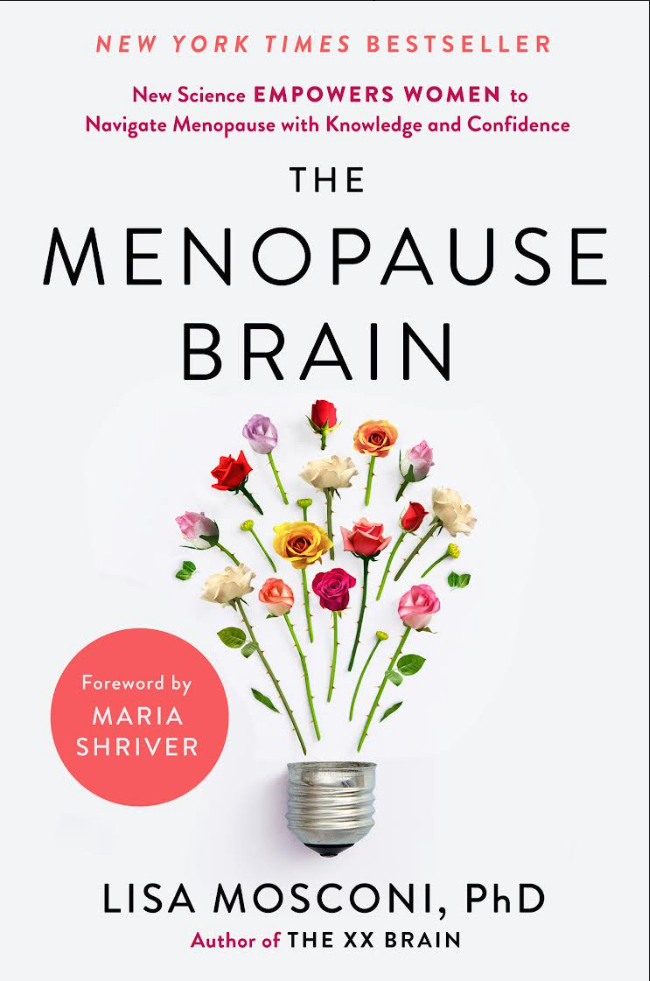
Your brain isn’t breaking. It’s rewiring in ways no one explained, and for many women, menopause is the moment everything suddenly feels unfamiliar.
Brain fog, sleep disruption, anxiety, memory lapses, and feeling unlike yourself can be deeply unsettling, especially when no one has given you a framework for what’s happening. In this conversation, we explore the science behind midlife brain changes and why menopause is a neurological transition, not a personal failure.
Dr. Lisa Mosconi is an associate professor of Neuroscience in Neurology and Radiology at Weill Cornell Medicine and director of the Alzheimer’s Prevention Program and the Women’s Brain Initiative. She is a world-renowned neuroscientist and the New York Times bestselling author of The Menopause Brain.
In this episode, you’ll discover
• Why Alzheimer’s risk begins in midlife, not old age
• What estrogen actually does in the brain and why its shift matters
• The hidden reason brain fog and mood changes show up during menopause
• How the brain adapts and rebuilds after hormonal change
• What science currently says about hormone therapy and brain health
Menopause can feel confusing and isolating, but understanding what your brain is doing can replace fear with clarity. Listen to learn how to navigate this transition with more confidence, compassion, and agency.
You can find Lisa at: Website | Instagram | Episode Transcript
Next week, we’re sharing a really meaningful conversation with psychiatrist and mental health educator Dr. Tracey Marks about what anxiety really is, why it feels so physical, and how understanding your brain can help you feel steadier and more at ease.
Check out our offerings & partners:
- Join My New Writing Project: Awake at the Wheel
- Visit Our Sponsor Page For Great Resources & Discount Codes
_____________________________________________________________________________________________________
Episode Transcript:
Jonathan Fields: [00:00:00] So, according to my guest today, there is a moment that many women experience in midlife where many things start to just feel off. Memory feels unreliable, sleep gets fractured, emotions feel closer to the surface, and quietly a question starts to form. What is happening to me? Today’s conversation is a deeply grounding answer. My guest is Dr. Lisa Mosconi, a neuroscientist at Weill Cornell Medical and one of the world’s leading researchers on women’s brain health. Her work focuses on how women’s brains change in midlife and beyond, with a focus on how menopause reshapes the brain and why this transition is far more neurological than most of us were ever told. We explore why Alzheimer’s risk actually begins in midlife, what estrogen does inside the brain, and how brain fog and mood shifts are signs of adaptation, not decline. We also talk honestly about things like hormone therapy, where the science is now and what questions still need to be answered. This is a conversation about replacing fear with understanding and confusion with clarity. And maybe most importantly, about trusting the intelligence of a brain that is learning how to function in a new way. So excited to share this conversation with you! I’m Jonathan Fields and this is Good Life Project.
Jonathan Fields: [00:01:21] It’s fun to have this conversation with you. You were born and raised in Florence. From what I understand, your parents were scientists, so you have been around the world of science and exploration literally since, you know, the earliest possible days. And as you moved into your career, spending a lot of time studying women’s brain health, this is also very personal for you, though, because you could have gone a lot of different directions. But tell me, what really drew you to say? Like, this is where I want to invest so much of my my time and energy.
Lisa Mosconi: [00:01:50] Yeah. When I was going through university, I studied neuroscience, and then I was starting my PhD, also in neuroscience and nuclear medicine. So really the apple did not fall far from the tree. Um, that’s when my grandmother started showing signs of cognitive decline and cognitive impairment. And that was really shocking and heartbreaking in many different ways, including that she was such an intelligent woman. She was so mentally strong and active and so fiercely independent. You know, she would take care of everything for everyone. She was a little bit like the heart of the house, but also the brains of the family in a, in a way. And then she really started not being able to enjoy her life. And that was terrible. But what was perhaps even more frightening is that my grandmother was one of four siblings, three sisters and one brother. In all, three sisters developed exactly the same kind of cognitive decline and then dementia. My grandmother eventually was developed, was diagnosed with Alzheimer’s disease and dementia, but the brother did not. So I think for my mom, her cousins, her female cousins and for myself, that was a big red flag. It was just is it just our family that is so deeply impacted by Alzheimer’s and especially women in the family? Or is there a bigger lesson that needs to be learned? And that’s what shaped my trajectory and my career ever since.
Jonathan Fields: [00:03:41] I mean, when you see that something and it touches you so personally on a day to day basis, how could you not? And especially that ratio that you described, you know, like three sisters, one brother, all the sisters experienced the the same thing, and the brother somehow escapes this fate. Yeah. And I would imagine as a young woman in this family, too, you’re wondering, how can I understand this? And also, am I going to be okay? Is my mom going to be okay? And is there a way to understand what’s really happening here? And maybe we can, you know, understand is this our fate? Is this. Are there other circumstances or contributors when you eventually decide to to say, okay, I’m going to really dive into this question. I mean, it seems like that really sets your career in motion. It leads you down a path of going deep into exploring women’s health with a focus on the brain. But when you do that also and tell me, correct me if I’m wrong here carving out women’s health or like saying I want to study women’s brains, I would imagine there are a lot of raised eyebrows. People saying, but what’s the difference? Like why women only isn’t it just isn’t a brain a brain?
Lisa Mosconi: [00:04:51] Yes, and you’re so right. And this is one of the biggest, or at least one of the earliest pushbacks that I’ve received, uh, back then. So there’s, there’s this notion in neuroscience, the really, really permeates the field of neuroscience that sex and gender do not matter one bit. There are, of course, some neuroscientists that specialize in sex differences in neurological disorders and neurosciences. But we are a minority. And when I started, that was a long time ago. I published my very first paper in 2003. So that was a really long time ago, and there was still a student. I hadn’t even finished my PhD back then. I had just started and I went to my mentors and to my supervisors, who are absolutely fantastic, really. I was so fortunate and so lucky. And I said, I really want to understand genetic predisposition in Alzheimer’s disease because I thought it’s got to be genetic with an eye on sex differences and whether or not it matters for women especially. And they said to me, and this is something I still get every day almost in my line of work. And this is more than 20 years ago, right? They said, well, we do know that more women than men suffer from Alzheimer’s disease. So we have known since the 1990s that after getting older, after aging itself, being a woman is the strongest risk factor for Alzheimer’s disease. So much so that today almost two thirds of all Alzheimer’s patients are women.
Jonathan Fields: [00:06:47] I want to reinforce so the number one risk is age. Number two behind that is being a woman.
Lisa Mosconi: [00:06:53] Well yeah. Being born with two X chromosomes. Yes. Right. Yeah. But women live longer than men. And Alzheimer’s disease is a disease of old age.
Jonathan Fields: [00:07:04] Mhm.
Lisa Mosconi: [00:07:05] So unfortunately, at the end of the day, more women than men have Alzheimer’s disease. And that makes sense in principle. But once you look at the actual data, women don’t live that much longer than men. So in the United States the difference is four and a half years, 4.4 years. In England, the difference is two years. And Alzheimer’s disease is the number one cause of death for women and not men. And the gap in prevalence is again, it’s the 2 to 1 ratio. So it can’t just be longevity. Also if it was just aging then women would also show a higher risk of other age related dementias.
Jonathan Fields: [00:07:50] That would make sense. Yeah.
Lisa Mosconi: [00:07:52] Vascular dementia, Lewy body dementia, frontotemporal dementia. There are many different types of dementia. However, we do not. It is only Alzheimer’s disease. I could give you counterarguments for the next half an hour because I have looked into this forever. But I’ll just. Long story short, I decided to look into that, and we can now really say that the field has changed, that our understanding has changed, and that we’ve all come together to understand that the premise was incorrect. Alzheimer’s disease is not a disease of old age. It is a disease of midlife with symptoms that start in old age. But the actual disease, the process that leads to the symptoms, starts decades prior in mid-life. So that completely changed the question to, well, if Alzheimer’s disease is a disease of midlife and women have a higher lifetime risk as compared to men starting in midlife, in fact, starting at age 45, then the right question is, well, then what happens to women and not to men in midlife? They could explain the higher risk down the line.
Jonathan Fields: [00:09:19] So many questions. I feel like the last, I don’t know, 3 or 4 years. This has become a topic of such public discourse in a way that I’ve never seen before. And you’ve been become much more forward facing about. There are a group of people that seem to be really pushing this, and in no small way normalizing the conversation is, do you feel like that’s the right word?
Lisa Mosconi: [00:09:44] I think that’s a beautiful, beautiful word. I thought you were going to talk about the menopause wars. Where where people are almost, you know.
Jonathan Fields: [00:09:52] Yeah, we’re seeing that too. And we may touch into that, but.
Lisa Mosconi: [00:09:55] Yeah, I think normalizing the conversation is so important and so necessary. And we should be doing more of that because, you know, all women who live to mid life will go through menopause. It’s unavoidable, almost like puberty. Right. There are there are three major neuroendocrine or hormonal turning points. Or there can be in a woman’s life which are puberty, pregnancy which is optional, and perimenopause, which is the transition to menopause. And as a society, we’re well equipped to support a woman as she goes through puberty. And then especially when she gets pregnant, we have parties and baby showers and celebrations, and there’s zero support in place for menopause, which is a universal event all over the globe. In fact, the understanding of menopause is of something that puts a woman at a disadvantage, right? There is so much stigma. There is so much bias. There are there are stereotypes around menopause and what the menopausal woman is supposed to be or act like that are harmful or demeaning and really need to be addressed. When I started looking into menopause as a scientist, but also as a woman, what struck me the most was the complete absence of a sense of accomplishment, or even just status gained, or the notion that you have reached a very important milestone in your life.
Lisa Mosconi: [00:11:46] And there’s there’s no celebration, there’s no acknowledgement. And so many women just go through it in silence. They feel like nobody wants to hear about this. Nobody wants to know my story. And that is not true. That is so not true. I think there’s so much desire to learn from older women, from women with more experience. And I find it so beautiful when when women do share their experiences and and their their thoughts and how they have dealt with certain situations, it’s such a gift to younger women. For me, it was wonderful when my mother talked to me about her menopause and when her friends would talk to me about it, and now I talk to my daughter about puberty and pregnancy so that she doesn’t have to be confused. She doesn’t have to be taken aback when that happens. I want her to be empowered to just take care of herself and get Ahold of her life at any age and any hormonal transition point.
Jonathan Fields: [00:12:57] That makes so much sense, right? Because you were describing, um, you know, there are these three potential, um, really major transitions. You know, there’s puberty, there’s childbirth. If a woman decides that that’s that’s right for her and there’s, you know, perimenopause or menopause, should you be blessed to actually live to a point where you move through it? And we do have like there are rituals, there are things where you know what to do and how to handle it in conversations for the first two, but there’s really nothing for menopause. In fact, it’s it’s almost like the opposite. Let’s not talk about this. It’s uncomfortable. So we just kind of push it away rather than you’re saying, no, let’s ritualize this. Similarly, let’s celebrate it and let’s let’s bring it forward.
Lisa Mosconi: [00:13:40] Yes. And the other thing that we need to do is to provide a framework. We need to formalize menopause in the medical and scientific field first, because that is going to be the backbone for all women that they can refer to. And right now we are missing this understanding that we otherwise have for puberty and for pregnancy and for other things that can happen in women’s health. But we do need to formalize one thing, for instance, that so many women don’t know. There are so many, so many things that most women don’t know about menopause. And one thing that is important to, to me to really explain is that there is a range of symptoms and responses to any hormonal transition state, and I think that that really brings everything into perspective, if I may share.
Jonathan Fields: [00:14:34] Yeah.
Lisa Mosconi: [00:14:35] Okay. So when you go through puberty, right, a lot of girls experience changes in body temperature. You start sweating or you have the chills. You start noticing the weather more. At that point, you you may experience changes in sleep. Sleep quality. Sleep quantity. How many teenagers just sleep until noon and they’re up all night? The pattern is changing. There are changes in mood for many women and men. Puberty is when you first experience anxiety or depression or related symptoms, right? So turning point is an inflection point for mood changes. It’s an inflection point for libido for sure. Right. And it’s an inflection point for memory consolidation attention and language. We understand that because it’s a system. There is a system in the body called the neuroendocrine system that connects the reproductive organs with the brain, and as the system evolves and develops and changes, so does part of the brain. So then fast forward to pregnancy. 30% of pregnant women experience hot flashes, which are changes in body temperature. Lots of women have trouble with sleep. Lots of women have trouble with mood. We talk about the mommy brain, right? We talk about the baby blues. We are aware that when your hormones kick in and then drop out, that can impact a woman’s mood. There’s brain fog when you’re pregnancy. Lots of women have brain fog. They have trouble remembering things. They some feel like they have ADHD all of a sudden, and that resolves over time, usually when the kids are, like two years old or so. The same exact Symptoms come back or may appear for the first time in menopause. We have the half flashes and night sweats, which are changes in the way that the brain regulates body temperature.
Lisa Mosconi: [00:16:46] There can be anxiety and depression. There are certainly mood changes. We used to say swings, but that is not really nice. So we say mood changes or changes in mood patterns or mild depressive symptoms. Definitely sleep issues, insomnia or fractured sleep. And then, like you said before, the brain fog is a huge concern. The memory lapses, the attention issues, fluency. When you can’t come up with words that you’re very familiar with, those are the same symptoms. However, when it comes to puberty and pregnancy, we understand that these things can happen and that there is a range. Some women don’t have any of those symptoms. For some women, they may be mild or moderate, or in some cases severe. When it comes to menopause, there is no formal understanding or framing that there is a range that some women, about 10% max, have no particular symptoms other than reproductive changes. But almost 90% do experience some brain symptoms, some neurological symptoms. And this needs to be better started, better researched, better understood, and then shared with women so that nobody panics when these things happen. I was doing a podcast the other day with my friend Doctor Mary Claire Haver, and she was like, I’m not in menopause, not even close to menopause yet, as far as I know. She was like, are you scared of going through it? I was like, no, why would I be scared? I trust my body, I trust my brain and I trust my ability to take care of myself and make the right choices. And the point here is that we want all women to feel the same way.
Jonathan Fields: [00:18:42] And we’ll be right back after a word from our sponsors. This brings us to this moment where we’re talking a lot about the physiological changes and psychological, because as you’ve described in research for so long, this affects the brain too. And I think a lot of times, you know, initially the thought was, well, this is a change that happens in hormones, in reproductive systems. And what you’re really saying here is this is actually neurological. This is neuroendocrine. This is like both the brain is deeply affected. And is it right to also I guess want to my curiosity is is what’s driving what.
Lisa Mosconi: [00:19:18] Right. Thank you for for asking. I think this is so important to make sure that everybody is aware of this. So we are born with a neuro neuroendocrine system which is neural for brain, endocrine for hormones, that connects the ovaries to the brain. It’s one actually the most important physiological highways in a woman’s body. In this system is activated during puberty and then is overactivated. When a woman gets pregnant, every time a woman gets pregnant and then is at least partially turned off as women go through menopause. And what powers this communication system between the ovaries and the brain is the hormones that we refer to incorrectly as sex hormones estrogen, progesterone, testosterone. So these hormones were discovered a long time ago, in the 1930s by scientists that were studying reproductive function. And back then they identified the hormones and said, okay, these are sex hormones. We need them to have children. But it’s only in the 1990s, the scientists realized that the same hormones that are responsible for fertility also serve very important functionalities in the brain. So they’re not sex hormones, strictly speaking. They’re brain hormones, too. And estrogen in particular is considered the master regulator of women’s brain health because estrogen is a very powerful hormone in many ways for women, because it supports a number of functionalities within the brain, it supports brain plasticity, which is a measure of brain resilience, is the ability of neurons to connect with each other and talk to each other. And if something goes wrong, you just reroute your pathway. You remain supple and flexible over time, but also estrogen supports blood flow to the brain, which is important for oxygen for nutrients. It’s an antioxidant hormone, reduces free radicals impact and oxidative stress. It’s an anti-inflammatory hormone.
Lisa Mosconi: [00:21:51] It does a lot of beautiful things inside the brain, and that happens throughout a woman’s life until menopause. With menopause, the ovaries stop producing the most powerful form of estrogen, which is called estradiol. And it’s almost like for the brain, it’s almost like your CEO. It’s been there for 50 plus years, is now gone. Right? And there’s a new CEO that’s taking this taking the lead. It’s called estrone, but is not nearly as powerful or as knowledgeable. You know, if you are as estradiol and so things don’t quite work or as present. Let’s put it that way as estradiol. And then things just don’t work the same way that they used to, which means that the brain really has to reset and switch gears and adjust to functioning without estradiol. And the wonderful thing is that women brains do have that ability. We and others are showing increasing evidence that the human brain has the ability to basically recalibrate itself, rewire itself, and switch gears metabolically so that they can keep going even though your ovaries are closing down shop, your brain carries on. And then I have to say, as a woman, I thought it was really amazing to learn that this is not universal. Most animal species, most females in different animal species just die soon after the end of the reproductive span. There are just a few species where female outlive their menopause like whales, killer whales, narwhals, potentially some elephants, some Asian elephants, a bug, the Japanese aphid for whatever reasons, and women. So we are fortunate in many ways that our bodies and brains have the ability to just renovate themselves and carry on. I think that’s something that is important to be aware of.
Jonathan Fields: [00:24:08] I never really heard it explained like that. It’s so it’s like as this hormone is being downregulated in your body and just not being produced at the same level, your brain is forced to figure out, how do I keep on keeping on without this thing that is so critically important to all of these different functions, from cognition to mood to regulation. So now I’m fascinated. You’re sharing that we do actually have the ability to kind of like through neuroplasticity, rewire and be able to function at a very high level and regain mood. And without that, the estradiol present. Do we understand how. Yeah.
Lisa Mosconi: [00:24:51] How deep do you want me to go on to.
Jonathan Fields: [00:24:54] I mean, like on on a level that that a non-sophisticated person like me might understand, but I’m just really curious now, like, how does that happen?
Lisa Mosconi: [00:25:02] It’s fascinating. So I think one part of the puzzle is that I should explain is the neuroanatomy of menopause. So this neuroendocrine system connects the ovaries to the brain but to very specific parts of the brain, and those are the brain parts that are specifically in charge of very ancient functionalities like memory and mood and sleep and wake and regulating heartbeat, but also thinking and reasoning, the frontal cortex. So the reason that we have the symptoms is that those specific parts of the brain are very responsive to estrogen levels, but not only estrogen levels. There are many different other factors that support health within those brain regions. So I think it’s important to think of estrogen as an activator in a way. One of the most important functionalities of estradiol in particular, which is one type, is the most powerful and more abundant type of estrogen, is that it supports energy production in the brain, everywhere in the brain, especially in those brain regions, but also a little bit everywhere in the brain. And the way it does that is by supporting glucose metabolism. So the human brain. Men and women, the human brain runs on glucose for energy. Glucose is a simple sugar. Your neurons, actually, your astrocytes, use the glucose and then feed energy to neurons and. But even neurons take the glucose and turn it into energy. For women, that changes with the menopause transition, because at that point, estrogen is no longer there to push the glucose into your brain cells.
Jonathan Fields: [00:27:00] So the fuel that it needs to function all of a sudden, one of the major mechanisms that makes that available falls away.
Lisa Mosconi: [00:27:08] Yes. And what my colleague has shown, Doctor Roberta Diaz Brinton, she’s a preclinical scientist. She does a lot of mechanistic work, but she has shown is how resilient the brain is. And the brain at that point in time is thinking, well, if glucose doesn’t work for me anymore, I’m going to turn into a hybrid. I can no longer depend on glucose. I’m going to start using something else for energy. And the something else is first protein, amino acids, which is not the best choice if you’re a brain because you really need the amino acids to make neurotransmitters. And so then you see how the brain will switch to fat. And so then the brain starts using fat as a major source of energy, which is very smart. The rest of the body can do it too. But in the brain, this mechanism is very delicate, and this switch is prone to glitches which manifests themselves, at least in part in the hot flashes, the night sweats, the depressive symptoms, the brain fog and whatnot. For many women, this process, it needs to be better, better studied. But what we’re thinking is that for some women, the process is more efficient. Or perhaps it’s faster. For other women, it may be slower or not as efficient. And then the long term effects are different. We do believe that part of the reason that women have a higher risk of Alzheimer’s, for instance, is that estrogen also prevents the formation of Alzheimer’s plaques and Alzheimer’s lesions. So when you lose this protective layer that estrogen provides, the brain is left in a more vulnerable state, which is when we, my team and I and other teams as well, using brain scans. This is when we see the lesions of Alzheimer’s disease, the Alzheimer’s plaques really starting to accumulate in some women’s brains. Not all women, but for some women, we and others have shown that menopause is a tipping point or an inflection point for Alzheimer’s risk. So every brain is different, and we’re trying to really better understand what leads down this pathway or a better pathway, and how can we intervene.
Jonathan Fields: [00:29:45] It’s like everything has to get rewired.
Lisa Mosconi: [00:29:48] Everything has to be rewired. Can I tell you my theory about.
Jonathan Fields: [00:29:52] Why I’m.
Lisa Mosconi: [00:29:52] So curious? Oh. Thank you. So this is what we’ve learned from puberty and pregnancy. When you go through puberty, you actually lose half of all your neurons and connections between neurons.
Jonathan Fields: [00:30:07] Whoa!
Lisa Mosconi: [00:30:07] Yes. This is actually so before puberty, you have the most neurons you will ever have in your life.
Jonathan Fields: [00:30:15] Okay.
Lisa Mosconi: [00:30:16] As you go through puberty, the drop. Which sounds really alarming, right? In reality, that is very smart because the brain is very metabolically active. It’s the one organ in the body that takes up the vast majority of energy and is really hard to just maintain functionality over time. So if you’re a brain, it makes sense to say, ooh, wait a minute. From now on, we may get pregnant here, we may have a baby. We’re grown ups. We’re members of society. I no longer need all these neurons and connections that I needed to learn to ride a bike. I know how to write. I know how to use a credit card. I know how to do all these different things. I can go in autopilot. So I’m going to get rid of all the things they no longer need, right? So takes remodeling. There can be glitches, there can be symptoms. But you also end up when the transition is complete, which, by the way, can take up to 8 or 9 years. I’m going to have a really mature, very well connected, very cost effective brain. And this new rewiring that happens during puberty also allows me to develop theory of mind, which is the ability to put myself in other people’s shoes. In fact, what we’ve learned is that all this rewiring that takes place during puberty, I promise, is relevant to menopause, really supports your ability to have a good place in society, makes you it helps you be a good member of society.
Jonathan Fields: [00:31:57] It’s wiring you for compassion and prosociality.
Lisa Mosconi: [00:32:00] Yes, exactly. The same thing happens during pregnancy. We lose neurons. We lose white matter for at least a few years after the baby is born. And then there’s a rebound in the recovery, because there’s a lot of rewiring that takes place where your instincts need to be stronger. You need to, again, you need to be able to mentalize that kid won’t speak to you for years. You need to literally learn to read minds. You become even better at dealing with people, but you’re losing neurons, and you may have those symptoms that are upsetting and difficult and disruptive. Menopause is no different. Menopause is actually when you no longer have a reproductive life. So all the neurons that were necessary to get pregnant in the first place, to grow a baby, to take care of the baby later, those can go. So my theory at least, is that the rewiring that takes place in the menopause brain is number one necessary because you do need to get rid of the neurons that you no longer need. Moving forward with your life. But at the same time, it seems to strengthen the deepest parts of your emotional brain, like the amygdala, the brain structure that is involved in empathy. Like you said, compassion, just being more emotionally in tune with other people. And that’s something the studies have shown in postmenopausal women that empathy is of the charts. Postmenopausal women are by far the most empathic individuals in any gender and age groups globally. And there’s also this ability, at least preliminary studies show that the ability to sustain happiness is improved after menopause. You are less impacted by negative things. I think that may have upset you, but at the same time you are more likely, at least in those studies, to be able to sustain happiness. Just stop sweating the small stuff, you know. You know what matters. There’s more clarity towards yourself and your life, and that could be psychological. But there seems to be a neurological basis because we do find changes on the brain scans.
Jonathan Fields: [00:34:35] That all sounds powerful, and it makes so much sense. There’s sort of like this evolutionary reason for these changes, these shifts that each one of these major phases, but also within each one of them, there’s this window where everything is sort of like thrown to the wind, where there’s a lot of disruption, there’s a lot of upheaval. It’s probably physiological and psychologically uncomfortable concerning on varying different levels. While you’re in the middle of that window, which could last anywhere. Could last years.
Lisa Mosconi: [00:35:05] Let’s just be clear. It can last anywhere between two years.
Jonathan Fields: [00:35:09] Yeah.
Lisa Mosconi: [00:35:10] And 15.
Jonathan Fields: [00:35:11] Wow. That’s a long time to be feeling that way.
Lisa Mosconi: [00:35:14] It’s a very long time. The average is seven years.
Jonathan Fields: [00:35:18] Okay.
Lisa Mosconi: [00:35:19] And that’s only to get to the final menstrual period. Your brain, your ovaries are done. At that point, your brain is not. So there are more years afterwards. It’s called the early postmenopausal stage, where your brain is still rewiring. So the whole process can span a decade, if not longer. And and women don’t know. Women don’t know. We should know because we should be able to plan for that. We should know what’s happening. We should know that it could take time. Hopefully it doesn’t take that long. Right? But there’s a possibility. And we need to know. We need to be prepared.
Jonathan Fields: [00:35:57] Do doctors know?
Lisa Mosconi: [00:35:59] Yes. So there’s a staging model for menopause that is not about the brain. It’s only almost about the ovaries. So when you start around age 35, that is considered the early premenopausal window where you are almost, you know, effectively midlife, but you have a regular menstrual period. A little bit later on, you may notice, as a woman, I don’t know how comfortable you are talking about periods and masters. Okay, fantastic.
Jonathan Fields: [00:36:30] Yeah.
Lisa Mosconi: [00:36:30] So when you can feel like your cycle is a little bit different, it could be slightly shorter, slightly longer, just a couple of days. It may be lighter, it may be heavier, but it’s still regular. That is the late premenopausal stage. And many women start reporting sleep disturbances at that point or irritability. So there are symptoms of that may or may not be menopause. But we’re investigating that. Afterwards you start skipping periods so your period is no longer every month. It could be every two months, every three months. That is the early perimenopausal phase. And that’s when the actual symptoms of menopause can start popping up here and there. Not consistently. Once you start skipping periods for more than three months at a time, especially if it’s more than six months at a time, that’s the late perimenopausal stage, and that’s usually when the symptoms hit you hardest.
Jonathan Fields: [00:37:31] Okay.
Lisa Mosconi: [00:37:32] Before the final menstrual period, years prior, that’s when most women have a harder time or can have a harder time. The hot flashes are at the worst and the other sleep disturbances mood, brain fog. That’s when they are more likely to impact a woman. Then there’s the final menstrual period, for whatever reason, that is menopause in clinical terms, right? Just that one day on the calendar when you’re like, oh, I haven’t had my period in a year straight, now I’m in menopause. What most people don’t realize is that there are other phases afterwards. There’s an early post-menopausal stage that could be anywhere between two years and six, and the symptoms are still present, but usually they’re kind of dissipating and fading. And then more than six years after the final menstrual period, that’s your late post-menopausal stage, which is going to be the rest of your life. And this is all based on your menstrual cycle, pretty much, and your hormone levels. The brain does not necessarily follow the same dynamics, and we are trying to better understand what happens in the brain and when relative to ovarian function. They’re not like hand to hand. It’s there’s a disconnect that needs to be better, better understood.
Jonathan Fields: [00:38:56] So it’s like your your reproductive physiology has a certain time cycle and it’s related to changes in your neurological physiology. But they’re not the exact same like they’re both working in parallel but but also going through similar but related but not the same processes. And they have slightly different time frames potentially.
Lisa Mosconi: [00:39:18] Oh for sure. Because otherwise we will lose our minds every time we have a period. Right. The brain needs to be connected to the ovaries and needs to to be informed of ovarian function, but it cannot be dependent on, in fact, something that most women don’t realize is that when you measure hormones in your blood, if you have estrogen levels measured or progesterone, that doesn’t tell you anything about the levels of hormones in the brain, they’re different. They’re two separate systems. The brain keeps whatever concentrations quite stable by shielding itself chemically from the rest of the body.
Jonathan Fields: [00:40:00] Yeah, and we’ll be right back after a word from our sponsors. One of the questions that always comes up is like, as you’re experiencing all these different symptoms, these changes and these season of where there’s a lot of things that don’t feel good in the moment because your body is in the middle of shifting and rewiring and adapting. How do we navigate that with as much ease as possible? One of the things that has become a real source of controversy over the years, you know, where I’m going with this is hormone therapy. Of course, you know. And for decades back it was prescribed. And then there was some research that came out that basically created a lot of fear and a lot of people. And it feels like we’re now in this window where you you brought up earlier in our conversation, the menopause Wars. There’s a real difference of opinion about the role of hormone therapy in helping to navigate this moment. Give me some context here.
Lisa Mosconi: [00:41:01] Yes. So like you said, there’s this is quite unprecedented in medicine. But what happened is that hormone therapy was prescribed very commonly to women before clinical trials were run. To test the efficacy and safety. In the late 1990s, the NIH decided to start to launch the largest clinical trial of women’s health in history, which is called the Women’s Health Initiative. And they were not just testing hormone therapy for half lashes. They were also testing hormone therapy for things that were already in the headlines that you should take hormone therapy to be young forever and to prevent heart disease and to prevent dementia. Right. And so they were like, well, this has to be tested. And so they launched this enormous clinical trial that unfortunately did not work for those specific endpoints dementia and heart disease. And so the trials ended in 2002 and then in 2003. What the headlines, however, ended up reporting on was the increased risk of breast cancer in one specific part of the clinical trials. So this is what’s important to to know in a nutshell. Those were clinical trials of women who were mainly in their 70s and 80s many years after menopause. First thing that’s very important. Number two, the type of hormones tested were not the same that we typically use today. They tested high doses of oral conjugated equine estrogens or Cees. We still use these today, but not at those specific dosages. And most importantly, a type of progestin, which is a synthetic version of progesterone that has been discontinued because it was later shown to sometimes potentially increase the risk of vascular damage.
Lisa Mosconi: [00:43:09] So those women were too old for any preventative effects to have a chance to occur. And number two, those results do not apply to women in midlife who take hormones for menopause as they go through menopause. And most importantly, the results do not apply to the type of hormones that we use more often in clinical practices today. However, what everybody was scared about was the risk of breast cancer. Now there were two different arms, or there were two different trials in the Women’s Health Initiative. There was one trial with the conjugated equine estrogen and the progestin, and one trial with only estrogens okay. Estrogen plus progestin. 26% increased risk of breast cancer. Estrogen only 22% reduced risk of breast cancer. But what the media picked on was the increased risk of breast cancer. And all women. Many women have really, really scared and they stop using hormone therapy. And hormone therapy is reputation really has not recovered since which is a problem. One thing I want everybody to know I’m a scientist, I love statistics, I have studied statistics the vast majority of my life, including dinners and, you know, my parents conversations with friends. Those clinical trials were not looking at breast cancer as an end And point. Those were incidental findings. Those were not results of the study. But the trials really show is an association, not a causative effect. I think this is important to understand for many women.
Lisa Mosconi: [00:45:03] All of us have heard that hormone therapy can cause breast cancer. That is the wrong word. Hormone therapy does not magically generate cancer. It’s not like radioactivity. It’s not like chemical compounds that can change the molecular structure of your cells. What can happen, which is important to know, is that you may have precancerous cells, you may have a small tumor, and you don’t know if you add hormones, if those are hormone receptive cells and you add hormone that may grow. That’s what estrogen does. It makes things grow. Right? So that is where prevention is really important. That’s where mammograms are really important. Ultrasounds, MRIs. We have a lot of options today for screening and prevention. That’s one reason I believe that professional societies now say as a 2022, the guidelines have changed. And professional societies which are appropriately very conservative, do say that the risk of breast cancer is rare for most women in midlife who take standardized, carefully controlled doses of hormones that we have tested in clinical trials. So as long as you follow the guidelines and you work with your physician, that the risk of breast cancer is considered a rare occurrence, I think that is very reassuring because it means that hormone therapy is on the table, but at the same time, it’s not like a silver bullet. It’s not magic in any direction. It’s one tool that we have to support and alleviate specific symptoms of menopause for women who are eligible.
Jonathan Fields: [00:46:57] Yeah. And of course, just to put this out there, this is not medical advice. This is just really good information. Talk to your if you’re in this moment and you’re trying to figure out what’s right for you. Sit down with your qualified health care provider or practitioner and just have a really good, deep, rich conversation about what is appropriate for you in this moment. As you’re describing this, something else kind of pops up also, which is if, as you mentioned earlier, without hormone replacement therapy, over time, your brain will eventually move through all these changes and kind of rewire itself. So you’re functioning at a high level again and feeling the way that you want to feel without the same level of estrogen. And granted, this may be really uncomfortable while you’re moving through it, and it may last a really long time. Is there a risk if you introduce hormone replacement therapy that that organic rewiring won’t actually happen?
Lisa Mosconi: [00:47:56] The organic rewiring is something that we have the potential to go through, as I mentioned before. For some individuals, again, a lot more research is needed to really understand. So the preclinical work that’s been done is in is in rats. In women, we still need to do a lot of the work, but our understanding is that hormone therapy could be and this needs to be tested and proven. We’re doing it now. This is the kind of research myself and others doing now. Hormone therapy will support the transition by not letting your brain go through the crash. That’s one theory, right? It can’t sustain functionality for longer, it needs to be proven we and others are working on it. There are many different types of hormone therapies as well that are worth investigating, and there is, however, no evidence that that would impair your recalibration. But I think what’s missing in our field has been a tool that allows us to look at what estrogen is doing in the brain. Like I said, you can measure it in blood, but we do not yet have accurate ways to measure estrogen activity in the brain. So what my team and I have done in the past is that we’ve been able to use positron emission tomography Pet imaging, which is the kind of technique where the brain looks like red, yellow, blue. We were able to use one tracer to measure estrogen in the brain, and we’ve done it. But we’re still the only one, the only team who have I looked into that, and right now, as part of my new program of research, we’re trying to develop more ways and more techniques to really look at estrogen in the brain, because that is important to test the effects of hormone therapy. Right. If we don’t have a way to measure what these hormones, endogenous or exogenous, are doing in the brain, that we’re really we’re flying blind when it comes to prescribing hormones for brain health. So this is one of my next steps in research.
Jonathan Fields: [00:50:12] I will be following along with your research closely. I’m fascinated by this. I want to maybe start to close the loop here. The earlier part of our conversation, we were talking about Alzheimer’s and cognitive decline. And that brought us into this conversation of this notion that this is actually a disease of midlife. It starts in midlife. And what is the one of the primary differences between women and men in midlife? It is moving through menopause. If we come back to the conversation around Alzheimer’s here, and we’re trying to look at the experience of menopause and help people not just navigate the discomfort or the changes in the brain, but also navigate in a way which maybe minimizes the potential for dementia or Alzheimer’s.
Lisa Mosconi: [00:50:57] Absolutely.
Jonathan Fields: [00:50:58] What are we thinking about here? Like, what are the changes that we want to explore?
Lisa Mosconi: [00:51:02] What we’re thinking here is the program that I just launched in July. I was so fortunate that Doctor Regina Dugan, who is the former director of DARPA, the advanced research program agency for defense, is now working in health. And she launched Welcome Leap, which is an independent subsidiary of the Wellcome Trust, one of the world’s largest organizations, charitable organizations. And she reached out to me and she asked me to develop and run in direct. A program of research that they funded is a $50 million research program which is entirely dedicated to women’s health hormones and Alzheimer’s risk for women. So it’s called the sprint. We have a three year grace period and $50 million to. What I love about this project is that I’m running it, but it’s effectively it’s a network of scientists from all over the world working together to address a difficult question that none of us alone could hope to really answer. And so, all together, there’s strength in numbers. And we have 70 leading scientists from all over the world working together to address exactly these questions and bring clarity on questions that have been very controversial in our field. Does menopause will increase the risk of Alzheimer disease for all women. Or is it just some women? How does it do? If so? And can we offset the risk using hormone therapy in menopause? And what kind of hormone therapy is best and for which women. And what are the genetic markers of susceptibility. Does lifestyle play a role? What are all the different risk factors that we need to address and balance out to really protect a woman against Alzheimer’s? So our goal the name of the program is care. It’s my idea. It means cutting Alzheimer’s risk through endocrinology c.a.r.e. Care. And our goal overall. And we have done panels. We know that this is potentially going to help or has the potential to happen if we really hit all the marks. Our goal is to reduce the risk of Alzheimer’s disease for an estimated 330 million women globally and given current conversion rates to Alzheimer’s, hopefully prevent almost 55 million new Alzheimer’s cases among women by the year 2050.
Jonathan Fields: [00:53:47] Powerful. And it sounds like you’re in the early stages there, but the ability to I mean, it’s both what like funded and the ability to you know, one of the biggest problems in science is the siloing. Like everyone’s protective and they’re just working their own labs. And it sounds like you’ve brought together a network of 70 scientists from around the world who are breaking the silos and sharing and exploring this. Um, I’m excited to see what unfolds from your research in the coming years. And I think, uh, me too, because it’s such an important set of questions that we need answers to, you know, to first understand what’s really happening here, what is the connection, and then what interventions might be effective.
Lisa Mosconi: [00:54:28] Because, see, as women and this is the problem we’re having today, that the awareness has increased exponentially. But the science hasn’t quite caught up with the questions that women now have. And that’s when people just start sharing opinions. Right. And there’s everybody’s now a menopause expert and an Alzheimer’s prevention expert and the brain expert. And then we get confused because one person says take hormones. The other person says don’t take them. The other person is like, it’s all about magnesium. And it just is there. So we are building the science that women deserve. And I understand that we all want answers now. You know, so do I. But it’s important to have the right answers that are based, grounded in evidence. Not fear, not marketing, not soundbites, and certainly not other people’s opinions. So it’s a privilege to be able to do this kind of research. And we’re all very motivated. We work really, really hard and I’m quite confident that we’re going to have good answers in the next three years.
Jonathan Fields: [00:55:35] That feels like a good place for us to come full circle as well. So final question. In this container of Good Life Project., if I offer up the phrase to live a good life, what comes up?
Lisa Mosconi: [00:55:45] Oh, for me, being with my family, I really for me, living a good life is hopefully being healthy and just as in love with my family as I am right now.
Jonathan Fields: [00:55:57] Mm. Thank you.
Lisa Mosconi: [00:55:59] Thank you, thank you so much for having me.
Jonathan Fields: [00:56:01] My pleasure. Hey, before you leave, be sure to tune in next week for a conversation with psychiatrist and mental health educator Dr. Tracey Marks about what anxiety really is, why it feels so physical, and how understanding your brain can actually help you feel steadier and more at ease. Be sure to follow the show so you don’t miss that episode or any new episodes we share. This episode of Good Life Project was produced by executive producers Lindsey Fox and me, Jonathan Fields. Editing help by, Alejandro Ramirez and Troy Young. Kristoffer Carter crafted our theme music. And of course, if you haven’t already done so, please go ahead and follow Good Life Project in your favorite listening app or on YouTube too. If you found this conversation interesting or valuable and inspiring, chances are you did because you’re still listening. Here, do me a personal favor. A seven-second favor is share it with just one person, and if you want to share it with more, that’s awesome too, but just one person even then, invite them to talk with you about what you’ve both discovered to reconnect and explore ideas that really matter, because that’s how we all come alive together. Until next time, I’m Jonathan Fields signing off for Good Life Project.