
The deeper the love, the more uncomfortable it gets, and learning how to work with that truth may change the way you relate forever.
If you’ve ever wondered why love sometimes feels harder over time, why irritation replaces ease, or why closeness can feel strangely destabilizing, this conversation offers a grounded and deeply wise and kind perspective. Rather than trying to fix or escape discomfort, you’ll learn how meeting it together can actually deepen intimacy and connection.
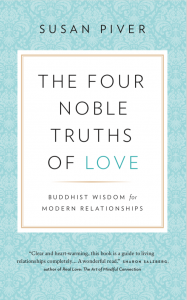
In this Best of episode, Jonathan sits down with writer and meditation teacher Susan Piver, New York Times bestselling author of The Four Noble Truths of Love: Buddhist Wisdom for Modern Relationships. Susan has studied Buddhism for more than 30 years and founded The Open Heart Project, an online dharma community with nearly 20,000 members.
In this conversation, you’ll discover:
- A simple reframe that explains why love feels hardest with the people we care about most
- How discomfort can become a doorway to deeper intimacy rather than a sign that something’s wrong
- The subtle way self-criticism quietly shapes how we treat our partners
- A powerful alternative to blame that changes how conflict unfolds
- Why intimacy can deepen even when romance naturally fades
Love isn’t meant to be comfortable or predictable. It’s meant to be alive. Press play to learn how to stay open, connected, and compassionate when relationships feel hardest.
You can find Susan Piver at: Website | Instagram | Episode Transcript
Next week, be sure to tune in for my conversation with Lisa Mosconi about women’s brain health, menopause, and what it all means for long-term cognitive wellbeing.
Check out our offerings & partners:
- Join My New Writing Project: Awake at the Wheel
- Visit Our Sponsor Page For Great Resources & Discount Codes
Photo Credit Lisa Fehl
_____________________________________________________________________________________________________
Episode Transcript:
Jonathan Fields: [00:00:00] So love has a way of humbling us, especially the longer we’re in it. What once felt effortless? It can start to feel uncomfortable, confusing, even painful. And when that happens, a lot of us just assume that something’s gone wrong. But what if that discomfort isn’t love walking out the door, or even failure in any way? What if it’s actually pointing us towards deeper intimacy? Deeper love? Today I’m sharing a powerful conversation with Susan Piver. Susan is a longtime Buddhist practitioner, meditation teacher, and the author of The Four Noble Truths of Love. She’s also a dear friend and someone I turned to for guidance, really, about anything involving the heart and what she offers here. It’s both deeply wise and radically practical. We explore why relationships never really stabilize, even decades into them, and how that’s actually okay. Why closeness can actually amplify irritation and what to do about it, and how the way we treat ourselves individually quietly shapes how we show up with the people that we love the most. And Susan also introduces a really refreshing alternative to blame, and explains how meeting discomfort together can strengthen connection over time. This isn’t about fixing your partner or yourself, it’s about learning how to stay open and kind and present when love feels hardest. So excited to share this best of conversation with you! I’m Jonathan Fields and this is Good Life Project.
Jonathan Fields: [00:01:29] One of the things that I’ve always loved about our conversations, and about the stuff that you create, is you toe this really interesting line between deep wisdom, deep ancient traditional wisdom, and practical on the ground. Okay, so how does this work if you don’t want to live in a monastery? And how is this going to actually help me? Is that is that intentional for you? Is that translation part of what you feel your work is?
Susan Piver: [00:01:56] Well, I kind of want to say yes because it would make me sound really smart.
Jonathan Fields: [00:02:01] Well, yes it is.
Susan Piver: [00:02:02] Absolutely. It’s been my plan all along. But no, it’s you know, I’ve been a Buddhist for a long time. And one of the things that I just love about being a Buddhist practitioner, not that anyone has to become a Buddhist. And the thing that surprised me is how practical it is. It’s not just like, how do you transcend to another realm to become like a God like human being, which obviously you don’t need? It’s how do you live your life on planet Earth as a human being with a completely open heart, a totally sharp mind, and a great and vast willingness to be of benefit to others? I mean, who doesn’t want that?
Jonathan Fields: [00:02:39] Yeah, I want that.
Susan Piver: [00:02:41] Me too.
Jonathan Fields: [00:02:43] So you’ve written what book is this? Seven.
Susan Piver: [00:02:48] It’s like nine. Nine? Yeah, if you count the three I edited, but otherwise it’s six.
Jonathan Fields: [00:02:52] So you’ve written a lot of books and touched on a lot of different areas of life. And You have a book now which focuses on love, and you’ve spent years sort of thinking about this and deconstructing it. I know we’ve talked about like bits and pieces and snippets of this over the years. Why this conversation and why now?
Susan Piver: [00:03:10] Yeah, well, as a longtime Buddhist practitioner and a longtime wife, I will have been a Buddhist for like 22 years and a wife for like 20 years, basically, as of right now. But as a longtime Buddhist practitioner, where there are millions of teachings on wisdom and loving kindness and how to be a good person, I just noticed in many people, including myself, it all sort of falls apart when you go home and look into the eyes of the person you’re in a relationship with.
Jonathan Fields: [00:03:41] Like we’re Buddhists, except for right now.
Susan Piver: [00:03:42] Exactly. Except for when you drop all your crap all over the floor, then I’m really. You know, it’s weird how your big mind sort of devolves into little petty hissy fits. And you know, why is that? Why is it actually the hardest to love the person that you love? Is a question that I’ve always been interested in. And also I wanted to be happy in my own relationship. I wanted to be a good partner and I want to be happy in in my own relationship. So but, you know, we go through phases. You probably have no idea what this is like where we just don’t like each other, where it’s like, who are you again? And why am I sitting here talking to you? Because everything you do irritates me and nothing you say makes any sense. It’s like suddenly you find yourself in this place where you’re very distant from each other. And one time, Duncan, my husband and I were in one of those places for a long time, like months. I mean, I think I wrote in the book, we fought about everything, and once we even thought about what time it was.
Jonathan Fields: [00:04:48] Yeah, I remember reading that. I’m like, how do you do that? How low do you have to go.
Susan Piver: [00:04:54] To make that a point of contention. So I was really upset and I didn’t know what to do. Nothing that we tried worked. And one day I was literally sitting at my desk crying, thinking, I don’t even know how to begin fixing this.
Jonathan Fields: [00:05:10] And it sounded like also the way you describe, sort of like that window that it wasn’t where you could point to something and say, oh, this is what it’s about. This is what it’s about. This is it’s almost like it’s this nonspecific, sustained thing.
Susan Piver: [00:05:26] That is so right. That is so right. There’s like, everything’s fine, everything’s fine, everything’s fine. There’s these little slights, little slights, you know, you blow by that one, you put that one under the rug, you forget about this one. You explain that one away because they’re explainable a weighable, they’re small. You know, you didn’t look at me or, you know, I asked you how you were, but you didn’t ask me how I went. I was, I mean, these teeny tiny things that don’t mean anything. A crew. And then suddenly, shit breaks loose. And it just blows up. And then, because it’s so weird, you just struggle to find some. That’s because you did this or I did that. But at least for me, I don’t think that that that there is such an explanation. There’s more like the weird irritation of trying to be close to someone else every single day creates this weird tension. And then, like this, I heard myself say, I hesitate to say I heard a voice because there was nobody there but me. But something inside me said, begin at the beginning. At the beginning, our four noble Truths I kid you not. And to me, as a long time practitioner, that meant something because the entire Buddhist path is built around something called the Four Noble Truths, which I’m sure you know, and I’d never thought that they had anything to do with relationships.
Susan Piver: [00:06:56] Life is suffering. Grasping creates suffering. It’s possible to stop suffering. There’s an eightfold path for doing so. Right view, right intention and so on. I didn’t think I had anything to do with my love life. But then in this moment, it’s like those teachings, like kindly reformed themselves in my mind to apply to my relationship. So I wrote them down. It just never occurred to me. I think probably because most of the teachings, whether teachings teachers are modern or ancient, are from monastics. You know, people that did not live in apartments and have to take the subway and go to the grocery store. They had a different kind of life. So for whatever reason, I just thought, well, they don’t know what I’m going through. But incorrect. They did know what I was going through and the teachings are profoundly illuminating. And PS, not just to me, but also to my partner who is not a Buddhist, not a meditator. Not into any of that. But, you know, it was useful for both of us. That’s what really gave me a lot of heart.
Jonathan Fields: [00:07:56] Yeah, I love that. Let’s. I know you kind of, like, whipped through really quickly the four noble Truths. Talk to me about each one of them a little bit more just before, because I know those became the foundation for then what you then developed. Sort of like the next iteration of that specifically as it applies to this domain of love. But tell me more about just the basics of these four Noble Truths.
Susan Piver: [00:08:17] Sure. Happily. So when the Buddha attained enlightenment more than 2500 years ago, and he went back to his, you know, practicing posse, not sure what they called themselves, and he was apparently enlightened. They could tell, they said, what did you learn? What did you see? He said, I saw four things. Number one, life is suffering, which is really easy to interpret as life sucks or life is awful. But upon great Investigation, I conclude that that is not what he meant. He meant that everything changes. There’s nothing to hold on to and everything we do to create stability or ground with this relationship or that home, or this degree or this amount of money, it’s all going to dissolve and it’s very painful. So that’s the first noble truth. Life is suffering, aka everything changes. The second noble truth is the cause of suffering, which is called grasping, which basically means not wanting the first noble truth to be true or pretending that it isn’t. Well, okay, maybe that’s true for you, but I am going to construct this fortress for myself that is inviolate and so forth. So you hold on to what you think will make you happy, and try to push away the things that you think won’t.
Susan Piver: [00:09:40] And that’s called grasping. And that is actually the cause of suffering, not the suffering itself. Not the loss, not the dissolution. Painful though it may be. The real cause is holding on. The third noble truth is called the cessation of suffering, which means, oh, you can stop now. You know the cause. You also know the cure. Stop grasping. Of course, much easier said than done. But you know, just mathematically, that’s the answer to how you stop suffering. And then the fourth noble truth is called the Eightfold Path, which is how you actually do that. How do you stop grasping? And I don’t know if I can say them all, but right intention, right view, right speech, right livelihood, right action, right effort, right mindfulness, right wisdom. All those rights have a vast canon of knowledge around them. And you could study one for your whole life. And if you do those eight things, just like the Buddha, you got the same trick bag. You too could attain liberation from suffering. So it’s the whole path right there. It’s a crazy ride in all cases, but it’s a crazy ride with meaning and joy. If you can let go to any degree of imagining that you are permanent.
Jonathan Fields: [00:11:01] The other thing that that I really struggled with, with these basic truths wrapped around the same concept, is the idea, the second truth of the notion of grasping as essentially the cause of suffering. When I start to think about the people who are closest to me, my family, you know, my my sister, my parents, my wife, my daughter, the notion of not grasping onto those relationships is almost inconceivable to me.
Susan Piver: [00:11:34] I know, I totally understand what you’re saying, and people mistake, I believe grasping for caring or loving. It means I shouldn’t love you so much. Or it means I shouldn’t need you. I shouldn’t appreciate you, I shouldn’t. I shouldn’t be so attached that it makes me really mad. Because often when people say have said to me, you shouldn’t be so attached, what they really mean is you shouldn’t care about something I don’t give a crap about. And I don’t. I don’t like that. So. Anyway, one of the things that helped me get my mind around grasping because me too. I love so many things and people and my life and things I feel very attached to. What helped me is to recognise that. Attachment itself. Non-attachment itself is an attachment. You can be attached to non-attachment. It may sound very elliptical, very meta. Exactly so. But non-attachment doesn’t mean holding back and it doesn’t mean converting all phenomena into an equal tone. You know where you have this very narrow range of where pain doesn’t hurt you and pleasure doesn’t make you too happy? It doesn’t mean that at all. It means the opposite, actually. Non-attachment means not attached to keeping things the way they were, or preventing them from becoming what they will. Rather, to dive into what you are experiencing fully without attachment to hope or fear, which is a very powerful capacity should one ever be able to do that. So when you feel joy, you just completely feel it without being attached to what does it mean or where will it end? And when you feel, you know, utter death defying grief, you don’t fault yourself for caring so much. You just feel it completely and it itself begins to dissolve. And when it does, you don’t try to stop it. So the the non-attachment is means just going on the ride completely as a total human being without holding back. It’s the opposite of constantly chill.
Jonathan Fields: [00:13:58] And we’ll be right back after a word from our sponsors. So you go from saying, okay, so I don’t know which way is up with my loving partner. Somebody give me an answer. You go back to the beginning. The four noble truths come to you, but you take that and then create this additional overlay so that they become. It feels like much more relevant to the context of relationships.
Susan Piver: [00:14:26] Yeah, it really helped me to look at them this way. So the Four Noble Truths have a kind of a sequencing. There’s a truth, the cause of the truth, the cessation of the suffering connected to the truth and how to do it. The truth, the cause, the cure and how? So when I took those into my marriage, what they looked like was the truth. Relationships are uncomfortable. Period. You know, if you. Of course. We were just talking about the ordinary irritation of just living with someone. You’ve been in a relationship for 20 plus years. You’re like, why are you doing that thing again that you said you would never do? Why are we having this argument again? There’s just this discomfort, this everyday and beyond everyday discomfort. But if you haven’t even ever met the person, like you’re going on a blind date, there’s already discomfort. What if they don’t like me? What if they do like me? And so on and so forth. So in every phase of relationship, there’s discomfort. That’s the truth. That’s the first truth. Relationships are uncomfortable.
Jonathan Fields: [00:15:36] Really? Relationships are uncomfortable. Well, There’s there’s something that you wrote about this, about this phase, about this first noble truth that when I read it, I was just like, oh, wow. With your permission, I’ll. I’ll read a couple of lines. Here’s what I read. Very few individuals are naturally convinced of their inherent worthiness. In fact, in Buddhist thought, to possess such conviction is considered a corollary of full enlightenment. It’s more likely that we are caught in cycles of self-denigration and self aggrandizement, both of which are forms of aggression. We are so hard on ourselves, so unremittingly unkind in the way we consider ourselves the opposite. Insisting that we are, in fact awesome is simply the flip side of that thought pattern. I was like, huh? And what popped into my head when I read that is we bring so much to the way that we interact with other people, and it’s that it’s sort of like this is, you know, it’s that old saying, if we treated ourselves the way we treat some other people, or if we treat other people the way we treat ourselves, sometimes you’d have disastrous relationships just all the time, all day, every day. But then you add to this, and this is where I kind of really like my heart went. Wow, reading again from you. When it comes to love, this unkindness to self begins to mix with the relationship. As you become emotionally intertwined, the energetic space between you begins to close up as it tightens. Your ability to see your partner as separate from your own mindstream diminishes. The closer you get, the less able you are to actually see each other. What happens at this point is that because you cannot discern who is who, you begin to treat your beloved the way you treat your own mind. The kindness or unkindness you extend towards them is a reflection of the way you treat yourself. Generosity of spirit, so powerful in the early stages of a relationship, begins to contract. Tell me more about this, because I think so many people will will sort of hear that and be like, oh.
Susan Piver: [00:18:00] Well, thank you so much for reading it. It made me feel so happy to hear you read it. It gave me great delight. Thank you so much. So and I would love to hear what it evoked in you. It’s always been kind of curious. Why does it become harder to love this other person the longer we know each other? And it’s. This is not my. I did not make this up. This is a teaching of the Bodhisattva path. The awakened being path the Bodhisattva being one who is here to be of benefit to others. This is a classical Buddhist teaching, and it also gives dimension to the cliché, which also happens to be true, that in order to love someone else, you have to love yourself. Which I always thought meant, oh, I have to like myself, or I have to think I’m awesome and I have self-esteem has to be perfect, and then I’ll be able. But that’s not what it means. It means that your self-talk and the way you actually think of yourself, could be riddled with gentleness and acceptance and spaciousness, as opposed to I’m an awesome person, which is very constricting. I’m an awesome person sometimes, and I’m also a crazy person other times, and a cruel person and a beautiful person and silly to make room for all of that, to hold that in a kind of gentle space with complete authenticity and accuracy is what is meant, I think, by self-love. And that when you can do that for yourself, bring the spaciousness and this courage and gentleness, then you can do it for someone else, someone else. But until then, you know these weird, neurotic, I guess you would say mainstream’s just mix and wreak havoc.
Jonathan Fields: [00:20:01] I think this landed so powerfully for me because you the way you laid it out. It’s like, okay, so you start as as you and this other person and in the beginning you’ve got your own, you know, you’re basically you’re diminishing and demeaning yourself. So many people have trouble with their own self-worth, as you say so. And you think to yourself, it’s okay for me to take myself down, but this other person I love and I’m going to hold them up and they’re awesome and they’re great, and all of a sudden I’ll be gentle with them. And the visual of as you get deeper into the relationship, the space between the two of you closing and closing and closing, closing until essentially there’s no space anymore. And whatever feelings you held just and applied to you now, without space between the two people, becomes the feeling that you apply to the relationship and to that other person. Well, if you’re torturing yourself and demeaning and diminishing yourself every day, and now you’ve reached a depth of relationship, a length of time where now you effectively there is no space between you, and you start to feel that that starts to translate into them. Then how could that not be toxic? And that’s where it landed for me. I was like, for the first time, I was like, okay, I get with that description. I really better understood why doing that work yourself is so important to your ability to truly see the kindness and generosity and love in that other person.
Susan Piver: [00:21:41] So I don’t mean to be your fake therapist here, but let me ask you, how did that make you feel now? How did it make you feel when you saw that? How did it make you feel towards yourself? How did it make you feel? You feel towards your wife, you know.
Jonathan Fields: [00:21:56] And it made me feel good. I’m. I’m not somebody that that tends to have a lot of negative self talk. For me, maybe it’s you know, there have been times in my life where I have I feel like I’m in a moment where I’m pretty okay with who I am and, and how I feel about myself. And, and so for me, it was it was a reason to continue to revisit the idea as my relationship evolves over time. You know, because 21 years in now, you know, five years from now, ten years from now, we are going to grow individually or the nature of our relationship is going to grow. The space will become lesser and lesser and lesser and lesser and lesser. So as that space continues to shrink over the next five, ten, 20, 30, 40, God willing, you know, it gave me a reason to keep revisiting the idea of how am I speaking to and treating myself in the context of my ability to continue to cultivate a healthy, nourishing, loving relationship?
Susan Piver: [00:23:04] That’s awesome that you’re the way you talk to yourself could actually comprise a loving gesture to her, which is makes everything workable, useful, inspiring. Because when I think, well, I just have to work on myself, I just get kind of bored, you know? I find it claustrophobic and unpleasant, but when I think, oh, I’m doing this for us. For me, that creates more space, I feel. I feel more inspired to do the work. And PS, as you were talking, I was, uh, thinking that one of the reasons this is so hard to do, I didn’t write about this, but is because the closer you get and as you were talking, I was just, I was having the visual of just two people’s lives mixing their energy, mixing their, their whatever, their lives becoming one, as it were. That’s terrifying. That’s terrifying for for ordinary reasons, like, you don’t want to be overwhelmed, you don’t want to lose your independence and so on. But that’s not the real reason. The real reason is because someday you’re going to have to part. That is unthinkable. That is unthinkable. For some reason, all relationships will end. Sorry. First noble truth, we got to come back to you. But the more you love and the more you open, the more that truth becomes visceral, whether you think about it or not. And in my opinion, armchair analyst here, that’s one of the reasons why many relationships don’t cease to progress is because it’s easier to hold the arm’s length. To think that, oh, you’re not this enough or you’re to that, as opposed to I’m going to love you soulfully and give my heart so completely, knowing I’m going to make myself cry that someday this will end. That’s an untenable. So we throw all sorts of roadblocks in the way. That’s my working theory.
Jonathan Fields: [00:25:14] To avoid the deeper pain of it ending by experiencing some form of ending. Now, that’s not quite as invested.
Susan Piver: [00:25:22] Exactly.
Jonathan Fields: [00:25:23] Okay. Second noble truth of love.
Susan Piver: [00:25:28] Thinking that relationships should be comfortable is what makes them uncomfortable. So of course, I hope everyone’s relationship makes them happy and comfortable and so on. And I want to be comfortable and happy and all that. But I don’t think that that’s necessarily the job of deep, romantic, intimate love. However, when most of us say we’re looking for love, we don’t normally mean that. According to my anecdotal observation, we’re looking for safety. We’re looking for someone to make us feel that everything’s okay, or someone with whom we can sort of turn our back on certain trials and tribulations and make a cocoon and, okay, those things are great. But if there’s one thing I have learned about love, and that I can say with great certainty about love, is that it is not safe. There’s no way to make it safe. And the minute you try to make it safe, it ceases to be love and starts to look more like some sort of a transaction. I will do this and you will do that, and so forth and so on. And I don’t know what that’s called. I just don’t think it’s called love. So we think, well, if only it was comfortable. If only you didn’t have this behavior. If only I could make that amount of money or we lived in this house, or you stopped jiggling your foot every time you talk to me or whatever. Whatever crazy things which you are not doing, by the way. Whatever crazy things.
Jonathan Fields: [00:26:58] Looking down at my foot right now. I looked at it too.
Susan Piver: [00:27:01] No jiggling here. Then we would be fine. Sure. Okay. Work on your problems, your foot jiggling, and your money problems. Work on those things. I hope you solve them all. But thinking that when you do, everything will be cool. That’s where the problem comes in. Because the weirdest thing that I ever learned about a relationship. And I’m fixing to tell you what it is right now. This drove me crazy. They never stabilize. They never stabilize. So I thought, well, we’ll be in this relationship. We’ll get to know each other. We’ll have these kinks, we’ll work them out. And then at some point, it’s going to be fine. And at some point it is fine until it is not. And I can’t predict how what weather fronts are going to blow through this. Now close to 25 year relationship with someone I know really well and who knows me really well. I still can’t predict. I could be really nice and kind and sweet and sort of get a blank stare. I can be a complete ass and just see him looking at me in the eyes, with the eyes of love. I there’s no telling. It doesn’t stabilize. It never does because it’s alive. So trying to get it to stabilize. Like let’s make it perfect and then hold actually is what creates the discomfort. The discomfort is not the problem Thinking it should be comfortable is. Does that make sense?
Jonathan Fields: [00:28:27] Yeah.
Susan Piver: [00:28:27] Are you buying? Are you picking up what I’m putting down?
Jonathan Fields: [00:28:30] I’m picking up what you’re putting down. And it makes sense also to me on a different level, which is that if you operate on the assumption that for a relationship to grow and remain healthy, the individuals in the relationship must also honour their own need to grow as individuals and remain healthy as individuals. Then, unless there is some freakish level of similarity in the timing and the nature of the way that each individual grows where it is just for a really long time identical, which I don’t think happens. It can’t be always just, you know, locked downable. So it makes sense to me. And yet that’s what we want. And it’s not I think it’s not just in, And, you know, like loving relationships. It’s in everything in life. But this just happens to land in the context of, okay, so when will I just know that everything will be okay? You talk about something called romantic materialism. Tell me more about this concept. The this is from what I recall. It’s kind of under the window of the second Noble Truth. Yeah, yeah, yeah.
Susan Piver: [00:29:41] No, I appreciate you bringing it up. I made it up, so I’m happy to have a chance.
Jonathan Fields: [00:29:44] I love made up terms. I do it all the time.
Susan Piver: [00:29:47] The Buddha did not say this, but the great Tibetan meditation master who you know, I love. And I know that you also have great respect for. Chogyam Trungpa Rinpoche named something called the Three Lords of Materialism. And these are three lords, three things we try to put our attention into with the aim of being safe and steady in making the Four Noble Truths not be true and their tricks. The first Lord is called the Lord of Form. It’s like, if I have, I’ll be safe. If I have this house and this amount of money and this degree and so on. Okay. The second Lord is the Lord of. I can’t remember what it’s called, but it’s the emotional Lord. It’s the Lord that says, if you could only figure out why you are the way you are and why I am the way I am, we can solve all our problems and be happy. So the second Lord is saying, if you have the right theory, the right system, if you do the right studies, you can solve all these problems and you can solve a lot of problems. There are certain problems, aka the problem of being a human being who lives and dies. You’re not going to solve that one. The third Lord is called the Lord of spiritual materialism, which is a very, you know, insidious Lord. And that’s the Lord that says, well, if you’re a meditator, if you really perfect mindfulness, if you get your spiritual cred, like way up there. You can be exempt from suffering, and actually you’ll be better than other people. That makes me want to vomit. I don’t like that one either. Probably because that’s the one I’m most likely to fall victim to. But the Lord of spiritual materialism says mindfulness will save you.
Susan Piver: [00:31:39] I won’t. It won’t. It’s an amazing tool. Powerful. The lord of romantic materialism, that’s the one I coined, says, if you can only find the one in quotation marks, you will be liberated from suffering. If you can only find the person who’s meant for you, maybe there’s more than one, but just find one of them. If you can only make that relationship. If you can only solve all your childhood wounds so that you will attract, quote unquote, the the right person into your life. Your problems will be solved. That is materialistic view of relationships. I think it’s again just using the word transactional. It’s a transactional view. So if you’re sitting there making lists of the person you want to be in a relationship with, which is great, it’s good to have something clear in your head. And if you’re thinking, well, I attract. This makes me very mad. Actually. I keep attracting the same thing into my life so that I can solve it. And until I do, I’ll keep attracting bozos and losers. I really highly suggest ceasing to do that. It’s useful to explore your problems and figure out who you are and why you are great. Super great. But to escape even the trials and tribulations of true love, which are vast and powerful and wonderful and crazy making and will not help you. So just Love is real. Totally real. And it don’t. You don’t know when it’s going to arise and there’s nothing you can do to make it be there. These are certain things in our world we can’t game, meaning we can’t make them be there when they’re not. We can’t make them go away when they are. Love is one of them.
Jonathan Fields: [00:33:35] And we’ll be right back after a word from our sponsors. The other thing that this, that, that this sort of concept brought up for me is, is this kind of idea that in the beginning of a relationship, we want the fire, we want the instability. We call that, you know, like passion. We call that romance. We call that we want the breathlessness. The oh my gosh. Like do they don’t they? And this is what gives it energy. It gives it fire and what gives it momentum. And then over time we start to say we want comfort, we want safety, we want stability. But then if we get it, there’s a yearning for what? For that breathlessness for Breathlessness, for that edge, for that fire that we’ve lost. And so it’s sort of like we keep telling ourselves that we want what we don’t have and trying to make adjustments to get it, rather than just saying, this thing is hard. It is ever changing. And let me just be in it.
Susan Piver: [00:34:34] Yeah, well, that’s a really good relationship strategy, by the way. This thing is really hard. It keeps changing. And let me just be in it. That’s like the best relationship advice possible. Yeah. In our Western culture especially, maybe unless you’re from France or something, there’s this idea that. I want a love affair, and then I want the love affair to be a relationship. And both of those are great things. I think that feeling of just falling madly in love and being everything heightened and just transported, and I think that’s totally real. And I get upset when people say it’s some weird illusion that you have to get past so you can get into the weird housekeeping weeds of a real relationship. Bzz Bzz bzz. That is a real relationship too. It’s great. It’s a love affair. Love affairs, yes, but love affairs and relationships are two different things in our in our world, for whatever reason, we think that all our love affairs should somehow turn into relationships, and all our relationships should remain love affairs. And the truth is, that’s very rare. They’re two different animals. And you know, well, I won’t go into too many details about my personal life, but, you know, I’ve had both. And I’ve also had love affairs that have been super hot, super amazing. And then I’m like, but I don’t really want to introduce you to my friends. Well, okay, that’s a relationship part. You know, it’s really helpful, I think, to look at those two things is different. And maybe if you’re really lucky, you’ll find one that could be both and.
Susan Piver: [00:36:18] But in a long term relationship that falling in love only happens once. I mean, it keeps deepening in this funny way, and then it disappears and then it deepens and then you remember it. It’s never with that intensity. So, you know, with my in my relationship. And I will not probe you to ask you, but I. Yeah, that falling in love part was like, what planet is this? I’m very happy to be visiting here. It’s amazing. I felt like I woke up in a different world. It was truly extraordinary experience. And now what I feel is that that had sharp peaks, highs and lows that were very intense. And I happen to like that. Now, what I feel is more like an ambient quality of love. It’s this. I look at him and I’m like, I adore him. And he drives me crazy. And I find him amazing and completely strange. And somehow what I feel for him is not particularly the focal point of our relationship anymore, because our relationship has kind of become a container for love. And that’s where we live. Sometimes it feels good, sometimes it really doesn’t. But every time we come back and sort of stretch to reconnect with each other, that container is reinforced. And so when I look around, I see, oh, love is everywhere. Sometimes it’s in my heart, sometimes it’s not. But it’s a structure that we created. It does not arise in a love affair. It arises over time. You know, if you’re lucky, I don’t know. Does that sound?
Jonathan Fields: [00:38:07] Yeah. No. Totally resonates with me. Yeah. And I don’t think there’s a way to accelerate that either. Mhm.
Susan Piver: [00:38:12] No you’re right.
Jonathan Fields: [00:38:13] I think it just it is time invested, time and presence. Third noble truth of love.
Susan Piver: [00:38:19] Third noble truth of love. Remember in the Buddhist sense, it’s the cure. Meeting the discomfort together is love. That’s the third noble truth. So normally we look. So there’s a problem. I look at you, I go, this is your fault or it’s my fault. I’m really sorry. Let’s dispel this discomfort by assigning blame. And once we assign the blame, we’re like 90% on the way to solving the problem.
Jonathan Fields: [00:38:47] It’s like. All right, now that we’ve cleared that up.
Susan Piver: [00:38:49] Okay. Problem solved.
Jonathan Fields: [00:38:51] Let’s have dinner. What do you want?
Susan Piver: [00:38:52] Exactly.
Jonathan Fields: [00:38:53] Next fight.
Susan Piver: [00:38:55] Exactly.
Jonathan Fields: [00:38:56] How could you possibly eat that?
Susan Piver: [00:38:59] We have been there a billion times. But if a great partner in my mind is not someone who will blame you or take blame, or but one who will sort of stop looking at you and turn. My visual is you turn you put shoulder to shoulder and you look at the problem and you meet it together and you see, oh, now we really love each other. Or now I really love you, but you don’t seem to be that interested in me now. We don’t like each other now. We seem to be in love again. Now we just want to be apart. There’s these incredible waves that royal and roll through the relationship on a daily basis, a minute to minute basis, certainly a yearly basis. And to ride that together. To me, that’s the ultimate love. We’re on this ride together and I’m feeling this way about it. And you’re feeling that way about it. And now it’s beautiful and now it’s not. That’s to me that’s that’s an incredibly loving partner. That’s a beautiful thing to do. That’s a companion.
Jonathan Fields: [00:40:04] Yeah. Can agree with you more. And I think that’s the place also where you know, when you are in it long enough, you will you’ll go through all the day to day things that we’re talking about, but you will also go through major things that that happen from the outside in that you have no control over. Major loss to health, to people that you love, to family and stuff like this. And it’s been my sense that your willingness to sort of like, be in this thing together and respect and open. And when those things happen from the outside in, the really big things that have the ability to either really tear apart or deepen, you know, like get you on the ride even more together. That’s when I think this commitment sort of really shows its face, or at least that’s been my experience.
Susan Piver: [00:40:55] I dig your voodoo right now, and how lucky is a person to sort of stumble into such a situation where Whether someone who’s like with you and who will continually deepen with you. It’s very, very fortunate and wonderful. And I would like to throw down a caveat here that the kinds of things we’re talking about, tolerating discomfort and meeting discomfort together does not include things like, oh, one of us is addicted to something, one of us is abusive, one of us emotionally abusive. No, those things are not included beyond the pale.
Jonathan Fields: [00:41:35] Those those don’t come under the. Oh. Tolerate it. Exactly. Yeah. Take us to the fourth.
Susan Piver: [00:41:41] Fourth. Noble. Truth is the path. There’s a way to work with it. And it’s not an eightfold path. Although I do apply the Eightfold path stages to relationships like what is right view in relationship and so on. But the three, there’s a threefold path that to me as a meditation teacher. Mirrors. Actually, the practice of meditation, which has three particular qualities, which I will just mention briefly. The first is meditation is precise. You’re a meditator. I know you know this. You place attention on the object of your meditation, which in most cases is the breath. Or it could be a mantra or an image.
Jonathan Fields: [00:42:28] Sound of a car horn in the background, or.
Susan Piver: [00:42:29] A kind of a car horn in the background. Exactly.
Jonathan Fields: [00:42:31] That’s my New York City mantra.
Susan Piver: [00:42:33] Which is a beautiful thing. I’m amazed it’s the first time we’ve ever heard one. So it’s very one pointed. You place your attention on the breath or the mantra, whatever it is. And if you stray into anything, it’s considered thinking. So you come back from super precise one pointed. From that, oddly. Something interesting happens. You sit there, being one pointed, allowing yourself to be exactly as you are. You like yourself. You don’t like yourself. You’re distracted. You’re not distracted. Doesn’t matter. Doesn’t matter. Because to meditate, you don’t have to stop thinking. Please. If you think that, stop thinking that you just sit there with yourself as you are. You open. And from this precision, the ability to open arises magically. Meditation is, you know, famously associated with insight, sometimes called the practice of insight. So from this one pointedness this openness of mind happens, insight arises. It’s quite expensive. The third quality is called letting go because you put your attention on the breath. You let yourself be as you are. Then you notice you’re distracted. That’s awesome. You just woke up. The instruction is let go. Letting go is very profound because then you let go and you’re in space for a moment until you come back to your object, breath or mantra. Letting go is the lesson of being human. Letting go, letting go, letting go. So precise. Open. Letting go in a relationship. What do these things mean? So the precision is the foundation of meditation. The foundation of a relationship in my mind, is very simple. It starts with good manners. It may sound really cheesy. Yeah, because good manners are profound. It’s not just, do I use this fork or not? It’s. Am I actually thinking of you and what you are experiencing and how I might be kind to you? Am I noticing you? Good manners are profound form of thoughtfulness, and you actually think about the person radical. If you don’t have that, it’s very hard to establish the foundation of a relationship.
Jonathan Fields: [00:44:55] So it’s like the focused awareness in a very directed way.
Susan Piver: [00:44:58] Exactly. Without an agenda. And also, to be honest, like to say the truth when you know it and to say it skillfully, not blurting. Those are the precise. That’s the precise piece of this path. Good manners, truth telling. The second quality openness. I’m laughing because I was quite taken aback when I realized how this came into play, which was to imagine that the person you’re in a relationship with is of at least equal importance to yourself. Shocking. Oh you’re there.
Jonathan Fields: [00:45:37] Mhm. Yeah.
Susan Piver: [00:45:39] I’m going to be open to you, I’m going to be open to you. And the third step and the book has more suggestions than this is letting go. I find this very interesting personally that as we were talking about romance ends just as sorry, but intimacy has no end. The letting go piece in relationship is letting go constantly of how you think it ought to have gone to be with what is. In such a way that everything you encounter wonderful experiences, detrimental experiences, loss, boredom, confusion, everything that you encounter together can actually be used to deepen intimacy which has no end and that you can commit to for a lifetime. You can’t commit to romance, you can’t commit to any feeling, but you can commit to deepening intimacy. That made me very happy when I realized that like that, I could do that. Honestly, I can’t honestly say I’ll always love you, but I will always try to act lovingly toward you, or see you, or be with you, or stay near you as you go through what you go through. And we and I go through things that I can commit to. So that to me was very, very hopeful. So precise, open, let go.
Jonathan Fields: [00:47:05] This all emerged out of your own, seeking to try and understand which way was up in your own relationship and trying to figure out, how do I understand this? How do I navigate it, how do I be in it or not be in it? But how do I at least figure out how to be okay with this person in this moment? And maybe in another and another and another and another and wow, when I go back to the beginning, this whole idea kind of jumps out at you. You start to apply it in the context of your own relationship. And like you said, also, um, Duncan is not a Buddhist. Um, were you sort of were you actively and openly saying, okay, I am now sort of engaging in the four noble truths of love and relationship and sharing with him what you were doing and how you were doing it, and say, come, come do this with me. Or was this just huh? Here’s a bit of wisdom. Let me try it on for size in relationship, and maybe he’ll pick up on what’s happening and not. And if he wants to engage in any of these reciprocally, awesome. And if not, that’s fine too. What? How did this then turn around and unfold in the context of your relationship?
Susan Piver: [00:48:11] Yeah, I appreciate you asking that. There’s actually a great benefit to being married to a non practitioner, quote unquote, when you are a practitioner of something. In my case, Buddhism. And the great value is that you cannot bullshit them with dharma notions. You cannot unload some dharma stuff on them and think that it will mean anything. You have to be those things. So I didn’t say, hey, baby, I’ve discovered the four noble truths of love. Let me tell you what they are. Instead, I started acting like discomfort was part of the deal and looking at it together was loving and meeting it together could deepen our intimacy. Started sort of doing those things. Luckily he is. I’m not saying this to be humble. He is a much more loving naturally than I am. He’s more relational. He’s more naturally attuned to the dynamics of of a relationship than I am. So I didn’t have to, like, convince him of anything, but I it was more the way I showed up. And of course, the way you show up has much more impact on the way someone else shows up than any, you know, charts and graphs that you can unroll about. This is this is my theory of relationships, which is basically useless. It’s useless. The theory, the practice is the only thing that matters. So all I had to do, which is not a small thing, I’m not trying to minimize it. All I had to do was just try to do these things. And it changed things for us.
Jonathan Fields: [00:49:51] Yeah. And there’s an there’s another lesson in there, which is that I know you’re asked this very often. I’ve been asked it very often too, which is I’ve discovered this amazing body of knowledge or idea or practice. How do I quote, get my significant other to do it too? And to see how important and transformational it is. And the answer is what you were just saying, which is you don’t. You just live it. You just be it. And the quality of you living and being in it in the context of a relationship, will or will not affect that other person in a way where they want to in some way stand in a similar energy or not. And that is all you can do.
Susan Piver: [00:50:33] And it is the best thing you can do. But I agree, I hear that too. I want to be loving in this way. I want to think relationships shouldn’t be comfortable and so on. How do I get this other person to do that? Well, just as you’re saying, just show up and be that way.
Jonathan Fields: [00:50:46] Yeah, I love the idea of the Four Noble Truths applied to the context of love, and I’m actually really excited to start kind of dancing with them, exploring them, sharing them. So as we kind of come full circle together, if I offer the phrase to you to live a good life, what comes up?
Susan Piver: [00:51:08] Hmm. To live a good life is to be unafraid, to be as brilliant and luminous and ridiculous and loving as you actually really are. No shame.
Jonathan Fields: [00:51:27] Thank you.
Susan Piver: [00:51:28] Thank you. I love talking to you.
Jonathan Fields: [00:51:32] Hey, before you leave, be sure to tune in next week for our conversation with Lisa Mosconi about women’s brain health, menopause, and what it means for long-term cognitive well-being. Be sure to follow Good Life Project in your favorite listening app so you don’t miss it! This episode of Good Life Project was produced by executive producers Lindsey Fox and me, Jonathan Fields. Editing help by, Alejandro Ramirez and Troy Young. Kristoffer Carter crafted our theme music. And of course, if you haven’t already done so, please go ahead and follow Good Life Project in your favorite listening app or on YouTube too. If you found this conversation interesting or valuable and inspiring, chances are you did because you’re still listening here. Do me a personal favor, a seven-second favor, and share it with just one person. I mean, if you want to share it with more, that’s awesome too. But just one person even then, invite them to talk with you about what you’ve both discovered to reconnect and explore ideas that really matter, because that’s how we all come alive together. Until next time, I’m Jonathan Fields signing off for Good Life Project.