
If your life looks good on paper but feels flat, this is for you.
Many of us follow the rules, build what appear to be successful lives, and still sense something essential is missing. That feeling sends us on a chase for more meaning or purpose, impact and clarity. But, what if the way we seek them is all wrong, and actually makes us less happy, content and alive, not more?
In today’s conversation, we explore a radically different way to think about meaning, one rooted in aliveness, presence, and becoming rather than achievement, impact, mattering, or outcomes.
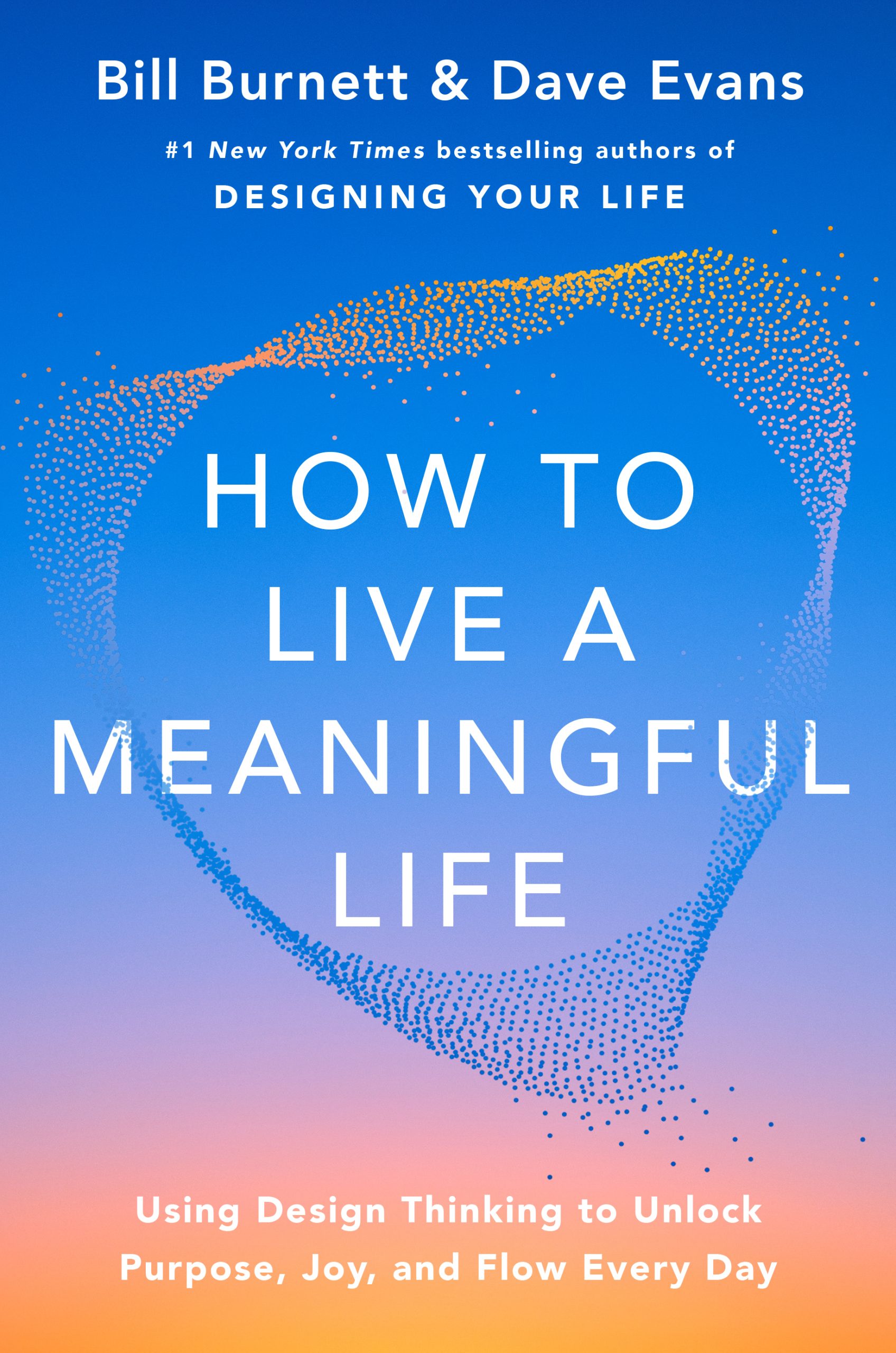
My partner in conversation is Dave Evans, the coauthor of the New York Times number one bestseller Designing Your Life, cofounder of the Stanford Life Design Lab, and author of the new book How to Live a Meaningful Life. I’ve known Dave for years now, and he’s spent decades helping people redesign work, identity, and daily living in ways that feel deeply human.
In this episode, you’ll discover:
- Why fulfillment and impact often become dead ends rather than answers
- A simple shift that helps you feel more alive without changing your circumstances
- Four overlooked sources of meaning that most people rarely access
- How to move fluidly between getting things done and actually being present
- A practical way to experience wonder, flow, coherence, and connection in everyday moments
If you’ve ever wondered why a life that looks good can still feel unsatisfying, this conversation offers a grounded and hopeful reframe. Press play to explore a more livable path to meaning.
You can find Dave at: Website | Instagram | Episode Transcript
If you LOVED this episode:
- You’ll also love the conversations we had with Dan Pink about regret, reflection, and using inner signals to guide a more meaningful life.
Check out our offerings & partners:
- Join My New Writing Project: Awake at the Wheel
- Visit Our Sponsor Page For Great Resources & Discount Codes
_____________________________________________________________________________________________________
Episode Transcript:
Jonathan Fields: [00:00:00] So many of us follow the rules, build what appears to be a successful life, and still something essential feels missing. That feeling sends us on a chase for more meaning or purpose impacting clarity. But what if the way we seek them is kind of all wrong and actually makes us less happy, content, and alive, not more? We do the work. We make the difference. We build the life that’s supposed to matter to us and to others. We leave our quote dent in the universe, or at least the lives of the small handful of people that matter to us. And still, our lives just feel thin and we want more meaning, we say. But the way that we’re pursuing it may actually end in less. Today’s conversation is a gentle but powerful reframe of what we mean when we talk about meaning. I’m sitting down with Dave Evans. He’s the co-author of Designing Your Life, the co-founder of Stanfords Life Design Lab, and the author of the new book, How to Live a meaningful life. And Dave really challenges the idea that fulfillment and impact, which so many of us equate to meaning. We’ve been taught that that those things are the finish line. Instead, he invites us into something more human, a way of living that’s rooted in aliveness, presence, and becoming. And we explore why meaning can turn into a treadmill, how to move between getting things done and actually being here, and for surprisingly accessible sources of meaning that most of us overlook every single day. This isn’t about finding your one true purpose, which tends to be, for so many people, a wild distraction at best and a big letdown at worst. It’s about learning how to feel more alive in the life that you’re already living. So excited to share this conversation with you! I’m Jonathan Fields and this is Good Life Project.
Jonathan Fields: [00:01:50] You and I had a conversation a number of years back, immediately clicked, and it’s fun because we’ve sort of been pursuing really similar parallel questions, sometimes overlapping questions. The meaning has been a central thing in my life for quite a long time, really kind of exploring it. Uncovering what? What is it? What does it mean? How do we pursue it? So the big question I think we’ll start out with is what are we talking about when we’re talking about meaning?
Dave Evans: [00:02:16] I think we’re talking about aliveness. Joseph Campbell, in his Power of Life PBS video series from years back, was being interviewed. You know, at one point they were talking about meaning making talk about Frankel, talking about Freud. And he says, you know, I don’t know. I don’t think it’s really meaning that we’re really after. I think it’s the rapture of being alive, the experience of the rapture of being alive, which I think is underneath that meaning question. And so I think that might be the soul of it.
Jonathan Fields: [00:02:43] Yeah. I feel like the deeper we get into life, the more we tend to center it in our own questioning. And yet we really never deconstruct it. Like, what does it mean? And of course, there’s, you know, the grand question that’s offered in movies like what is the Meaning of Life? As if there’s a universal, you know, like thing for everybody. But I really have increasingly just found that we can define that word however we want to define it, as long as it carries weight for us or lightness for us.
Dave Evans: [00:03:10] Yeah. So your question, what is meaning? Interestingly, you know, because we were in this conversation a long time with a lot of people, I mean, literally thousands of people, we hear two things over and over again. I’m not fulfilled. I thought I’d be fulfilled and unfulfilled. I got to come back to what you think that means. And you know, I’m not making the impact, or I need to make a difference, or I need to. I need my life needs to matter. I need to make the world a better place. There was some, you know, production outcome. I think impact is the best word. So the two primary things people were looking for, that they were getting not enough of existentially was impact or fulfillment. And we think both of those, frankly, are dead ends. And since we we came up with some reframes and some new ideas. So currently I would say the zeitgeist of meaning. I’m not sure. It’s the broadest definition it could be is it’s all about impact. It’s all about fulfillment.
Jonathan Fields: [00:04:00] So why do you think those are dead ends?
Dave Evans: [00:04:03] Okay, let’s start with fulfillment. What is fulfillment mean to most people? Well, we actually know because who told us? Abraham Maslow told us. That’s what told us. You know, because the apex of the human experience, the top of that pyramid is self-actualization. According to the 1943 paper that he wrote that the NIH now still claims is one of the stickiest ideas in the social sciences of all time. He defines literally that he says to attain self-actualization, one must become all that one can be. And if you become all that one can be, then you will attain the experience of fulfillment. So self-actualization is the goal. Be. All you can be is the way you get there, and the prize is fulfillment. Here’s the only problem. The Life Design Lab at Stanford for 20 years has been teaching. We now are more convinced than ever. All of us contain more aliveness than one lifetime permits you to live out, i.e. there’s more than one of you in there. That’s the good news. So if in fact, that’s true, and we’re absolutely convinced it’s true, everybody is way bigger than one lifetime’s worth of living, and you’ve decided you have to manifest your entirety in this life in order to feel like you’ve got fulfillment. You can’t get there from here. So the traditional definition of fulfillment I became everything I can be is unattainable. That’s the good news, actually. But if you’ve decided you need that to feel okay about yourself, you just set a policy that you have to be in despair for the rest of your life.
Dave Evans: [00:05:25] Bad choice, bad choice. So that’s the fulfillment problem. The impact problem is impact is great. Make the world a better place. I mean, you’re trying to make an impact. I’m trying to make an impact. But impact is a thing. And you’re not a thing. You’re a person. And so after you, let’s say you’re lucky enough to do everything right, and it even works out the most of the other 8 billion people. Stay on your script, even if you do it. All right. By the way, a bunch of people go off script and you do the right thing and it doesn’t work if you’re lucky enough that something actually worked and actually left some kind of a positive result, that’s great. And then about ten minutes go by and the world goes, so what are you done for us lately? An impact is a moment in time. I mean, we sold over a million books. Well, okay. That’s great. But now what? I mean, I’ve worked with the US Olympic Committee. Nothing as exciting as ascending the Olympic platform or terrifying is coming back down the other side. Now what? So impact is fine, but it can’t be the only thing. So if you’ve got all your meaning eggs in your impact basket, you’re in real trouble. You’ll never get there from here. So we need to look at some other forms which starts getting into our reference, our idea about understanding that we don’t just live in one world, we live in two. But I’ll stop right there.
Jonathan Fields: [00:06:37] And they’re definitely thorny issues there. And when you lay it out that way, it’s like, okay, so if we pursue meaning and we swap the words fulfillment and impact in for them, then effectively were investing ourselves in pursuing something that we can never truly have, or even if we get it for a hot minute, the next minute, it’s no longer there if that’s the way that we define it. So it’s kind of like a life of perpetual frustration, of futility to a certain extent.
Dave Evans: [00:07:03] And that is the sound of the voice we’ve been hearing is this deep frustration. And when you get down, you know, between, you know, under 38, 35, it’s despondency. It’s like, I’ll never get there. I mean, the game is rigged. I can’t have it. That’s a terrible place to be.
Jonathan Fields: [00:07:18] Yeah. I mean, also one of the thing that occurs to me about the way that you’re presenting it is there are things that rely on something outside of you to get the feeling that you want to get.
Dave Evans: [00:07:28] Say, more.
Jonathan Fields: [00:07:28] Meaning that, you know, impact. Right? Right. Okay. So that exists outside of you. You’re making a difference in the world to someone else, to some other beings, to some environment, whatever it may be. And sure, you may have a certain amount of control over the circumstances, over the resources, over the agency, over the process, the path. Yeah, but you’re never going to have full control. And even if you do, one moment and the next thing you’re not going to and at some point you’re not going to actually be able to do the thing you want to do. And if that is how we define meaning, how we get the feeling that we so desperately want to feel, we’re going to keep bumping up against these situations where we’re actually not able to get it as much as we want to, and as much as we pour our own energy into it and our resources. There’s always going to be an external part of it.
Dave Evans: [00:08:11] Yeah, that’s out of your control. One of our lines is is meaning the new money?
Jonathan Fields: [00:08:15] Yeah.
Dave Evans: [00:08:16] What do we mean by that? Well, you know, the hedonic treadmill. What’s that thing of which? How much do you need? A little bit more. Is the addiction cycle, right? So in the workplace in particular, historically, the the two classical engines of the hedonic treadmill, the thing of which I need a little bit more but can never quite get are money and power. How much money do I need? A little bit more. How much power do I need? A little bit more? Well, frankly, those those two engines have driven capitalism pretty successfully. I’m not sure of all good outcomes, but they worked really well. And now what we’re hearing is it’s the same complaint, but it’s around. Meaning how much meaning do I need? A little bit more. So people are stuck on this thing that’s not you can’t get there. So we got to reframe it. So we say on fulfilled you can’t be fulfilled but you can become fully alive and on the impact thing. Impact is good. But how about a couple of other forms we come up with for other forms of meaning making, which are wonder, flow, coherence and formative community. We might come back to that stuff, but you know, let’s get the 4 or 5 color crayon box, not the one color crayon box.
Jonathan Fields: [00:09:18] Yeah. So if we take that word aliveness, then that is also thorny. What do we mean by that?
Dave Evans: [00:09:24] Well okay. So our definition so so Bill and I you know we do human centered design right. Design thinking is the modern slang term to describe what’s been around since 1963, begun at Stanford and now all over the world called design thinking, which is human centered design and human centered design is human two ways. It’s how do humans collaborate in ideate? So what’s the design process that works for human beings? And then how can you point that activity of designing cool things in ways that work for human beings, so it’s humanly make human usable stuff? And then we added the idea we could even make ourselves so we could apply design thinking to to making our lives. Um, and so this aliveness question starts with, well, what does it mean to be human? And our shortest definition of that is a human being is a becoming. We are always growing. We’re always moving toward, you know, so if I’m a becoming, I’m never done. And the aliveness that I’m looking for is the awareness of my experience of living into that becoming both in the present moment and in the growth moment. You know, change is inevitable. Growth is optional. Um, so are you living into your becoming and if you really reconcile yourself to that, do what we call radical acceptance. You’re never going to get done. Now suddenly that’s the good news. So it’s not. It’s not FOMO, the fear of missing out. It’s the joy of missing out. There’s always something new coming.
Jonathan Fields: [00:10:48] Mm. I mean, it’s interesting to me. Also, I, um, I look at that a little bit of a Buddhist lens and. Sure. Which invites you perpetually to keep coming back to the present moment. Not live in the past, not live in the future. And because in the present moment, which is truly the only moment that we can really experience fully, um, that is where aliveness comes from. That is where you are your most human self. Um, and yet, you know, all of us aspire and, you know, the social science research shows that we are, in fact, you know, quote, happiest when we are aspiring towards something meaningful to us or towards something when we’re in. And that could be our own personal growth, that could be checking some box that somehow matters. But, um, it was funny because a lot of us think, you know, like, we’ll finally hit that point in life where we kick back, we don’t have to work so hard to change or to grow or to get. And that turns out that we’re generally least happy when we hit that if and when we hit that moment. But the notion of I used to use this phrase, grateful yearning to try and embody this notion that we can strive, in fact, for growth, to become, to ever, always become, and at the same time honor and appreciate and be grateful for the moment that we’re in there. Not to two things in opposition, but I think sometimes we think they are.
Dave Evans: [00:12:02] The term I use that you call grateful yearning, I characterize it as befriending your longing. Mhm. So okay, you sit there and you watch this amazing sunset. You know you’re like, oh God, that was so great. And then ask anybody who’s just seen an amazing sunset right as it finishes. What do they think. I want more. Mhm. What. That experience awakens the longing for more. Even that wasn’t good enough. No no no no no the reframe is it’s not that. It’s not good enough. It’s that it was wonderful. And you intrinsically as a become or as, as, as an entity who’s longing leans toward those ultimates and always will. That I’d like some more of that just means, oh, I’m still alive and I’m coming back tomorrow.
Jonathan Fields: [00:12:50] Yeah.
Dave Evans: [00:12:51] So back to this thing about the present moment. In fact, Bill and I actually chatted back and forth to each other for two years about whether or not do we deserve to write this book, because when you if you if you take these 200 pages, you distill it all the way down to a post-it note. It’s about the present moment. It’s all about the present moment. We’re kind of going, everybody already knows that Ram Dass, you know. You know the Buddha, Jesus, we’re done here. Um, and then either we’re bringing a new take on a deep wisdom that’s helpful in the modern era, or we’re wasting a bunch of paper. And frankly, it’s it’s pretty good stuff, but it really is about the present moment. But the modern world, we spend 99.97% of our time in the achieving brain, which Bill and I describe as. And where does that brain take you? It takes you into what we call the transactional world, right? The GSD, the get shit done world, you know, and we’re there all the time. And by the way, we know how to transactional lies, anything. We’ll come back to that and then. But meanwhile, in this experience of the present moment, where is that occurring that’s occurring what we call the flow world, the flow world, which is the present moment, coursing like an aquifer right underneath every experience you’re in, in the present moment, at all times, ready to be tapped into if you have. But the willingness to turn your awareness and your attention to it, even if briefly. So we’ve got these two worlds, and all we’re really doing in this book is inviting people to come back over and spend a little more time in the flow world where you can experience wonder, flow itself, coherency, and a deep experience of community we call formative community. And if you add those four things to impact in your meaning making diet, you’re going to get a lot more calories.
Jonathan Fields: [00:14:27] Yeah, and we’ll be right back. After a word from our sponsors, let’s talk about those two worlds a little bit more because it’s really interesting to me. So the transactional world and the flow world, what’s what’s driving each.
Dave Evans: [00:14:44] The truth is there’s one world, there’s one quantum reality. It’s way over our pay grade to receive it. So it’s going into those two worlds actually is what form of consciousness, what form of mindset do you have access to at the time?
Jonathan Fields: [00:14:58] Okay.
Dave Evans: [00:15:00] So so what’s really going on there is it’s all happening all the time. It’s just that we’re not attentive to it. So real simple example I’m sitting in a staff meeting. The staff meeting is going by. We’re talking about the budget again whether or not we’re going to get this new project, you know, and there’s eight of us in the room and the boss is running the meeting as badly as she usually does, and it takes about 45% of my brain to be attentive to that. And I can either just be entirely in that which is, you know, again, all living in the past, how did it go, living in the future? What are we going to do next? It’s never in the present. And I can just be thinking about dinner. I can be thinking about the next thing. I can be thinking about my counterargument. So I’m staying in that place the whole time or while I’m doing that. You know, I can actually look out the window and notice that the color of the trees in the parking lot is changing, and then I can kind of go, oh, gee, I wonder how that happens, which is a transactional question. Or it can go, oh, that’s lovely, and I can participate in it. So when I’m in the transactional world, I’m an agent of change, right? I’m an actor. When I’m in the flow world, I’m a participant. When I’m in the transactional world, I’m pushing, and when I’m in the flow world I’m receiving. And what we’re encouraging people to learn how to do is to learn how to switch back and forth quickly. In fact, eventually. And this is really a second half of life thing, um, learning how to be in two places at the same time.
Jonathan Fields: [00:16:21] Yeah. I mean, and that’s what pops into my head. You know, the question for me is, aren’t we really in both worlds all the time? But the one that we experience is the one that we’re attending to.
Dave Evans: [00:16:32] Exactly. And part of the thing that we’re trying to say is, frankly, that all that stuff like the mindfulness movement and these nice guys like Jonathan Fields, you know, who are telling us all this stuff, that’s great. But too many people are hearing that. First of all, uh, like even hitting the experience of being in flow, which is, you know, psychology of flow is so elusive. I have to be this incredibly special state that it’s all too I need to go learn how to meditate for 40 years, and then maybe I can get my mindfulness act together. We’ve made this thing too hard. Tick not, Han said. You know, if enlightenment isn’t available now, it’s not available at all. Can we start accessing this stuff a little more simply? We’ve really simplified design tools like wonder, the experience of wonder, and we say mystery plus curiosity equals wonder in the experience of wonder or awe is a fundamentally alive making, human, enabling, generative experience. So let’s get as much wonder as you can a bunch of meaning, the experience of wonder as a meaning making experience. How do you do that? Well, we got a little trick called put on your wonder glasses, had a look around the room with your normal glasses.
Dave Evans: [00:17:34] Had to look around the room with your transactional glasses, then take another pass and look around the room with your wonder glasses and teach yourself how to see what’s actually in front of you all the time. So you’re exactly right. Both these worlds are available all the time. All we’re trying to do is give people tools and reframes that, free them up to access this broader world much more easily. And we do need to get stuff done. There’s a bunch of work we’ve got to get done, but let’s be fully human, alive people along the way. Let’s learn how to savor and enjoy on the trip. One of the things we’re helping people watch out for is what we call the practice to production trap. So if you want to get good at these things, they become practices. I mean, so mindset and practices are really what this book is about. The exercises in this book are practices. You just keep doing them because it’s how you live. And the problem is in this world we can transactional anything like, hey, I really killed it in my 20 minute sit this morning. I think there was, like, a nine. Yeah. So I’m scoring, you know, or like.
Jonathan Fields: [00:18:38] You know, I’m just thinking about the stars I’ve accumulated on my meditation app. Right?
Dave Evans: [00:18:41] Exactly. It’s like the streak.
Jonathan Fields: [00:18:43] No matter what you.
Dave Evans: [00:18:44] Do. Because, you know, my meditation practice, the goal of that is, of course, is to get enough centeredness to get me through the business day. So it’s so I’m going to tank up over here in this meditative moment, and then I’m going to go back to the real world, the transactional world, and take a little my meditative juice with me, and it’ll get me across the finish line. And if I’m good, I can get it down to 15 minutes. If I can get a day’s worth of centeredness out of 15 minutes, I’m killing it, man. I’m killing it. Like everything you just made everything a performance as opposed to. Can you simply enter into the present moment and be in a live person there, experiencing the wonderfulness of actually being a participant in this thing called reality?
Jonathan Fields: [00:19:19] Yeah, it sounds like also one of the underlying assumptions here is that meaning or aliveness use the word you want to use. Yeah. Um, we tend to say this comes from the big things, the big moments, the big things like the big awakenings. And it sounds like what you’re positing also is like, well, yes, and it can, but it can also be like the like the little thing that you notice or the side of your eye, the, you know, like the feel of somebody, you know, like hand in yours for two seconds when you’re just giving a kiss in the morning, it can be like the tiniest little passing things.
Dave Evans: [00:19:52] Yeah. It really, it really is. I mean, the big things are big, don’t get me wrong. But the little things are important. And and let us not relegate them to the cliche of, well, you know, smell the flowers along the way.
Jonathan Fields: [00:20:05] Right.
Dave Evans: [00:20:05] The problem with, you know, sniff the flowers along the way is like like, okay, you know, the real world. We’re going to go get the new book out. We’re going to go start the company, you know, and then but along the way you need you need a little break. You want to go sniff a flower, that’s fine. Then then come back and join us, you know, get out of the pits and get back on the track and do the real thing. So we’ve we’ve ended up with a belief system where the transactions Define the real world, which is absolutely crazy. It’s a real part of the world. But those little moments aren’t just a quick side trip. And then back to it. Those little moments are it, right? They are it. They. This is where the last big reframe we have three reframes. One is impact, one is fulfillment, not fully alive, not fulfillment. And the last one is the scandal of particularity. The scandal of particularity is actually theological. Idea now become philosophical, which is, as it turns out, any and all ultimate truth, beauty, justice, compassion, you name it, are never experienced. We will never attain them. They’re all aspirational. All you ever experience, as it turns out, is a small partial reflection of it that is has a temporary instantiation and then is gone. So it’s never enough. But that’s the fundamental nature of reality. Like, you know, I think, you know, right there, about two thirds of the way through the conversation, I conversation.
Dave Evans: [00:21:24] I think Jonathan and I actually understood each other because when he went like, I went like, yeah. And at that moment, we both knew we were saying the same thing without having to say it. Like the whole conversation was great. But that one spot, that one spot, oh, God, he really got it. He really got it, you know? And what was that? That’s unity. That’s a little reflection of unity. Now the scandal of particularity is like, really? That’s the way the world is set up. We’ll never get the real thing. No, no, no, that is the real thing. So you reframe it and then you move to celebrating the particularity which occurs in moments with the fundamental task of the meaning designer is moment making. And what you do is you let them be what they can be. So that little two seconds hand in hand, when you’re not just touching, you’re actually connecting. You deeply celebrate that moment. You savor it later because it reminds you that that profound truth of we are a union is true because it was there for a minute. It was there for a couple of seconds. It’s a big choice to decide after those two seconds, like, ooh, it’s over already, I want more or oh, that was fabulous. That’s a critical choice, right?
Jonathan Fields: [00:22:44] Or like, oh, this is a signal that it’s leading to something even better. Yeah. You know, which often we just take it as it’s like, okay, so this was like a check along the way to like the real thing, which is coming next. How does this square in your mind with, you know, I think so many of us were acquainted with Viktor Frankl’s ideas around the sources of meaning, which fundamentally he distills down to work, love and courage and suffering.
Dave Evans: [00:23:05] Yes. When asked, what does it take to have a meaningful life? Freud. Leben und arbeiten. Love and work, right? Right. So relationships and achievement. Then Frankl ups it to one more thing. So it’s, you know, it’s love achievement and suffering. Suffering. Well which he which he learned in the concentration camps. And his point there was that if the only agency left to you by virtue of your oppression is your decision for how to respond to your situation, which is all that was left to a concentration camp prisoner. All they had was how to react. If you do that nobly, that alone is sufficient to be a person making experience, hence suffering. Let’s bounce up to Seligman. You know, the founder of positive psychology and happiness isn’t good enough, okay? It’s got to be flourishing. And what supports flourishing? Five things. The Perma model. There are five elements of the flourishing life perma positive. Positive experience E engagement. Relationships. Meaning making a achievement. Okay. So Seligman has got a pretty long list, like, okay, um, I want I want to be happy. That’s positive. I want to be engaged in the world. I want to do stuff, by the way, when I’m really doing stuff deeply, that’s called flow. I want to be in relationships. Love. It’s all about love.
Dave Evans: [00:24:21] Bob Waldinger and all the people in the Harvard Adult study will tell you what’s the number one thing it’s all about love, dude, and meaning making. This is coherency and living in concert with your values from actually a meaningful person. Because I’m living out who what I really believe and then achievement I’m getting stuff done. So that’s the whole portfolio according to other scientists. And what we’re saying is entirely complementary to that. All we’re really saying is, look, for God’s sake, you know, get beyond just impact and achievement and allow these other things to start serving you, all of which are going to take you into the present moment. So if you start becoming a good moment designer, which isn’t just the hedonism of having a good time because, well, dude, where’s the aspiration? Where’s the purposefulness, where’s the serving of their mankind stuff? Well, we trust people. And so when we say of the three wonder flow and coherency, coherency is where who I am, what I believe and what I’m doing are in alignment. When you experience that, it’s more your life is more meaningful and we trust the overwhelming majority of people. We talk to their fundamental values, what they care about are really noble, and they have the other people in the world involved in them.
Dave Evans: [00:25:29] So if I just say, look, the coherent life is the way to go. It’s going to take care of itself. People are going to start moving down the path purposefully if they actually are living out their values in a conscious way. You know, I’ve met in 20 years of teaching college. I’m at exactly one young man who walks up to me and says, look, can I take the class? I go, well, sure, anybody can take the class. He goes, no, no, you don’t understand. I figured out it’s all bullshit. I’m a nihilist. It’s just about the money. I’m here to make as much money as I possibly can, have as good time as I can, and then I’m out of here. I don’t give a shit. Are you clear? I kind of go. Yeah, well, we’re clear, he says. So am I allowed to take the class? I said, well, sure. Any any worldview is allowed to take the class. I might encourage you to be a little open minded, that there might be more to life than that. But, you know, and at the end of the quarter, I said, how’s it going? He goes, well, I’m asking some questions now. I go, good. But I, have, you know, 20 years later, I got one nihilist.
Jonathan Fields: [00:26:19] Right, right, right.
Dave Evans: [00:26:19] I got exactly one nihilist, you know, and I mean a couple of, you know, you know, struggling determinists and this kind of stuff. But most people are trying to leave the campground better than they found it. So if they just lean into that, you don’t have to find your purpose, but you can leave purposefully all the way down that road of becoming.
Jonathan Fields: [00:26:37] Yeah, and that’s a big distinction. I think also this notion of purposefully versus like your capital B capital, big purpose, um, which we get so tripped up with, you keep referencing different I’m going to call them meaning engines. And you explore four of them wonder, flow, community and coherence. Yep. Let’s dig into each one of these a little bit. You talked a little bit about wonder, but let’s start there. Like curiosity and mystery. Take me deeper into this.
Dave Evans: [00:27:03] Okay. So it comes out of the mindset. So so you know we have five mindsets in this book. So the wonder piece you know, Dacher Keltner at UC Berkeley wrote the book or you know, and he studied eight forms of how awe or wonder can be experienced in the world and that it’s a fundamentally, you know, human experience that transcends socioeconomics and culture and background and race and all that stuff. And it’s a fundamentally human experience of this experience of being in a world that’s bigger than you are, which is what Maslow, by the way, finally figured out. As you know, the top of Maslow’s curve isn’t self-actualization, it’s self-transcendence. In his 70s, just before he died, he’d long suspected he was wrong. And he’s right. He was wrong. That being fully yourself, which is egotistical, isn’t the end of the human experience being beyond yourself. Self-transcendence. And if you achieve self-transcendence, what do you get? You get meaning. So when I get beyond myself, I recognize that I am a part of something bigger. And that’s meaningful. So wonder reminds me that the world is bigger than I am. And that’s. And that’s a very meaning reinforcing experience.
Jonathan Fields: [00:28:10] So how do we experience more of it than okay.
Dave Evans: [00:28:14] So we have a simple exercise called put on your Wonder glasses. As designers, it’s all about behavioral stuff that you can actually prototype and do. If we can’t give you a handle on doing it, then we’re writing philosophy books. And that’s not what we do. We write design books. So Wonder Glasses says you want to put on your wonder glasses. What you do is you look at a scene. In fact, the example in the book is me sitting in a chair in a room right across that wall, looking around my living room, you know, and it says, you take one quick look around and just take a look. What do you see? You know, you just get the little GoPro camera look. And so what do you notice in the second pass? Is your transactional look like okay. And what needs doing here. Like oh yeah we got to get the piano tuned. I wonder if I’m ever going to get that clock fixed. And so you let your transactional brain do what it wants to do, which is come up with action items, whatever you see because you start seeing what’s wrong with things or what’s right with things like, oh, we should buy another one of those. That’s great. And then your third pass is the wonder glasses. Like, and what’s in front of you that has a little mystery to it or begs a little more than meets the eye, the more than meets the eye. And as I pass by, I’m looking at the chairs. And the. And the arms of the rocking chairs are scuffed. And I’m like, oh, those are scuffed. I wonder how that happened. Oh, it’s because hundreds of people have sat in that chair and many of them had really deep conversations. I wonder how those souls are doing now. I remember the wonder of being in the presence of people telling the truth about their lives so that that that wonder of, oh my God, there’s literally a where spot on a chair in front of me. That’s from souls being rubbed off on the lives of the people in this room.
Jonathan Fields: [00:30:05] So the initial act there, though, is also it’s noticing.
Dave Evans: [00:30:08] It’s noticing.
Jonathan Fields: [00:30:08] Right. And I’m wondering if I’m wondering if. Yes. So here’s what happens to me when I sit for meditation. I’ll sit for 25 minutes. The first 17 minutes of those are transactional. Yep. Yeah. It’s almost like I need to clear the transactional part out. Yeah. And then finally, like, just towards the end, my mind starts to do what? It starts to open up and it starts to just be. And it feels like for most of us, we probably live in such a transactional state that we kind of need to do that for a scan to get the transactional sort of like checked off before we can allow ourselves, our minds to just create the space in our minds, kind of just knows. Oh, and what else? Aha. Yeah.
Dave Evans: [00:30:46] Because the resistance. Oh, I’m doing it again now. It’s gotcha.
Jonathan Fields: [00:30:51] Yeah.
Dave Evans: [00:30:51] As opposed to there’s, there’s a, there’s an old aphorism that says you cannot prevent the birds from flying over your head, but you need not let them make a nest in your hair. Mm. So when a thought appears, you know, learn how to let it go by. So it’s not so much hacks, but there really are humanly designed strategies inside. These simple exercises give you another one. It’s called magic trees, which is how to identify a moment of wonder. So, you know, you look out, you looking at a tree. Now, nine times out of ten, there’s a little air moving around the tree. Look at the tree. It’s like the trees are sitting there. And then it goes. Okay, so that’s the first look. And then now look at it long enough to notice that the branches and the leaves are quivering. And you look and you look and you go, oh my God, it is moving. It’s actually moving. Now what was static now is moving. And you’re kind of like, ooh, this thing’s actually really? Then close your eyes for three seconds, open it again and try to not see the moving tree. You can’t do it. So suddenly you’ve transformed this tree by noticing it. So these are tricks. If you. I mean, these are ways. So I’m trying to take that 17 minutes and knock it down to one.
Jonathan Fields: [00:32:05] Yeah.
Dave Evans: [00:32:07] And the truth is, they’re all over the place.
Jonathan Fields: [00:32:10] Yeah. And what’s interesting to me, also, I’m curious whether you agree with this is, you know, so I live in Boulder, Colorado. I hike all the time, and I often hike the same trails over and over and over and over and over. And somebody once said to me, like, aren’t you bored silly? Like, why do you keep doing the same thing over and over and over? I was like, it’s never the same trail. Yeah, it’s the same trail on a map. But like every day that I’m out there, it is. If you’re if I really allow myself to just be there and be present to it, it is never the same. And it’s really cool to see how it changes every day when you allow yourself to be present to that. And it was such a foreign notion to the person I was talking to like, yeah, sure, whatever. No, you have to keep doing different trails. It’s like, well, you can and that’s awesome. And I do. And I also can get pretty much everything that I go hiking for, doing the same trail over and over.
Dave Evans: [00:33:01] Well, because again, the question, aren’t you bored? What does that question give me a hint that’s going on as the aspiration of the questioner. Well, I need novelty, right? If I if I recognize this thing as be boring, like, you know, why would why the hell would I have sex with my wife this week? We had sex last month. I mean, it’s, you know, been there, done that, right? No, I’m doing it again, actually. Oh. Yeah. As like. Dude, um, if you’ve decided novelty is the prerequisite to legitimacy, this is the X games mentality. You don’t even feel alive until you’re scared to death. Okay, now you’ve really set your threshold at a ridiculously inhuman level. So the whole possibility like, oh, it’s gorgeous. Maybe even familiarly gorgeous. Mhm. And it still evokes the aliveness in you like oh wow. I mean sometimes I’ll just sit there and stare at a tree in silhouette during sunset. I’m a big fan of silhouette. If I was asking my wife today, why do I like silhouette so much? Why is why is a blacked out tree so pretty? I have no idea. But it is it. It just blows me away. And I just sit there and I just longingly look at that thing. And I enjoy the living daylights out of the fact that I notice that it is pretty, you know? So if newness is the only thing you’re allowed, which is what the social media based world will tell you, then you’re you’re in for some real trouble.
Jonathan Fields: [00:34:30] Yeah. So agree with that. And we’ll be right back. After a word from our sponsors, talk to me about coherence.
Dave Evans: [00:34:39] Coherence goes all the way back to our earliest work, the compass exercise. In fact, the people who do research in meaning not the meaning of but the meaning in life, you know, make it really clear that what we call connecting the dots, the three dots of who am I, what do I believe and what am I doing? And are those three things in alignment? You can’t align them until you articulate them. So there’s an exercise to write that stuff up, which isn’t that hard. And then, of course, some compromises involved, because the real world is an imperfect place. But, you know. So now, if I know who I am, roughly what my current story is, I know what my key values are about life in general, we call the life view. And we know what my values are about the workplace and my engagement with the world we call the work. If you’ve got those three things in mind written up, then I actually have the capacity to notice when I’m actually living with integrity or coherency, acting out kind of who it is that I am, you know? And so somebody says, well, how was your day, Dave? Well, it was good. You know, I got I got to talk to my friend Jonathan Field, you know, and Jonathan has been doing the Good Life project for a long time. We’ve been working on the life design thing for a long time. So we are really aligned. And it was completely consistent with what I care about and completely consistent with what I want to do. To be in conversation with this guy. I actually got to be completely coherent for an hour today. I’m rocking it. So we call this coherency sightings. Catch yourself in the act of oh my God, for a couple of minutes today it was actually working, not the outcome. Production was done, but I’m participating in a value aligned way that reinforces, you know, what Frankl was talking about from the from the get go.
Jonathan Fields: [00:36:16] Yeah. That’s coherency is the feeling of coherence aliveness then.
Dave Evans: [00:36:21] Ooh. I think one of the hues of the experience of aliveness would be, oh yeah. Right. If you’re a skier, you know you’re going along and then suddenly you’re really in the groove. I’m a motorcyclist and you suddenly you’re really on the line. And I mean, you are feeling it. I mean, everything is right where it’s supposed to be. And you have that sudden experience of of fittingness belongingness, aliveness and coherency is like that. Coherency is like hitting the perfect line on the snow, hitting the perfect line going into the turn. It’s the world lining up, at least briefly. It feels great.
Jonathan Fields: [00:37:03] Yeah. It does. I felt it, and it is amazing. What’s even better for me? I’m going to extend your. Yeah, your example here. I have been out on the mountain on a perfect powder day, on the backside of a mountain where I’m literally giggling and laughing out loud the whole time, because I can’t believe this is a real experience in my life. Yeah, the thing that has made that day better is when I look 20ft to my right and I see my daughter doing the same thing side by side with me. Um, it’s where does that fit in here?
Dave Evans: [00:37:40] Okay. So community, first of all, you know, we’re big fans of Dan Siegel’s work in a Mindsight institute. Um, who figured out that we are not autonomous. He would say it is a an unfortunate scientific error at best. Um, truthfully, a profoundly toxic lie that we are autonomous beings, the consciousness. He’s an attachment theorist that moved on to consciousness is actually collective. We are much more of an aspen forest than a bunch of people running around in a little glass tubes. So we are part of one another. So if I can participate in this life where I experience something meaningful, something important to me, something real communally with somebody I care about or somebody I love, like seeing my daughter, you know, just to the right of me on the slope, then that is an alive making thing. You know, there’s, you know, you know, I happen to be a religious guy, you know, and there’s this great phrase in the New Testament which says, wherever 2 or 3 of you are gathered together in my name, in God’s name, I am with you. What’s going on there? Well, does that mean, oh, God’s a leveraged player, you know, like, look, at least get three people who don’t waste my time. There’s only one of you. I’m not going to come to the meeting. I don’t think that’s it. I think it’s like, no, no, no. We say when we put people in design teams, it’s impossible to hear yourself by yourself.
Dave Evans: [00:38:58] We have people read their their their, their worldview and life, view narratives to one another, and they hear their own ideas coming out of their mouth while it’s being heard by another person in a way they could never hear while writing it themselves. There’s something in the interchange of communal experience that is real making. And the reason we have a whole the fourth of the four categories. They’re not the only categories of meaning making, but these four wonder, coherence, flow and community, we think, are ones that are ripe with opportunity that almost everybody can get their hands on. So all the low hanging fruit. So for God’s sake, don’t miss these four. And formative community is where people get together to become. They’re not here to transact together. Not here just to be entertained together. We’re here to become together, to share that lived experience, you know. So when you and your daughter are having, you know, I mean, somewhat an entertaining experience, but really in a live making experience, both doing the same thing at the same time. And this is bone of my bone and flesh of my flesh, and it’s really this incredibly resonant moment that allows you to feel like I mean, Jonathan, the dad next to his snowboarding daughter, is more Jonathan than Jonathan alone. Mhm. Right.
Jonathan Fields: [00:40:13] Yeah, 100%. 100%.
Dave Evans: [00:40:15] I mean way thicker. Way thicker.
Jonathan Fields: [00:40:17] Yeah.
Dave Evans: [00:40:18] It’s great.
Jonathan Fields: [00:40:19] What are the qualities of community that elevate it to the level of being a genuinely meaningful contributor to this feeling?
Dave Evans: [00:40:27] So this really comes out of my work. So I haven’t taught the undergrads for a while at Stanford for the last ten years, I’ve been teaching the DCI fellows the Distinguished Careers Institute, which is a very fancy name for the gap year for grown ups. So if you’re 45 to 90, mostly 55 to 75, and you’re thinking now what? You want to stop out for a year and think deeply about that, Stanford will take your rather large check and let you be a fellow. Take a bunch of classes, wander around, talk to your colleagues, and chat with me. The life design guy, a little bit about now, what are we going to do? And there was this really interesting outcome, which was they have all these programs, these great classes and these research things, and these are pretty sharp people. And at the end of the couple of months, they do this for a calendar year. The question was, so was this good? Oh yeah, we love it. And what’s the best part? Oh for sure. The community, the relationships. And I’ve debriefed ten of these cohorts on this question and I confront them. I kind of go, are you telling me that the relationships are the best part? Not only are the relationships the best part, but these relationships are of a quality and a nature I have never experienced before.
Dave Evans: [00:41:27] And my response to that was, bullshit. I’m not buying it. You guys have all built corporate cultures. You’ve got huge networks. How many of you get 15 calls a week from people who miss you and wish you to come back home? Everybody raises their hand. Most of them are married and have families and kids. Like, I guess you guys have huge communities. And you’re telling me that these 37 other people you never met, that some Yahoo admissions officer at Stanford you know nothing about invited you to get in there. And six weeks after you meet these people, they’re the best friends you’ve ever had in your life. They go, yeah. Justify your answer. So as I researched into that, what it turns out is, and this is why we we called this thing formative community, that almost none of them have ever been in this particular relationship. So I’ll say there are three kinds of community. There’s social community. Let’s get together and have a good time. Lovely, even loving, collaborative community. Let’s get something done together. Very, very real. Making very wonderful. Let’s get together and become better together, become our better selves.
Dave Evans: [00:42:27] So if I’m a DCI fellow, the fundamental posture is, well, hi, my name is Anne. Who are you? Well, I’m Fritz, okay, Fritz. Well, what are you up to? And Fritz says, and why are you here? Well, I want to grow into this. How can I help you? So everybody, number one receives one another. Unjudged at face value. Thing one and thing two. How can I be a part of you becoming more, you know, transaction at all. You know, everybody’s in it for becoming their more authentic selves, and particularly because most of these people are successful. Everybody wants something from them. They’re in transactions 99% of the time. So a group of people who want nothing from them, other than to be with them and to potentially contribute to enabling them to growing further into their sincere selves. They’ve never experienced before, and frankly, they’re total strangers. And some of them, their personalities are radically different and they would never have picked each other. But that commitment, that rubric of we’re going to live into this together, allows them to have this experience. So that’s that’s what we think is the kind of community that, frankly, everybody can get their hands on pretty easily if you find the right group.
Jonathan Fields: [00:43:38] Yeah, I so agree with this. And you and I have talked about this over the years. We for five years, we ran this sort of experiment where, you know, we call it camp GLP, where we brought you did something. Grown ups together and the kids sleepaway camp for four days at the end of every summer. And it was interesting because we would offer for people to sign up, you know, like they would sign up, they’d pay their admission. And then we had 40, 40 something different workshops and activities and lectures and stuff like this. And they would sign up and they would reserve their spots and, and they would sign up. And in their mind, they’re signing up because this is a learning experience. I get to go and I do the thing, I learn things, and maybe I’ll meet people. And what we saw happen every single year is people would get halfway through the first day, and then they just start to blow off all the things they signed up for because and we’re like, what’s happening here? And what we realized is they thought that they were coming for a particular reason that sounded rational and justified the investment.
Jonathan Fields: [00:44:29] But as soon as they got there and they realized that this was a container that was safe, that was nourishing, that was compassionate, that gathered these people, and all they wanted to do was hang out and talk to them and share their life experiences and see, like, what? What are you up to and who are you and what I mean? One of my favorite stories from this is two women, one from Australia, one from Canada, who came to camp one year. They left literally like best friends for life. They are to this day. And they emailed us a couple of weeks later and they said, like we were on the train back to New York City after this because they were flying out to their relative places and realized for the first time, we had no idea what either one of us did for a living, or any of the practical elements of either of our lives. Yeah, it just didn’t come up. It was about something bigger and deeper and richer and more nourishing.
Dave Evans: [00:45:20] One of my unfair ways of dividing the world into two groups is there are communities of people who are hanging out to rehearse their answer like, aren’t we right? This is so great. You know, um, I love I love the way we do this, you know, and there are communities of people who are getting together to live their question and becomes people committed to becoming are living into a question. In fact, we help we recommend you actually articulate what are the critical questions you’re living into now, not the problems you’re solving. Like how much does it cost to do this? But you know, like for me, right now, my small formative community group has been gathering for 51 years. We met this morning. Um, I formed the group in 1974, and we’re still. And we’re now I’m the oldest guy. I’m about to turn 73. And so we’re all entering our 70s. And so the question is, how do we how do we. Elder? Well, what does it mean to elder? Well, so what are the questions that are drawing us into this next step?
Jonathan Fields: [00:46:16] Yeah. Then now that resonates so deeply. Let’s round this out by talking about flow a little bit. You mentioned it a number of times through our conversation when most people hear the word flow. And I think a lot of us have been exposed to the concept.
Dave Evans: [00:46:26] Of course.
Jonathan Fields: [00:46:26] A lot of us also are exposed to like the work of Mihai, Mihai and, and the word is often offered up in a performance context. But you have a really different lens on this.
Dave Evans: [00:46:35] Yeah, we’re we’re trying to really free this thing up. I mean, Mihai is not wrong. He defined the flow channel. You know of where the flow experience could happen? May not. Um, which is mostly, you know, where the challenge of the task I’m doing and my skill set are almost equal. So I’m really right at the edge of my capability, preferably at the higher end. And why does. And that allows me to enter into flow which is this deep engagement. Time disappears. I become one with the task. You know, there’s this real live making experience of it, and but it’s elusive and it’s a high performance thing. And you can create the conditions, but you can’t ensure that you’ll actually be in flow. That’s the way most people think of it. Um, and that’s not wrong. Except it’s not right enough, because. What are you really doing there? Um, and first of all, our argument is, well, that’s the state of flow, your psychological state of being in flow. Where is it that you are when you’re doing that? That’s what we call it. The flow world. The flow world, which has to be in the present moment. The reason time disappears in the flow world is because you are entirely in the present moment. Right. So. And the present moment, frankly, is eternity. It’s not a lot of time. It’s just the endless now, right? It’s now a clock again. That’s. So that’s what’s going on in flow. Now, the problem with it is it’s so elusive and it’s so high performance.
Dave Evans: [00:47:55] So our argument is because he would say, by the way, when your skill set is below the task, you’re bored. And that kicks you out of flow when your skill set is when it’s above, when you’re more skilled than the problem, you get bored. When you’re less skilled than the problem, you get anxious. So either boredom or anxiety kicks you out. And our argument is those are actually choices. So let’s say I’m bored by chopping these onions or filling out this tax form. Well, I can choose just not to worry about that. I can choose for the next five minutes. I am just going to chop these onions. I’m going to I’m going to look through my wonder glasses at the amazing carbon steel knife, and I’m going to feel the actual feedback of the different layers of the onion as the knife goes through. I’m going to allow myself to follow all the way into this thing as an act of mental discipline, by not worrying about the other. When is this going to be done? This is such a waste of my time, you know. Can we hire somebody to do this? I’m just going to I’m going to choose to lean all the way. And we call that simple flow. Simple flow is just allowing yourself to have permission to fully participate in the thing right in front of you. Now, it may not be what we call apex flow. The highest thing in chicks and beehives chart, but you can still really learn how to be much more present to what you’re doing, all by an act of mental discipline, and you want to give yourself a chance for that to actually work.
Dave Evans: [00:49:20] And even when you’re a little over your head like, oh, I’m learning I now have failure immunity because I’m just a learner and it’s okay that I’m making a mistake. I can still be, oh, I did it wrong. No no no no, stop all that. Just like, oh, how interesting. So we really do believe you can enter into this high degree of engagement called flow, which is an alive making experience. And anytime I’m more alive, I’m more human. That makes me feel more meaningful because my agency and my existential reality are being reinforced. Um, particularly if, by the way, the thing I’m doing might be an act of coherency that’s moving me purposefully toward writing a book about meaning making. Or last night, going to dinner with the CEO of a homeless service center, trying to help them be more effective in saving people’s lives who are dying on the street. You know, so that’s that’s great. But no matter what you’re doing and hopefully it’s purposeful, um, be more present to it. And so flow we think the flow, the flow channel should be much wider by simplifying our relationship with it, which is just a matter of choice. Which brings us back to the mindset stuff, which is about acceptance and availability.
Jonathan Fields: [00:50:28] Right. And it just invites such a broader swath of humanity into the experience of flow. Rather than saying, well, the conditions aren’t perfect for this magical state called flow. You kind of look at it and say, well, how do I make them what they need to be so that I can experience this thing, even for a hot second? It’s reframing the task as not the activity or the goal of the outcome that was presented to me, but it’s reframing it as how can I make the task to be as present as possible in the moment that I’m in, no matter what the conditions are? And that gives so much of the agency back to you by doing that.
Dave Evans: [00:51:03] It really is about having more agency, which again, is more human making. You know, I mean, my mentor, now 92, actually in Colorado, is a really wise guy and was frequently sought out for his wisdom. So he found himself sitting across the table from people in dire circumstances when the company’s blowing up. And I think my wife’s going to leave me and the kids suddenly got a horrible disease or whatever, you know, these really tough things to which there are no solutions, of course. Um, and, and then at one point, almost always in the conversation, he would go, okay, well, boy, that sounds pretty tough, Jonathan. I just have one question for you. How’s the coffee? And the person goes. What? Well, how’s the coffee? I think it’s fine. You think it’s fine? Why don’t you find out? Take a sip. It’s fine. No, no, no. Take it again. Taste the coffee and go. Oh. You know. And he brings him into the present moment. For God’s sake, taste the coffee in your cup, you know. And then you’d say, okay, now. And you say, okay. And how are you right now? And then he would get them into their present self, not the person completely overwhelmed with their problem. And then ask that person, so what do you think you can do next? And they always knew what the next step was. And they always realized they couldn’t solve the huge problem. But all they can do is take the right next step. And so that this this idea of learning how to apply agency and allowing both our awakened and our achieving brains to populate the worlds that we’re in isn’t just, you know, a little sideshow or a tanking up. It’s actually becoming your best self.
Jonathan Fields: [00:52:49] Yeah, the little shows, the big show. Yeah.
Dave Evans: [00:52:53] And we’re coming back tomorrow.
Jonathan Fields: [00:52:55] Exactly. It feels like a good place for us to come full circle. I have asked you this question once before, but many years ago, and a lot of life has unfolded since then. But, um, in this container of Good Life Project., if I offer up the phrase to live a good life, what comes up?
Dave Evans: [00:53:12] Be here now.
Jonathan Fields: [00:53:14] Hmm. Hey, before you leave, if you love this episode, you’ll also love the conversation we had with Dan Pink about regret, reflection, and using inner signals to guide a more meaningful life. You can find a link to that episode in the show. Notes for this episode of Good Life Project was produced by executive producers Lindsey Fox and me, Jonathan Fields. Editing help by, Alejandro Ramirez and Troy Young. Kristoffer Carter crafted our theme music and of course, if you haven’t already done so, please go ahead and follow Good Life Project in your favorite listening app or on YouTube too. If you found this conversation interesting or valuable and inspiring, chances are you did because you’re still listening here, do me a personal favor a seven-second favor. Share it with just one person, and if you want to share it with more, that’s awesome too, but just one person even then, invite them to talk with you about what you’ve both discovered to reconnect and explore ideas that really matter, because that’s how we all come alive together. Until next time, I’m Jonathan Fields signing off for Good Life Project.