
You can be deeply loved and still feel alone, even when your life is filled with people who care about you.
Many of us assume that love automatically translates into feeling loved. But research shows that isn’t how it works. In this conversation, we explore why connection can be present, yet the feeling of being loved never quite lands and what actually helps close that gap.
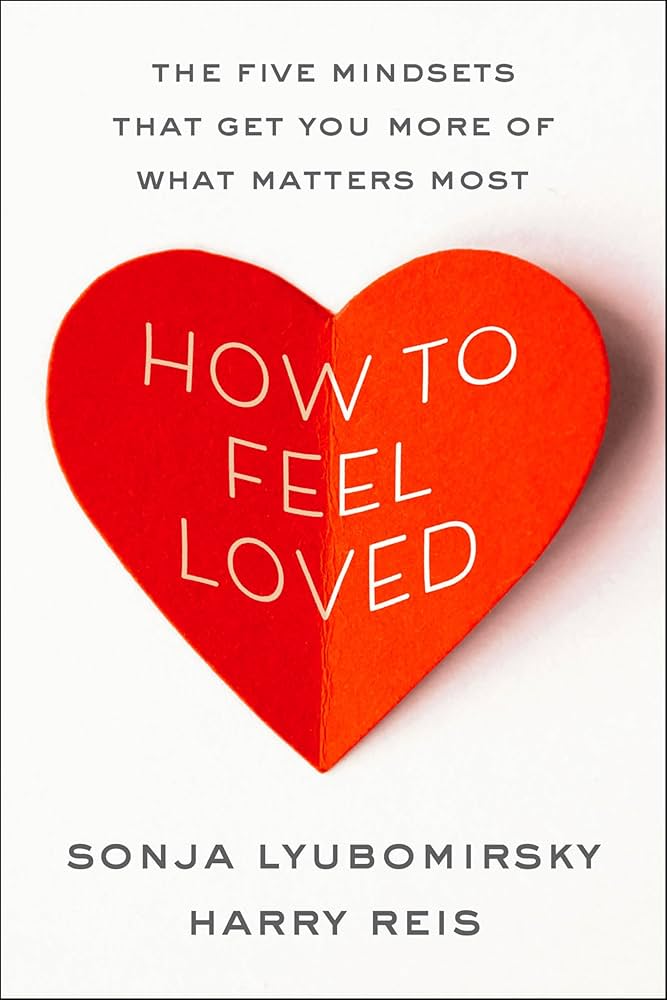
My guest is Harry Reis, a longtime researcher of close relationships and professor of psychology whose work has shaped how we understand intimacy, attachment, and emotional connection. He’s the co-author of How to Feel Loved: The Five Mindsets That Get You More of What Matters Most.
In this episode, you’ll learn:
• A powerful relational dynamic that quietly determines whether love is felt or missed
• The subtle reason giving more doesn’t always lead to feeling more connected
• A listening shift that dramatically deepens intimacy without forcing vulnerability
• Why being fully known matters more than being widely liked
• The mindset that helps love feel genuine instead of performative
If you’ve ever wondered why closeness feels harder than it should or why love doesn’t always register even when it’s present, this conversation offers clarity, compassion, and practical insight. Press play to learn what actually helps love land.
You can find Harry at: Website | Harry’s Bio | Episode Transcript
Next week, be sure to tune in for my conversation with Lucy Kalanithi about what still matters when certainty disappears.
Check out our offerings & partners:
- Join My New Writing Project: Awake at the Wheel
- Visit Our Sponsor Page For Great Resources & Discount Codes
photo credit: Elise Nakhnikian
_____________________________________________________________________________________________________
Episode Transcript:
Jonathan Fields: [00:00:00] So how can you be surrounded by people who care about you, say they love you, and really do love you and still feel like love somehow isn’t landing like you’re unloved, maybe even unlovable? And how can that change? That question has been a deep curiosity of mine for years, because it’s also such a common story. And because when love doesn’t register, it doesn’t just hurt emotionally. It turns out it actually shapes our health, our sense of belonging, and how safe we feel being ourselves. Today’s conversation is with psychologist Harry Rees, who has spent decades studying close relationships, intimacy and emotional connection, and he’s also the co-author of How to Feel Loved, a research grounded exploration of why feeling loved is not automatic even when love is clearly present. We talk about a powerful back and forth dynamic that determines whether love is felt or missed, and why giving more doesn’t always lead to closeness and how listening with real curiosity, it just changes the emotional texture of relationships and why being known matters more than being impressive. This is one of those conversations that just quietly rearranges how you see your relationships. So excited to share this conversation with you! I’m Jonathan Fields and this is Good Life Project.
Jonathan Fields: [00:01:19] I have had a deep fascination with how people build relationships for probably my entire adult life in all different contexts, whether it’s loving intimate partners, whether it’s friends, whether it’s family, chosen family, colleagues. There’s just such a growing body of research that shows that the depth and quality of our relationships are so determinative of a life well lived. You have been in this field for a long time researching, exploring, writing. In the new book, you make an interesting statement, which is effectively that we can be objectively loved, have partners, friends, family, and still not feel loved. Take me into this. Well.
Harry Reis: [00:02:01] Objectively, loved is a funny kind of statement because the question is what is the objective criterion of being loved? Now, if to most people, that would probably mean that there are other people who have a loving attitude towards you. So there can be people like that? Certainly. Um, in childhood most kids are loved, but the feeling of being loved requires something more. The feeling of being loved requires that you experience what you’re getting from other people as something that is genuine, something that is really authentic to the person that you believe you are. And they’re getting through to you. And that doesn’t always match. Now, some of that has to do with experiences that people have when they’re growing up. But more importantly, we think that has more to do with the experiences people have when they’re relating to each other, when they don’t reveal their true selves, when they hold back, when they’re, you know, they’re afraid, perhaps that if I let you see my true self, you’ll be repelled by that. And so people kind of hold back. And the irony of holding back is that it first of all, it prevents you from giving to other people. But more importantly, it prevents you from receiving because the message that you’re getting doesn’t connect with the authentic or what we would call the real self.
Jonathan Fields: [00:03:31] Yeah, that’s one of the murky things about this four letter word that is so central to the human condition is that, you know, if you ask ten people like, what does it mean? You’re going to get ten different definitions? And my guess is, if you ask ten researchers, what does it mean? You probably wouldn’t even have harmony there. So it’s almost like, what hope do we have of understanding what this actually is? If the people who are leading the research on it I can’t even agree.
Harry Reis: [00:03:57] Well, if you ask ten researchers, the first thing you’ll get is people saying that love is probably the most ambiguous word in the English language. You know, you can say you love chocolate ice cream. You can say that you love, uh, the New York Mets. You can say that you love abstract art, or you can say that you love your mother or your partner. Now, those are very different kinds of feelings, very different kind of experiences. So the first thing that if you ask ten researchers, the first thing they’re going to do is ask you to define a little more closely what we mean. Now usually well, certainly in our book, but also in, in the research that I’ve done over the years, what we mean by love is the feeling of caring deeply about the welfare of another person. And that can be the passionate kind of feelings that one has when one falls in love. Um, usually the term Inla. One doesn’t say I’m in love with chocolate ice cream, but it can also mean the deep feeling of caring and concern that two colleagues would have after working together for 25 years. It can mean the kind of affection that a parent has for a child. It usually means, you know, a feeling of concern and caring for another individual.
Jonathan Fields: [00:05:19] Yeah. So if we accept this premise, then that we can be surrounded by people in theory, quote our people, and still feel like we’re not getting the feeling that we want, we can be in a relationship for a long time and feel like we’re not getting this feeling that we want, whether it’s any one of the different kinds of love. If I ask the question, well, why does this even matter? A lot of us will be. Love is everything, and we love the feeling of love. Are there bigger reasons? Are there more physiological or survival or psychological reasons why this is really important?
Harry Reis: [00:05:49] Oh, there’s little reason to doubt that. The importance of loving and feeling loved is deeply embedded in our brains and our bodies. You know, the evolutionary significance of those feelings is unquestionable. Doesn’t mean that everybody feels it all the time, but it does mean that in the typical human, a whole series of biological processes that regulate all of that. It’s been critical to our species. It’s obviously critical to mating and producing offspring, but it’s also critical to to survival. If you know, if you think about the era in which humans evolved, if you weren’t closely connected with other people, you had no chance. You know, how many years can a newborn not survive without having some kind of attachment to caregivers? And those processes are very much regulated by the kinds of feelings that we would call feelings of love and attachment. So they’re absolutely critical to our species and I would add probably to other species as well.
Jonathan Fields: [00:07:00] So there’s a strong argument that says love doesn’t just feel really good, but maybe maybe the reason it feels really good is because there is a survival basis. So it’s almost like somehow through evolution of the species, this feeling has endured because and maybe we want it. It feels good for all the other reasons, because it also helps us stay here as human beings.
Harry Reis: [00:07:24] 100% when you feel that way towards another person, at least let’s talk about the passionate, romantic kind for a moment. When you feel that way toward another person, you want to create a mating relationship. You know you want to have sex, and of course, sex produces offspring. But those feelings also bond parents together, and they bond them to their children. And, you know, they see their children to maturity. And the most fundamental thing about the continuation of our species comes directly out of those feelings. Now, the companionate type is a little more relevant to the idea of us living in groups. We certainly evolved to live in group contexts, right? Most people who study this, you know, claim that the typical human group was about 150 people who all had various connections to each other.
Jonathan Fields: [00:08:19] It’s like that was like Dunbar’s number.
Harry Reis: [00:08:21] So that’s Dunbar’s exactly right. And we lived it together. We hunted together. We shared food with one another. We warded off predators together. We built structures to protect ourselves from the elements together. And it’s not that much of a stretch to call those feelings the feelings that that create those bonds of love. You know, they’re more the companionship kind of love. But those are the feelings that built those kinds of relationships.
Jonathan Fields: [00:08:53] Yeah. Question for you then. Is there a distinction in your mind between companionate love and if people are struggling with the word companionate? By the way, I think we could probably just replace it with like, friends or friendship. Like deep friendship.
Harry Reis: [00:09:05] I know I hate the term too.
Jonathan Fields: [00:09:07] It’s a weird word. Yes it is. Nobody uses that in natural language. But like good friends long term, like like friends that you love. Is there a distinction in your mind between that and the feeling of belonging?
Harry Reis: [00:09:17] That’s a really interesting question. And I think one could say that they’re kind of they’re similar. The biggest difference that I would say is that when we talk about belonging, we tend to talk about the feeling that one fits within a group, the feeling that a group will accept one and not reject one. So, you know, when I say that I have a feeling of belonging in my family, or I have a feeling of belonging in my community, we’re talking about the relation of me to a group or an entity of some sort. When we talk about friendship love, we’re really talking about a 1 to 1 kind of thing. Now, I would say there’s certainly a similarity, and it wouldn’t entirely surprise me if the underlying physiology turned out to be, you know, fairly similar. Many of the things that describe human behavior, we psychologists can differentiate things to a very fine gradient. But in the physiological reality of them, they’re drawing on similar kinds of mechanisms.
Jonathan Fields: [00:10:25] And that makes a lot of sense to me. So if we if we agree that the feeling of love and belonging, they have very real benefits, both emotional, psychological and physiological and also societal, you know, they help us survive as a people, then what’s the cost of not having that? Like, are there well defined costs? Like if this doesn’t exist in your life beyond just feeling like, well, I wish I had it or not. Like, what are the actual costs?
Harry Reis: [00:10:50] One of the things that that is quite misunderstood about these kinds of evolutionary arguments, it’s assumed that everybody has this and that’s not the case.
Jonathan Fields: [00:11:01] Yeah.
Harry Reis: [00:11:02] How does evolution work? Evolution works by individual differences. Evolutionary terms. You call them mutations. So some people have a lot of this. Some people have very little of it. If it’s evolved, it means that the having of this tendency was related to survival and reproduction. So there are going to be people who don’t feel this way. And I think we have pretty good evidence right now. There are a decent number of people in our world who don’t have these kind of feelings. Now, that can mean that for whatever reason, they don’t have it as a drive, in which case they are, you know, content with their lives without having strong friendships and strong community relations. Or it can mean that they do have those needs, but they’re not being satisfied. Now, the former case is presumably not problematic. I remember reading about a lighthouse keeper in Siberia who had 20 minutes of social contact each year.
Jonathan Fields: [00:12:07] Oh my God.
Harry Reis: [00:12:08] And he was fine.
Jonathan Fields: [00:12:09] Right, right, right.
Harry Reis: [00:12:10] So, okay. Good for him.
Jonathan Fields: [00:12:12] I’m just hoping I had a lot of really good books.
Harry Reis: [00:12:15] Yeah. Yeah, I would hope so. And he enjoyed the natural environment. On the other hand, if someone were to live in those kind of circumstances. But to feel a loss, this is the kind of thing that we refer to now as the loneliness epidemic that we’ve all heard about that exerts real cost. Feelings of intense loneliness are pretty strongly related to just about everything bad you can think of. You know, by now we have dozens and dozens of studies that show that when people let me be clear, we’re not talking about, you know, feeling lonely some of the time. We’re not talking about feeling lonely. You know, when you move to a new city, we’re talking about feeling lonely a lot of the time. Most of the time, those kinds of feelings are associated with every illness and disease that’s ever been studied. People die on average, about 7 to 10 years earlier. When they’re chronically lonely, they have trouble at work. Adolescents have trouble at school. Just about anything that’s ever been studied has been shown to be related to a loneliness problem. Now, most of us believe that right now, relative to, let’s say, 50 and 60 and 100 years ago in America, where considerably lonelier as a society than we used to be. This concept was made famous in Robert Putnam’s Bowling Alone book, which I’m sure you know. I think it’s safe to say that loneliness is a bigger problem than it used to be. There also are quite a number of studies that compare countries to each other. America is sort of right around the middle of those. We’re certainly not near the top. The countries that fare best on those are the Scandinavian countries. And, you know, there are a number of reasons for that. And there are a lot of different explanations that have been given for why loneliness is increasing today compared to the way it was. You know, let’s say 50 or 60 years ago.
Jonathan Fields: [00:14:26] Yeah. And we’ll be right back after a word from our sponsors. We’re at this point then where we agree that this thing, friendship, love in particular and probably sense of belonging, these things and of course, like being in love, like these things all matter to us. They make life richer, but they also have these. They have real survival, physiological, psychological, emotional impacts on us. And when we don’t have them, they cause all manner of pain in our lives. Are we going about getting them in a way that is actually working?
Harry Reis: [00:15:01] That’s such a great question, and there’s no straightforward answer to it either. What I would say is some people are and some people aren’t. Now, what do we know about the different strategies that people can use? Well, one thing we know is that, you know, you could ask yourself the question, why does loneliness exist in the first place? Well, loneliness is signaling that I lack the kinds of social connections that I want. And so a very healthy strategy is, well, go out and get them. If you’re sitting in your apartment and you’re feeling lonely, call someone up and go have dinner with them. That’s a very healthy strategy and clearly, you know, would be associated with with success. On the other hand, other strategies that people typically adopt, um, using drugs and alcohol, binge watching television are probably less effective. So there are healthy, constructive ways of dealing with those feelings, and there are unconstructive ways of dealing with it. I think the trick is to recognize that the feelings exist in order to get us to go out and try to make those connections. You know, if you want a romantic relationship, that’s the precursor to going out and making one. Of course, it’s not that simple, right? Finding a partner that works is takes time and effort. And and it can be a challenge for many people. But it’s the drive to go out and do that that ultimately, you know, can lead to to good outcomes.
Jonathan Fields: [00:16:40] Yeah. I mean, what you just said is so important. I don’t want to gloss over it all so that, you know, the feeling that you’re having is kind of there as motivational source fuel for you to in some way mobilize to put yourself in situations where you can actually make these connections.
Harry Reis: [00:16:57] Absolutely. And I think the other thing to recognize about that is this mechanism, this this drive predates our becoming humans. If you look at most mammalian species, an animal is isolated. What does it do? It seeks out other members of its species, its group, you know, its band, whatever. You know, we’ve all seen the Nature Channel. You know, you see animals bonding together when there’s a predator around, they form a group. What drives that? Now, I’m not going to say that’s the same as a human feeling. Lonely. But I will, you know, make the argument that the mechanism that exists within the brain of the organism is pretty similar to the mechanism within us humans, that it’s designed to make us go out and seek connection with others.
Jonathan Fields: [00:17:55] But you also made another interesting point, and this is a point that I stumbled upon years. Years ago, I was actually working on a book on belonging, and I found the research of John Cacioppo, who’s no longer with us. But, you know, he was maybe one of the seminal researchers on loneliness. And I remember in the research that he was pointing to, he said, you know, it’s actually really complicated because some people, when they have this feeling of loneliness, like this feeling of isolation or estrangement, all sorts of variations of this feeling that becomes for them this motivator to become social, pro-social. I want to go out. I want to be around people. I want to help other people. I want to join things. Some people, though I remember the research, said it has the exact opposite effects. It literally makes them antisocial. The feeling makes them feel like they’re being shunned, that they’re being, like, unfairly, you know, like banned. And it actually makes them antisocial. And it it inspires feelings of rage. And it’s almost like the exact opposite. And the story is complicated. It sounds like your.
Harry Reis: [00:18:58] Story is complicated. And again, the thing to remember is that there are big individual differences. I knew John very well, and I actually worked with him on one of his projects. Um, I think when that happens, more often than not it’s a reflection of early life experiences. You know, one of the things that parents do is they teach their kids what to do when those feelings arise. Um, now, some parents will respond, well, you know, initially it’s the parent. Later it’s the parent encouraging the child to, you know, seek out peers and arranging, you know, for play dates and all this kind of stuff. Other parents maybe don’t do such a good job. And the message that the kid gets is that peers are not going to be accepting that if you let your needs be known, you’re in fact not going to be accepted. Maybe you’re even going to be rejected. We certainly know that the experience of abuse and neglect in childhood is a major predictor of having exactly the kind of reaction that you’re describing. So the infant cries, the infant says, I need a you know, communicates that, you know, I need attention. And they and what do they get in return? You know, they get something that says other people are dangerous. Stay away from them.
Jonathan Fields: [00:20:24] Yeah. I mean, it seems like also you’re talking about the messages you’re receiving in by the family. I think this is brought home so powerfully. I think so many people saw this four part series. I think it was early this year or late last year. Adolescents, which sparked so many conversations because you have an adolescent boy who felt wronged, who felt outcast socially. And the only emotion that he felt like he was permitted to feel and then express as a male. It wasn’t sadness like for him being outcast, like not belonging, the feeling of loneliness. It wasn’t allowed. It wasn’t appropriate for that to show up as sadness. The only appropriate feeling was rage, you know, which translated to violence. And I feel like that show started so many conversations around this issue.
Harry Reis: [00:21:14] Right. Well, certainly our culture has long taught boys that expressing sadness, expressing a desire for connection is not is not healthy. And instead teaching boys, you know, to channel that into more aggressive kinds of impulses, I think I think we’re starting to move away from that somewhat, but it’s still a very powerful drive.
Jonathan Fields: [00:21:38] Yeah. If we zoom the lens out here and we say, okay, love matters, belonging matters, friendship, these things all are critical to human vision and they just make every day better. You know, like, forget the research. We just all know life is a whole lot better when we have this in our lives on a regular basis. And acknowledging at the same time as you shared, people will have very differing levels of need for this. Some people can get by with a little bit, maybe very random. Some people really need a lot more of it. It’s not a judgment thing. It’s just we may be wired differently. We tend to go about it in ways that sometimes are effective, sometimes aren’t effective. You have a model that looks at relationships, um, the seesaw model. It kind of says, why don’t we look at this a little bit differently? A lot of what we’re yearning for, the feelings that we want to get and also give fundamentally comes down to developing a back and forth type of dynamic and relationship, and also understanding these five distinct mindsets. Take me into this.
Harry Reis: [00:22:38] Let’s talk about the seesaw model first. What’s one of the most powerful dynamic processes in human behavior? It’s reciprocity. We respond to other people in the way that they have treated us, and in the way that we expect that they’re going to treat us. So the seesaw model is based on the idea that in order to feel loved, what you need to do is help your partner feel loved. So if I help you feel loved in most instances, not not 100%, but in most instances, that will lead to a cycle of behaviors that will end up with my feeling. Love. We call it a seesaw because the idea is if I lift you up, then you will lift me up so we can do that both ways. So the irony is that one of the best ways to create the kinds of interactions that will help you feel loved is to do that for the other person. So we talk about the mindset, the idea, of course, being that it’s the mental frame of reference that you enter interactions with. So if you enter your interactions with desire to really be open hearted towards the other person, to listen to what they have to say with genuine curiosity and genuine interest, and to show that interest that will help the other person feel, wow, this person really values, appreciates, cares for me. And that will motivate the person to do the same for you. So the seesaw idea is this idea that by giving love, you’re increasing the likelihood that you will be getting love in return. Now, it can’t be that one one sided, of course, because you can’t continually just be giving and listening all the time, right?
Jonathan Fields: [00:24:41] Because, I mean, it’s going to lead to contempt if you’re just giving, giving, giving, giving, giving. And it’s like, what about me?
Harry Reis: [00:24:47] That’s exactly right. When is my turn? Come. Yeah. So the other person does have to buy into it, but also you have to make yourself be open. There was a book that was really popular when I was in college many years ago called why Am I Afraid to Tell You Who I am? And the idea of the book was that many of us will not talk about our deepest feelings, our goals and aspirations, the things that that are most important to us for a variety of reasons. We’re afraid of being exploited. We’re afraid of being vulnerable. We feel like we might be embarrassed if other people knew these things about us. So to make the CSO work, you do have to open up to the other person so that they can respond to those things in a positive way. One of the most interesting lines of research I know is work done by Nick Epley at the University of Chicago. And one of the things he does is he asks people to first say, suppose you told your friend about your deepest secrets, the things that you’re most concerned about. It doesn’t matter exactly what it is, but just things that are relatively deep to the self. What do you think would happen? And people will say, oh, I’ll be embarrassed. You know, I’ll be it’ll be vulnerable. Then you ask them to do it. And the interesting thing is that people almost always report not the things that they were afraid of. They report that the conversations go well, that they’re happy doing that. He calls them miscalibrated Did expectations. Now, of course, sometimes that it might happen, but more often than not, opening up to another person leads to a genuine interaction, a genuine feeling of connection with another person.
Jonathan Fields: [00:26:42] That makes sense. And yet we are terrified of going there. That’s right. On the whole what happens though, if you’re like, okay, let’s do the seesaw thing. You sit down with a partner or a friend and it’s like things haven’t been great or you just or you’re just you, you kind of know this model and you’re just say, I’m going to run a little bit of an experiment with somebody new. I’d love to develop a deeper friendship with them. You start acknowledging somebody, seeing them, um, giving them the attentiveness, like responding to their bids, lifting them up. And as we talked about earlier in the conversation, being loved and receiving love are two different things. And it’s almost like, you know, that kids thing I’m rubber. You’re glue. Whatever you say, right? Yeah. Bounces off of me. You know they’re not receiving any of it. Like, you’re you’re really trying, and they’re just. They’re like Teflon. They just. Nothing actually lands with them. And because of that, they probably are not getting the signals that would tell them, oh, I should be reciprocating.
Harry Reis: [00:27:43] That’s a great question. You know, and there’s there’s several responses. The first response I would say is that trying it once doesn’t work. You know, you spend two minutes doing this and you say, see they were wrong. This is more of a of a of a long term kind of thing. You know, maybe they have maybe they’re having a bad day. But I would also say that if you’ve tried this genuinely and, you know, with a reasonable degree of effort and time, then the argument is maybe it’s not the right person for you. You know, this isn’t going to work with anybody. You can’t just walk over to some person. You can’t just, um, go over to the most popular kid in your school and expect them to, you know, be your friend just because you opened up to them. It’s a case of sort of picking your targets, well, picking people who are likely to respond well, people who are, you know, what I would call good matches, you know, people who are, uh, have compatible interests. Compatible values are at a similar point in their life space, but it’s not going to work every time. And at some point it may be time to sort of move, move on to someone else.
Jonathan Fields: [00:28:57] Yeah. And I’m thinking also, maybe actually it is the right person, but it’s not the right moment. You know, maybe this person just deep into a work project and they’re just they’re burned out, or maybe they’re struggling with something, or maybe they’ve got trauma that they’ve been carrying for a long time that they have not actually turned inward to process. And maybe five years later, they’re going to be in a very different place and you connect with them again. It’s like, wow.
Harry Reis: [00:29:21] Absolutely. And you know, the place where you see this most is in the romantic arena. You know, one of the things that’s always fascinating to me is the large majority of people who want to find a partner do find a partner. Now, the interesting question is a lot of times you meet that person, it’s a coincidence. You know something. So if you hadn’t met that person, does that mean that you would have been lonely for the rest of your life? Oh, of course not. I won’t go into the whole long story, but the way I met my wife was a total coincidence of someone making a phone call at the right time.
Jonathan Fields: [00:30:00] I’m the same, actually. I’m with my wife 33 years now, and there was a moment in time where if that moment didn’t happen, we would have never known each other.
Harry Reis: [00:30:09] Right. And so one of the ideas is that, and I’m sure you’ve heard this terminology, when you’re ready for a relationship, is when you tend to find someone. Now, does that mean you wake up one morning and you’re ready, and the next person you see is the person. No, of course not. But you meet an encounter many people in your lifetime. And, you know, creating that kind of match depends on you being in the right place, the other person being in the right place, and then finding each other, which you know it well, you know the way you have to kiss a lot of frogs to find a prince kind of idea. So it’s a process that you have to be genuinely open to, and you have to be willing to experiment with in order to find the people for whom those connections will really work.
Jonathan Fields: [00:31:02] Yeah, no, that makes a lot of sense. And we’ll be right back after a word from our sponsors. Talk to me now about the role of these things you call the mindsets.
Harry Reis: [00:31:14] The mindsets have to do with the idea that how you approach The possibility of connections has everything to do with how they go. Let’s talk about listening. Listening is in many ways the most interesting of the five mindsets that we talk about. It’s one that is starting to be a very popular idea in research. And one of the really fascinating statistics about listening is that something like 85% of people say they’re good listeners. But when you ask people, how often do you experience good listening? It’s about 8%.
Jonathan Fields: [00:31:54] Somebody’s wrong there.
Harry Reis: [00:31:55] Somebody’s wrong. I took part in a workshop and listening a few years ago, and I will admit that I thought I was a really good listener at that time, and I was terrible. It was really hard. Stephen Covey has talked about the idea that we don’t listen, to learn. We listen to respond while we’re listening to the other person. We’re thinking about the next thing we’re going to say. One of the things that’s really important, and we and we actually have two mindsets embodied in here, what one is called the listening mindset. Uh, the other is called radical curiosity. The idea is really listening to another person with interest, as if there was going to be a test on this tomorrow, so that you’re really trying to learn what the other person is about. And more than that, you’re making the kinds of questions, giving them the kind of non-verbals that encourage them to go deeper. So you’re saying things like, how did you feel when that happened? Or if you’ve just met someone, you could say, you know, what’s the best thing that happened to you on the last week? And then really sort of going deeper in these kind of experiences. It’s amazing how powerful that can be. You know, the cocktail party, party effect. If someone asked you a question And you answer it, and then they go on to talk about something else. If you respond to what they say with genuine interest, it’s almost like, huh? And they typically will buy into it. So the most important thing you can do if you want to start off this cycle, is to approach a conversation with the desire to really learn what the other person is about, what’s going on for them. And by the way, this doesn’t mean, you know, asking them to tell you about the most dramatic thing that happened to them in their childhood in the first five minutes of a conversation.
Jonathan Fields: [00:33:55] It’s like, let’s go deep into our shared traumas immediately. Yeah.
Harry Reis: [00:33:58] Yeah, exactly. It’s not that, you know, it’s like, you know, if they’re telling you that they just watched the World Series, you know, I asked them, you know, what went on during the game that was so interesting to you. You know, it’s showing interest in whatever they’re talking about. So those two parts of how you approach a conversation with another person in the first place are really critical to developing.
Jonathan Fields: [00:34:23] I’ll just throw in there. I so agree. Um, I’ve been doing this for 14 years now, and I’ve learned over the years that one of the questions that I tend to ask more than anything else, and it’s it’s become a question that I ask in just new relationships and new conversations. It’s not even a question. It’s a simple statement. It’s four words. It’s tell me more. So a lot of times people are like, well, what should I be asking? Like? And that’s where you get into that trap where you’re saying, well, now I’m trying to figure out like, what is the appropriate follow up? Now I’m just listening to follow up now. But if you literally just take a simple phrase like, have it in your back pocket all the time, oh, wow, tell me more.
Harry Reis: [00:34:58] Tell Me More is an absolutely great one.
Jonathan Fields: [00:35:00] It’s such a beautiful open and you can use it in almost any context. It’s beautiful.
Harry Reis: [00:35:05] But I will also say that you then have to follow up with something that shows that you listened to them more. You know, there’s the the caricature of the rogerian therapist who just goes, aha, I see. Right, right. And, you know, they’re not really seeing and they’re not really. So you have to show that you’re really are listening to what they say. But tell me more is a great way to get that going.
Jonathan Fields: [00:35:28] Yeah. So we have sort of like the overlap of these two mindsets here. Then listening mindset and the I think you call it the radical curiosity mindset. Right. Let’s build on that.
Harry Reis: [00:35:37] The next one that I think is all important is called the multiplicity mindset. And the multiplicity mindset is the idea that none of us are as bad as the worst thing we’ve ever done, and none of us are as good as the best thing we’ve ever done. What the example I give in the book is the story of a young man, I believe, in Colorado, actually, who had murdered his parents in a drug fit, and he was in jail and was going to be in jail for life. And his sister talked about how much she loves him. Now, this man had made her an orphan and yet she still loved him. The idea here is that all of us have good sides and bad sides. We have weaknesses. We have strengths. Acknowledging that people are many things is a way of giving them permission to be willing to be open with us. If I communicate to you that I’m going to judge you harshly, if you tell me that you did something bad in your life, I’m going to shut down, and then I’m always going to have that feeling in me that I can’t let him know this thing about me. And that’s going to make it that much harder for me to feel loved by you. If I can let you know that, gee, I did this bad thing when I was younger or I did something bad last week.
Harry Reis: [00:37:09] You can criticize the behavior. Nobody’s saying you should condone bad behavior? But the difference is the difference that that developmental psychologists talk about between criticizing the behavior or criticizing the child. If you’re a child has been caught stealing something, you want to communicate that that behavior is not acceptable. That doesn’t mean that the child is unacceptable. So letting adopting sort of a non-critical attitude toward a partner, having strengths and weaknesses, shortcomings, but also, you know, talents of one sort or another is a major part of helping them feel loved. But it also allows you to be more genuine. And that’s the other thing. You know, we all know about the impostor phenomenon. You know, the idea that if we get promoted at work to a level where we feel like we don’t really have the skills, and if only if other people found out that we really can’t do that. If other people find out that you’re using AI to write your memos. You know they’re going to criticize you. Being open minded toward people’s strengths and weaknesses in that way frees you up to be that way for yourself, and that allows you to be more genuine. And one of the things that’s absolutely critical to feeling loved is being genuine. I have to feel that you know who my full self is, warts and all.
Jonathan Fields: [00:38:41] It’s interesting, though, because this one, the multiplicity mindset, is, um, again, complicated in my mind because we also know that there’s this research that shows that we often carry a bias that says, well, if this other person does this, quote bad thing, they’re a bad person. But if I do that exact same bad thing, well, I’m a good person who just made a bad choice.
Harry Reis: [00:39:08] Yes.
Jonathan Fields: [00:39:08] That’s right. You know, so we’ve got to, like, find a way around that.
Harry Reis: [00:39:12] Yeah. Well, and and of course, one of the ways around it is realizing that we have this bias. The scores of studies have shown that, you know, the step one in overcoming bias is is becoming aware of the fact that the bias exists. When Sonia and I were writing the book, we, um, visited with the Dalai Lama, uh, which was a great experience, and someone asked him, you know, do you hate the Chinese because the Chinese have treated the Tibetans badly and all that? And he said, no. Someone said, but after all the things they’ve done and what he said was, in 100 years they’ll all be dead, so why bother hating them?
Jonathan Fields: [00:39:51] It’s an unusual human being who can look at people and the world that way, though. Yes, I think we all aspire to it.
Harry Reis: [00:39:58] Yes, we all have the tendency to be judgmental about people who do bad things, particularly very bad things. When I served on my university’s Academic Honesty Committee. You know, most of the people who came before the committee had done something that violated, you know, standards of honesty in the classroom in one way or another. And it was hard work to realize that this was not a bad person, but that this was a person who for, you know, whatever reason, sometimes, you know, good reasons, sometimes not so good reasons. But, you know, a person who had other strengths and this was meant to be a learning experience that hopefully they could move on from. And I think the same thing goes on in our relational lives. One of the most interesting examples of this kind of thing in marriages is affairs. Interestingly enough, one partner having an affair that comes out does not necessarily lead to divorce. It certainly does lead to divorce in a decent percentage of cases. But in many other cases it actually leads to an improvement in the relationship. And that’s because there does have to be an apology and some degree of of taking responsibility. But it leads to a certain openness between the partners that allows them to improve whatever, you know was going on in the first place.
Jonathan Fields: [00:41:31] I mean, I think that also leads to one of the other mindsets open heart mindset. Yes.
Harry Reis: [00:41:37] Yes. Open heart, open the open heart mindset is the one that most people will likely be familiar with. And that’s simply the idea of approaching others with an open heart, that is, with kindness, with generosity, and with the intention of benefiting them in some way. This runs the gamut from little things like holding the door open for someone when they’re following you into a building, to contributing to a GoFundMe page to donating blood or a kidney. Approaching others with an open hearted mindset is absolutely critical to creating that seesaw kind of interaction. Simply because we can’t allow ourselves to be open to another person unless we feel that they have genuine, positive intent towards us, that we feel that they’re going to be benevolent towards us. I’m going to be that much more willing to be open with you. If I know that you are going to be compassionate about that, you’re going to be kindly to that. Similarly, I’m going to be more willing to be compassionate to you if you’re compassionate to me. Again, that norm of reciprocity becomes important. There’s legions and legions of studies showing that people will reciprocate kindnesses that are done to them, not necessarily even, but to that person. You know, there’s the pay it forward idea. I don’t know if you’ve ever driven up to a well, we don’t have toll booths anymore. So I guess this can’t happen.
Jonathan Fields: [00:43:20] But I know where you’re going with this. Yeah. Back in the olden days.
Harry Reis: [00:43:23] Back back in the old days, you know, and you know, they would tell you the person before you paid your toll.
Jonathan Fields: [00:43:29] Yeah, yeah.
Harry Reis: [00:43:29] And then, you know, sometimes you would you would pay them for the next person. I can’t do that anymore.
Jonathan Fields: [00:43:34] Yeah. You know, what’s interesting is popping into my mind as you described this also is people who rescue abused animals. And I’ve heard this story so many times, somebody you know who’s just motivated, driven to rescue animals. And when they first rescue an animal not unusual for that animal to be vicious, violent towards everyone around them, including this individual who all they want to do is give them love, take them, make them okay again. And yet there’s something in the individual and the rescuer that says there’s no reciprocity happening right here. I am being attacked for every effort that I put into this. But there’s something in me that knows that, like, this is all coming from a place of wounding. And if I keep showing up gently in the right way, over and over and over and over again, that with that open heart, with the warmth and acceptance and compassion that this is going to make a difference and that that behavior is going to change, and they will at some point be there to receive it. And whether it gets reciprocated, back licks on the face or whatever it may be from the, you know, the dog is almost, I think, less important to them, but they just there’s something in them that says, I see the pain in this other person. This is not because they’re a bad dog. It’s because they’ve been through bad things. And I want to help the goodness become central to that being again.
Harry Reis: [00:44:59] Oh, well. And, you know, and you see, you see this with a shy, reclusive animals as well. You know, they they will they will hide away and they will not come out. But if you’re patient with them, eventually they’ll take one step forward. And the. My wife works in an animal local animal shelter on Thursdays, as a matter of fact. And she has that experience with the animals initially that you know, who is this person and how can I trust this person? Not always, but usually if you’re kind to them for a long enough period, they will respond to that.
Jonathan Fields: [00:45:39] Yeah. And this goes back to the concept that you were sharing earlier where a lot of these ideas, the mindsets, it’s not about let me try this mindset for three minutes. You know, this is the saying, well, let me actually see if if I can step into a relationship over a period of time and keep stepping into this mindset and even when it feels like it’s being rejected, keep saying, well, what if I keep showing up this way? What if I keep showing up this way over a reasonable period of time? But it’s generally not like a hot second type of intervention?
Harry Reis: [00:46:09] Yes. But you know, you can also think about it from the other side. So suppose you don’t approach the person with a kind mindset, but instead with a hostile defensive mindset. You’re guaranteeing that you will not form a connection. Whereas if you approach them with an open mindset, at least there’s a chance that that kind of connection will occur and won’t always. And you do have to protect yourself in those situations. But more often than not, that will work.
Jonathan Fields: [00:46:40] And that brings us to the fifth mindset. Also the sharing mindset.
Harry Reis: [00:46:43] Yeah, the fifth mindset is the sharing mindset or the idea that we touched on earlier that you have to be open about who you are as a person. You’re not going to feel loved if all you’re doing is being there for the other person, if you’re just giving, giving, giving, giving to feel like you’re being loved, you need to make yourself known to the other person. So you have to be willing to be open. You have to be willing to be sharing. You know, your full story, the full who you are. You can’t be on your best behavior with the person every minute of every day. You know you have to be willing to be open. And the purpose of this is not just to be revealing yourself. The purpose of this is so that the esteem and the love you’re getting back is experienced as genuine. If I give you a curated version of myself and you express, wow, that’s really fantastic. I think you’re such an interesting person. I’m not going to experience that as genuine because the person you’re loving is not me. It’s my curated image. And so many of us go through life feeling that way. The obvious example of this is online dating, where you know, the profiles that people post are very curated.
Harry Reis: [00:48:08] And of course, they do that because they believe that you’re more likely to get a positive response if you present yourself as beautiful, smart, accomplished, successful, athletic, fit all these things. And that’s all well and good for, you know, for step one. But unless you get past that, you’re not going to experience that that person is loving the real you. And ultimately, what we want is, you know, for other people to love and respect the real me. And I want to stress this goes beyond romance. You know, let’s talk about, um, being on a work team. If what you’re constantly doing in on the work team is saying the things that will please other people on the team when you get positive feedback. It’s not going to ring true. What you want to be able to do is express what you really believe about the work, how you really feel about the work, and what your ideas are. And if you get positive feedback for that, that’s how you feel valued. That’s how you feel like you really belong on the team.
Jonathan Fields: [00:49:21] Yeah, I mean, that lands so powerfully. I feel like so many people are walking around these days, you know, and they present an image of themselves in social media makes this so much easier. But even we have the ability to curate the way that we show up in different contexts so easily these days. And we may have all these people who are following us and they’re interacting with us and they’re like, you’re the best. And they’re saying all these different things. And I’m like, welcome into my community, welcome into my friend group. And on the surface, you’re like, wow, you must be feel amazing inside. And you feel completely hollow and you’re trying to figure out why. Why do I feel this way? Why am I so lonely when I’ve got all these people in my orbit and all in five different orbits who say how much they welcome me and want me and love me is because, as you’re describing, it’s not actually you, it’s the avatar you’re projecting, and you’re never going to get what you actually want if all they ever get is the avatar.
Harry Reis: [00:50:15] Exactly. And it’s perfectly fine to use that avatar as a way of starting connection. I don’t I’m not saying people you don’t want to trauma dump. You don’t want to present your flaws in the first five minutes that you’re meeting somebody. But that should be the goal that you want to get to that stage so that you can, you know, we want to feel authentic. We want to feel like it’s the real me that’s out there in the world.
Jonathan Fields: [00:50:44] Yeah. I mean, that brings us all the way back to, you know, Arthur Aron’s 36 questions, where it was three couplets that start kind of superficial. And it requires this progressive mutual Vulnerability, you know. But it doesn’t start with the most vulnerable side. It starts acknowledging we all kind of need to feel safe. We want to present our best selves, but over time, we need to unfold if we want to feel genuinely connected.
Harry Reis: [00:51:06] Yes. You know, and I’ve done the 36 questions in my classes many, many times. So I’ve seen hundreds of pairs doing this. The thing that’s so striking about it is that the questions are carefully chosen. First of all, to be graduated in the way you’re describing, but also to be the kinds of questions where people are going to say, oh, yeah, I can really relate to that experience. That makes sense. So it creates this cycle of reciprocity where I’m disclosing and you’re responding positively to that, and then you’re telling me something that I can respond positively to. And so it creates this dynamic of I feel really connected to you because we’ve shared both sides of the process.
Jonathan Fields: [00:51:55] Yeah. No, that makes so much sense. Zooming back to the five mindsets, the seesaw model, what I love also, and I want to just sort of double tap on what you said earlier, which is, yes, these are valuable tools. When we think about the context of romantic relationships, um, long term partnerships, intimate partnerships, and at the same time, it’s a basic set of tools and mindsets where if you think about how do I deepen into friendships, how do I deepen into relationships with colleagues? It really it’s a set of tools that function really on any level or any context of relationship, where you want them to feel more real and genuine, where you want to feel more from them, and you’re also open to giving more to them. Does that land?
Harry Reis: [00:52:37] That totally lands. And, you know, I would say that we’re in the period of the year where this becomes especially relevant, you know, Thanksgiving and Christmas. These are tools that especially will work with the relative you haven’t seen since last year. And you can keep the conversation at a superficial level. And, you know, that may be okay. You know, you may have a sense of belonging like you. You know, this is my family and I’m connected to them. But, you know, if you’re sitting with the person and they’re telling you, you know, so how, you know, how’s your year been? And then you say, tell me more and really dig into it. You’re going to have a much more authentic connection. And you may not see them again for another year, but I think you’ll feel loved by them and you’ll you’ll feel really connected with them.
Jonathan Fields: [00:53:26] And you may be more likely to have that. Tell me more. Reflect it back to you too, which would be pretty awesome.
Harry Reis: [00:53:31] Absolutely. And if they don’t actually ask you the tell me more question, um, because they haven’t read the book, what you can do is, you know, open up, be a little more self disclosing, be a little more intimate and see how they respond.
Jonathan Fields: [00:53:47] Man, I love that. Feels like a good place for us to come full circle as well. So in this container of Good Life Project., if I offer up the phrase to live a good life, what comes up to me?
Harry Reis: [00:53:57] Living a good life. First of all, it’s about having enough, but it’s also about having connections. We know that the most important determinant of whether people are happy in their lives is that they have meaningful relationships. That just in case anyone’s wondering, that doesn’t have to mean that you’re married or partnered. You can have other kinds of connections as well, but having meaningful connections with other people is the number one criterion to being happy in life. Other things matter also, but it’s those connections and relationships that are most important. Hmm.
Jonathan Fields: [00:54:34] Thank you. Hey, before you head out, be sure to tune in to next week for my conversation with Lucy Kalanithi about what still matters when certainty just disappears from your life. Follow Good Life Project in your favorite listening app so it’s waiting for you. This episode of Good Life Project was produced by executive producers Lindsey Fox and me, Jonathan Fields. Editing help By, Alejandro Ramirez and Troy Young. Kristoffer Carter crafted our theme music and of course, if you haven’t already done so, please go ahead and follow Good Life Project in your favorite listening app or on YouTube too. If you found this conversation interesting or valuable and inspiring, chances are you did because you’re still listening here, do me a personal favor, a seven-second favor, and share it with just one person. I mean, if you want to share it with more, that’s awesome too. But just one person even then, invite them to talk with you about what you’ve both discovered to reconnect and explore ideas that really matter, because that’s how we all come alive together. Until next time, I’m Jonathan Fields signing off for Good Life Project.